Physical Address
304 North Cardinal St.
Dorchester Center, MA 02124
Physical Address
304 North Cardinal St.
Dorchester Center, MA 02124

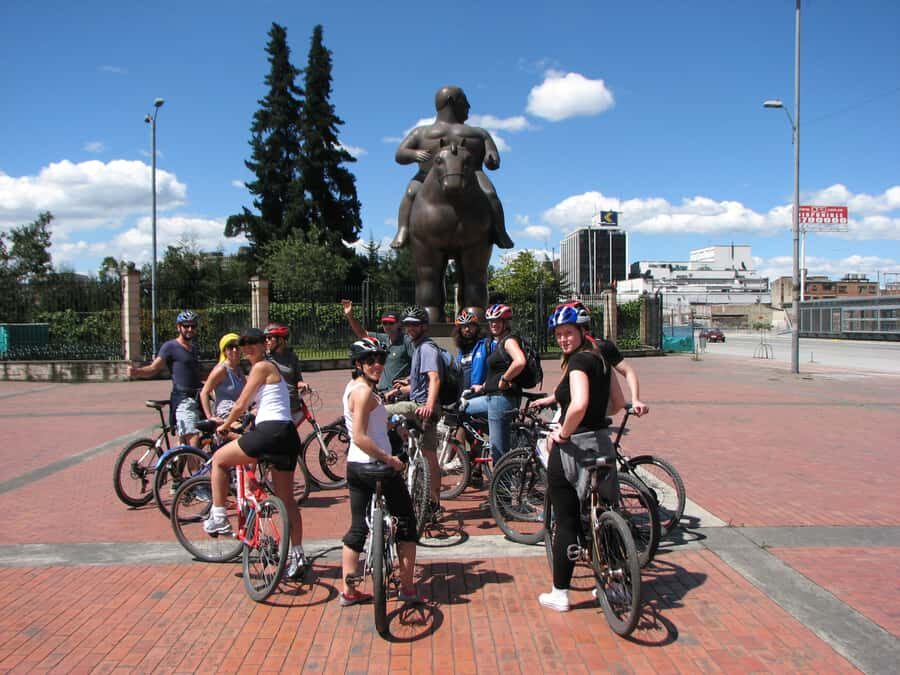
Cycle Bogotá’s neighborhoods, sample unusual fruits, visit a coffee roaster and see street art on a four-and-a-half-hour city tour.
Bogotá makes more sense from the saddle. On this four-and-a-half-hour ride, you pedal beyond La Candelaria to markets, neighborhood streets, plazas and street art, with stops that bring the city’s daily life into view. The route varies, but the mix of cycling and local encounters is the point.
I like two things in particular: the market tasting, where you can try a wide range of unfamiliar fruits, and the chance to hear about Bogotá from guides who connect its streets to Colombian history and culture. A coffee-roasting stop adds another welcome pause, and some routes include tejo, Colombia’s national sport.
The trade-off is that this is still an urban bike ride. The terrain is mostly flat and there are frequent stops, but you’ll share roads with traffic, and the tour runs rain or shine. If cycling in city traffic makes you uneasy, this may not be your best introduction to Bogotá.
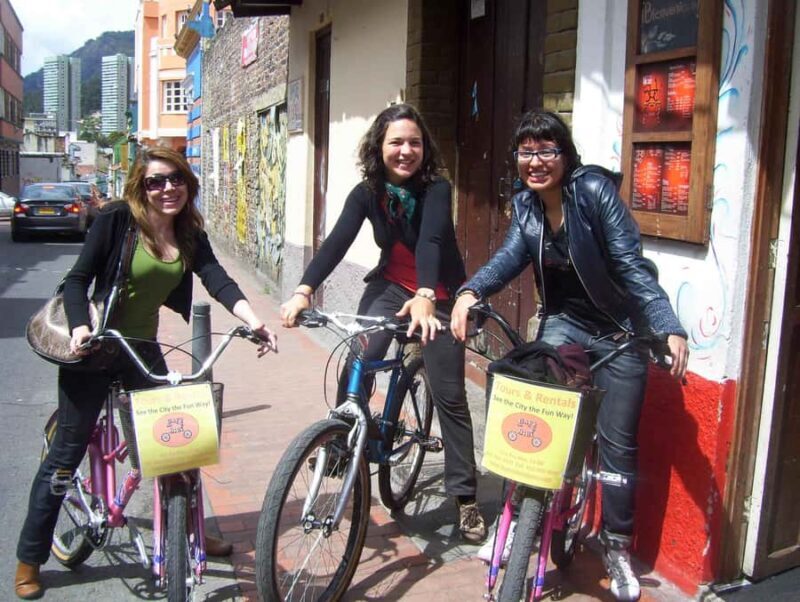
This tour is a practical way to get your bearings early in a Bogotá stay. In 270 minutes, you see different parts of the city without spending the whole time walking between them. The ride is less about ticking off one major attraction than about linking sights, streets and local stops into a broader picture.
The exact route changes according to the day, weather and special events. You may pass through the historic center and several plazas, parks and neighborhoods, with planned stops that can include a traditional food market, coffee roaster, street art and landmarks such as the bullfighting stadium or Central Cemetery. Treat those named sights as possibilities, not a promise that every ride follows the same itinerary.
That flexibility can work in your favor. A road closure or city event may make one route easier or lead the group elsewhere, while the guides can shape the outing around conditions. The trade-off is that you shouldn’t book with one particular stop as your sole reason for going. The best reason is to see a cross-section of Bogotá with a guide filling in the connections.
The market stop is the tour’s most distinctive feature. You park your bike and walk between stalls, tasting fruits that may be new to you. Guides cut and share samples as you go, so this is more than a quick look at produce behind a shop window.
The tasting can be extensive. One tour guide, Mike, was described as moving stall to stall and slicing a long run of fruit for the group. You may get sticky fingers and plenty of juice, which is part of the fun. You’ll also get a more direct sense of Colombia’s range of produce than you would by ordering a familiar item from a restaurant menu.
A small point of etiquette is worth keeping in mind: take a sample only if you’re willing to try it, and be considerate if you decide you don’t like it. The fruit is provided as part of the stop, but it is still being offered by market vendors. If you have dietary concerns, ask your guide before sampling.
The market is also a useful pause in a cycling tour. You get off the bike, look around at a different pace and have time to talk with your guide and fellow riders. For many people, it is the moment that turns a city overview into a memorable local encounter.
A traditional coffee roaster adds another taste of local life. The tour information describes a visit to a coffee factory, and riders have also described stopping for coffee during the route. The exact format may vary, but the point is to learn about coffee where it is made or prepared, rather than treating it as just another café break.
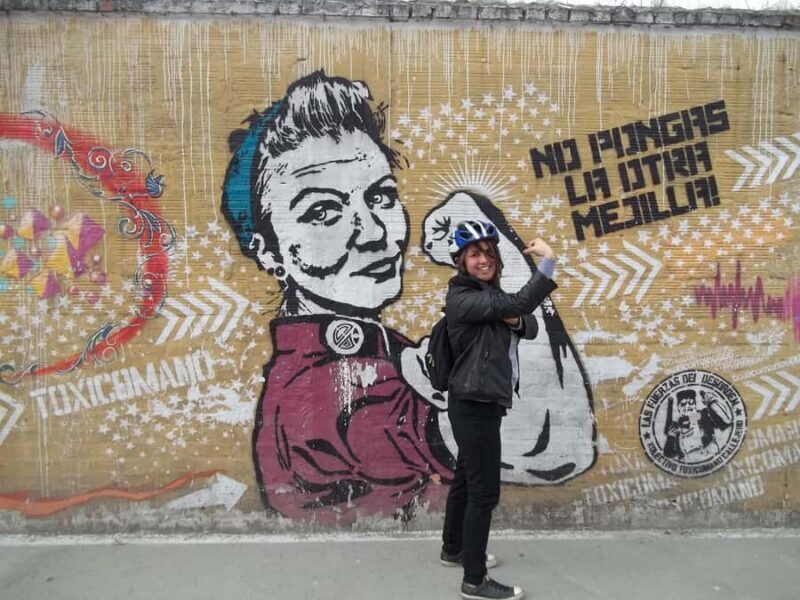
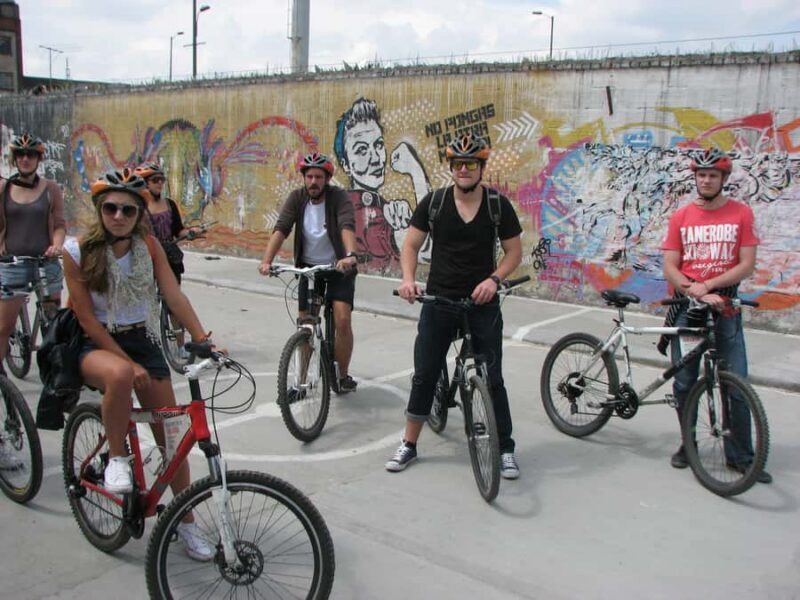
Street art is another strong thread. Bogotá’s murals give guides a way to discuss the city’s public spaces and the ideas behind the work. One guide, David, is an active street artist, and a route he led included a visit to his studio. That is a particularly personal addition, but it is not something to assume will be included every time.
Guides bring different strengths. Mike has been praised for combining history with personal anecdotes; Daniel has led rides focused on Colombian society and the city’s past and future; Lina has been noted for her friendly, energetic approach. These names give you a sense of the team, not a guarantee of who will lead your departure. The guide assigned to your tour may differ.
With a bilingual guide speaking English or Spanish, you can follow the explanations in either language. Good guiding matters here because the ride passes through a range of places quickly. A short stop can be more meaningful when someone explains how a mural, neighborhood or landmark fits into the wider story of Bogotá.
Tejo, Colombia’s national sport, appears among the tour’s highlights. If it is part of your route, it offers a playful change of pace from looking at buildings and listening to history. The exact schedule can shift, so consider it a possible activity rather than a guaranteed stop.
Other surprises can include street snacks, local coffee or an extra stop connected to the guide’s interests. Such additions help explain why the ride can feel different from a standard list of monuments. You are moving through a living city, and the guide’s knowledge and local connections shape what you notice.
That variety is appealing, but it also means the tour is not a tightly scripted sightseeing circuit. If your priority is a particular site, check whether it is included on your chosen departure. If you are happy to follow the route as it unfolds, the changing mix is part of the appeal.
More Great Tours Nearby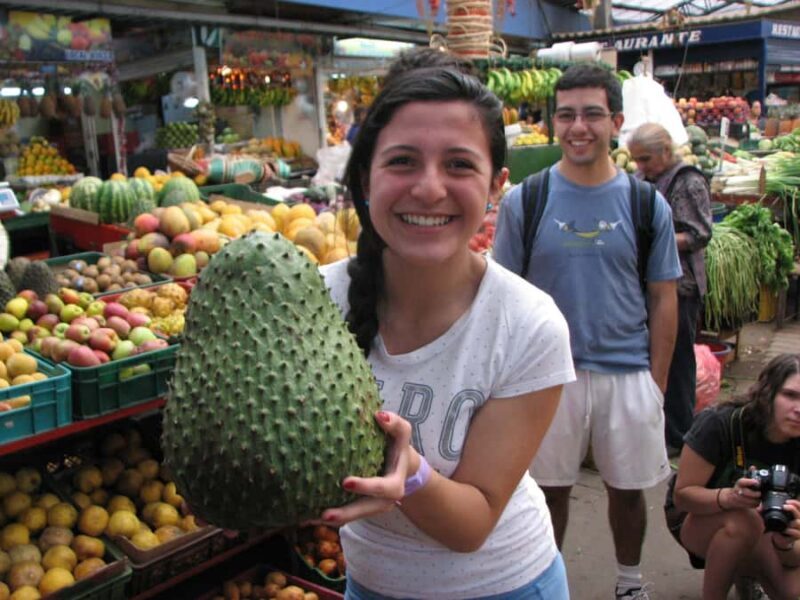
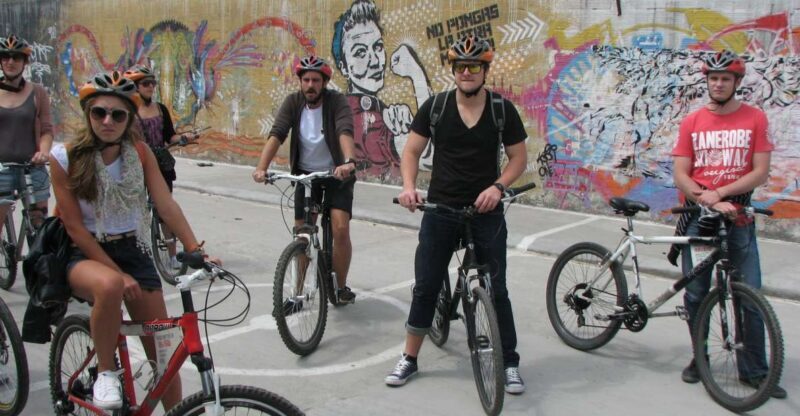
The terrain is mostly flat, and the bikes are described as mountain bikes with plenty of gears. There are regular stops, so the pace is broken up rather than being a long, uninterrupted ride. Still, the tour lasts four and a half hours and covers an urban route, so expect a meaningful amount of time in the saddle.
Traffic is the main practical consideration. You’ll ride on city streets, and the group needs to stay alert and follow its guides. Tour staff may include someone focused on safety and bike support, as well as the person leading the commentary. Riders have praised the extra attention, including help with traffic, bike security during stops and mechanical issues.
That support is reassuring, but it does not remove the need to be comfortable cycling around other road users. One rider noted that Bogotá’s cycling style can feel assertive and less orderly than expected. You do not need to be a serious cyclist, but you should feel steady on a bike and able to pay attention in traffic.
Sunday can be a pleasant day to ride because some roads may be closed to cars, making parts of the route more relaxed. This depends on the day and the city’s arrangements, so don’t count on empty streets. Pack weather-appropriate clothing as well: the tour goes ahead rain or shine. One ride continued through heavy rain, and ponchos helped, but wet conditions still made for a soggy few hours.
At $19 per person, this is a strong-value way to cover a lot of ground with a guide. You get a bicycle, helmet and bilingual guide, plus a route that combines cycling with stops for fruit, coffee, art and city history. On a short visit, that mix can be more useful than paying separately for transport between several neighborhoods and arranging each stop yourself.
The price does not include insurance. Factor that into your decision, especially because this is a city ride rather than a protected path from start to finish. The tour operator is Bogotá Bike Tours, and the meeting point is Carrera 3 No. 12-42 in La Candelaria.
Plan on 270 minutes, or four and a half hours, and check the available start times before booking. The activity offers free cancellation up to 24 hours in advance and a reserve-now, pay-later option. It also advertises skip-the-ticket-line access, though the main value here is the guided ride rather than entry to a single attraction.
I’d recommend the tour if you want an active first look at Bogotá and are comfortable riding in city traffic. It suits curious visitors who like to learn as they go, sample local food and see parts of town beyond the historic center. It can also make good use of a short stay, giving you a broad overview in a single morning or afternoon.
It is not suitable for wheelchair users or people with mobility impairments. It may also be a poor fit if you dislike cycling near traffic, need a fixed itinerary or want to spend a long time inside one museum or landmark. The route moves on, and the stops are varied rather than deeply focused on one subject.
If you are unsure about your cycling confidence, be honest with yourself before booking. Flat terrain helps, but it does not make the ride traffic-free. For a confident city cyclist who wants a lively, affordable introduction to Bogotá, the combination of market, coffee, art and local stories is hard to match at this price.
“Mike was a terrific guide, he was so knowledgeable and I loved learning about the history of Colombia from him. The day was well worth the money, w…”
The tour lasts 270 minutes, or four and a half hours.
The listed price is $19 per person.
Meet at Carrera 3 No. 12-42 in La Candelaria, Bogotá.
A bicycle, a helmet and a bilingual tour guide are included.
No. Insurance is not included.
The live guide speaks Spanish and English.
No. The route may change with the day, weather and special events in the city.
Bring clothing suited to the weather. The tour operates rain or shine.
The terrain is mostly flat and there are frequent stops, but it is an urban ride with traffic and a decent amount of exercise.
No. It is not suitable for wheelchair users or people with mobility impairments.
You can check availability for your dates here: