Physical Address
304 North Cardinal St.
Dorchester Center, MA 02124
Physical Address
304 North Cardinal St.
Dorchester Center, MA 02124

Meet Sumatran elephants at Bali Zoo through mahout-led feeding, mud bathing and river time, with lunch, zoo entry and optional orangutan breakfast.
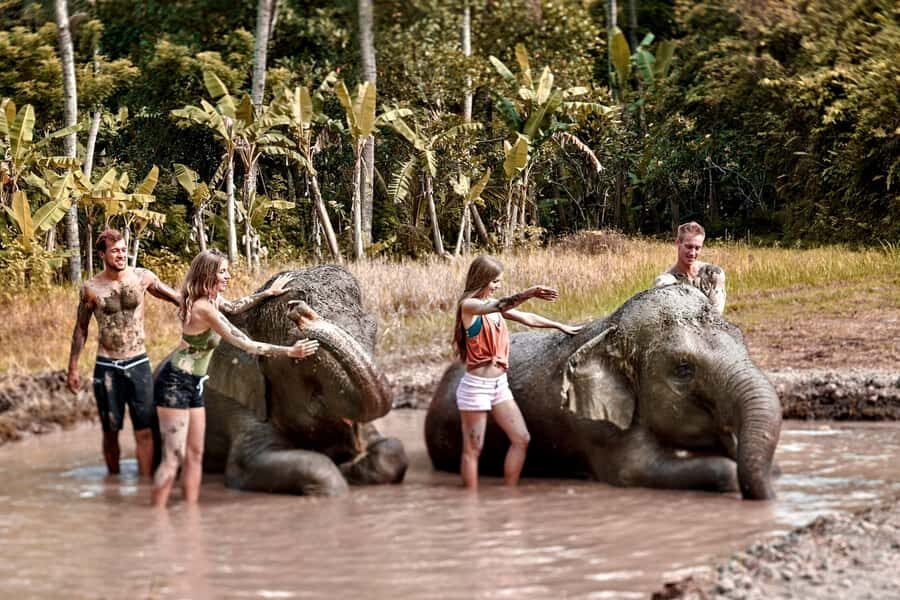
At Bali Zoo’s elephant program, the elephants set the pace. Mahouts explain their behavior and care, while you watch them feed, bathe in mud and move through river areas. Close contact is allowed only with staff approval, and an elephant can simply choose not to take part.
I like two things in particular: the focus on natural, elephant-led behavior makes the encounter feel more thoughtful than a staged photo stop, and the mahouts share practical details about daily care as you go. The day also includes lunch and zoo entry, so you have time to see more than the elephant area.
The main consideration is that this is still a close-contact animal experience at a zoo, not a wild encounter. The program’s rules are designed to protect the elephants, but you should expect other people nearby, wet and muddy conditions, and limited control over how much an elephant chooses to interact.
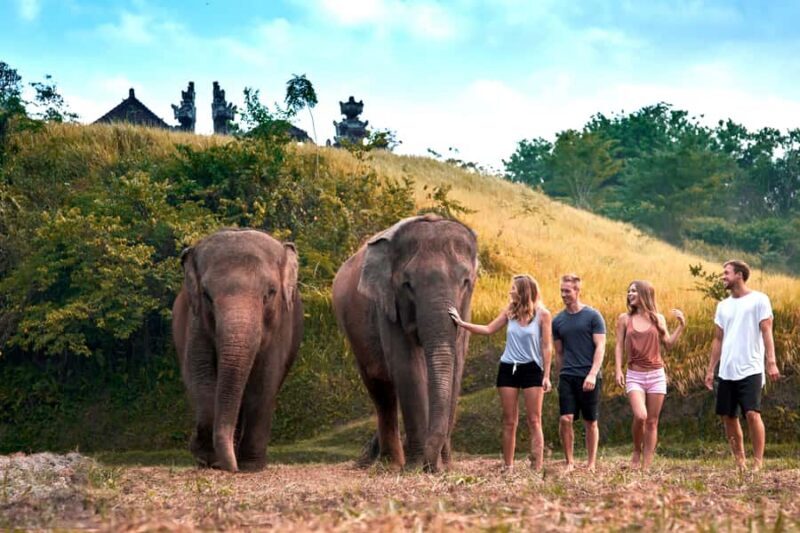
The experience begins at Bali Zoo, in the Kampung Sumatra area. If you book a transfer, pickup is scheduled for 6:30 a.m. in Kuta, Seminyak, Canggu, Nusa Dua, Tanjung Benoa and Jimbaran, and 7:00 a.m. in Ubud and Sanur. Transfers depend on the option you select; if you are staying elsewhere, extra charges may apply.
A drive across Bali can take time, so a pickup is useful if you would rather not arrange an early taxi or navigate to the zoo yourself. Transport is also a notable part of the day’s value: the experience runs about seven hours, and the pickup and return ride can save you planning and bargaining. If you prefer to make your own way, the meeting point is the zoo’s main entrance on Jl. Raya Singapadu.
At Kampung Sumatra, you begin with a light refreshment before an English-speaking mahout introduces the program. The briefing matters. You’ll hear how elephants communicate and behave, what their daily care involves, and why staff set limits on close contact.
Follow those instructions closely. The experience is described as supervised, with mahouts deciding when visitors can approach. You are not to chase, force or control an elephant, and the animal can decline an activity. That means the encounter may not unfold like a fixed performance, which is a good sign for welfare, but also something to keep in mind if you are booking with one specific photo or interaction in mind.
You can check availability for your dates here: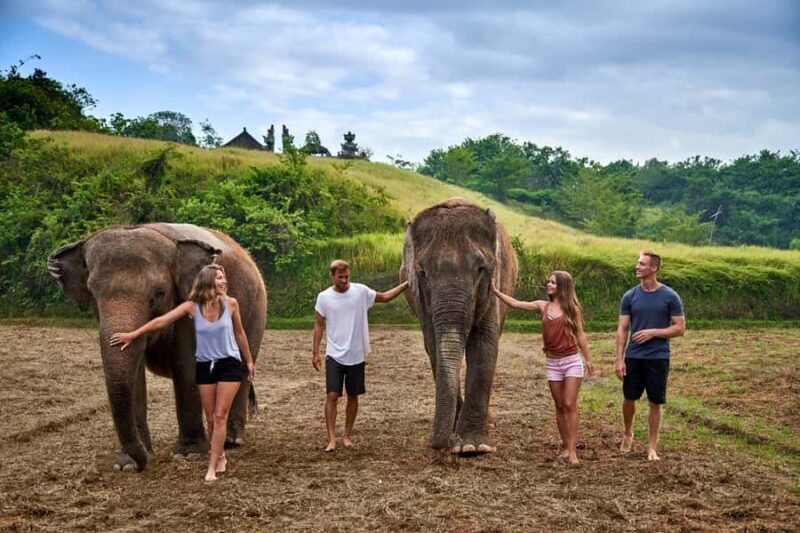
The elephant team is a major part of the experience. The named staff members vary, but mahouts such as Purna, Nicki and Nike Hero have led groups. Their role is not simply to direct people from one activity to the next: they explain the elephants’ behavior and care, and help keep contact calm and controlled.
You’ll learn why elephants use mud. It can help them regulate body temperature and protect their skin, so a mud bath is not just an amusing activity for people to join. The keepers also share details about individual elephants, such as their ages and backgrounds, when available.
This is where the program’s educational side earns its place. You are not only getting close to a large animal. You are being asked to notice what the elephant is doing and why, while following the mahout’s lead. If the elephant is not interested in interacting, you observe instead.
The program is presented as welfare-focused, but it is reasonable to ask questions and pay attention to how the animals are handled. The rules described here give elephants the choice to take part and limit visitor control. That’s useful context when comparing animal experiences in Bali, where the word ethical can mean different things to different operators.
If you prefer having a local expert, these guided Bali experiences could work well
The hands-on portion can include feeding, mud bathing, brushing and time around the river. Food for the feeding is included. The precise sequence and level of contact depend on the elephants and the mahouts, so think of these as possible parts of the session rather than a checklist the animals must complete.
During the mud activity, you may be invited to help apply mud and later scrub an elephant with brushes. An elephant might lean in for more brushing, or might move on. You are there to follow its cues under supervision, not to direct the encounter.
The river area gives the session a lively change of scene. Elephants may splash or spray water with their trunks, and you can watch their natural behavior at close range. Bring swimwear, sandals and a change of clothes. You should also expect to get wet and muddy, and sunscreen is on the recommended packing list.
A towel is included, and showers have been described as clean, but pack a change of clothes all the same. Sandals are more practical than shoes you need to keep spotless. If you are bringing a phone or camera, follow the staff’s instructions about when it is safe to take pictures.
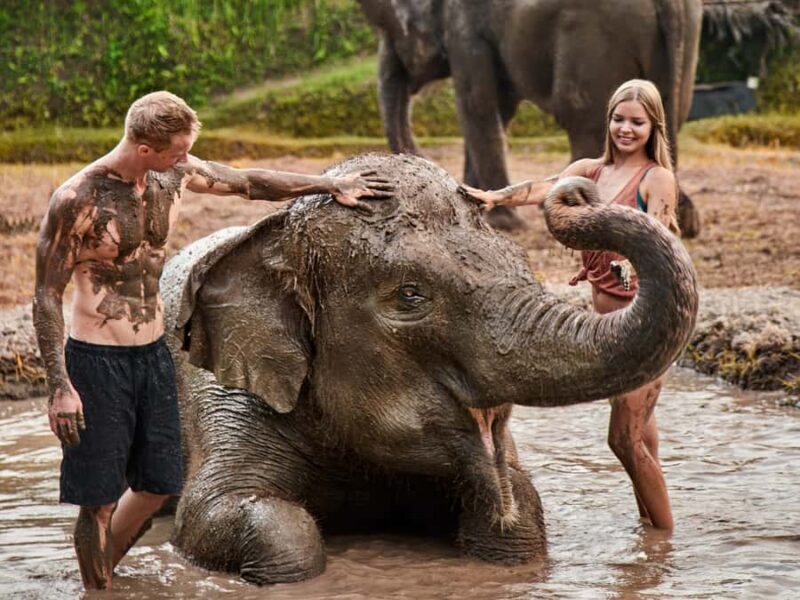
The clearest welfare safeguards in this program are the rules around consent and supervision: mahouts guide all interactions, activities are adjusted to the elephant’s comfort, and elephants are not forced to participate. One participant also noted that Bali Zoo had stopped elephant rides and offered on-foot experiences instead. Those details help explain the format, though no single visit can answer every question about animal welfare.
For you, the practical difference is that the day is less predictable than a ride or a staged show. An elephant may spend more time moving through its environment than standing beside a group. That is part of the point. You get to observe the animal’s choices rather than treat it as a prop.
The experience is described as suitable for adults and children aged 12 and up, with a minimum height of 120 centimeters. Children who meet the height requirement pay the adult price. Pregnant people and people with mobility impairments are listed as unsuitable for this activity. Parents remain responsible for children who stay at the restaurant, as Bali Zoo does not provide babysitting.
After the elephant session, you have time to clean up and eat lunch. Lunch is included, as are welcome drinks and snacks. The meal adds value to a full-day outing, though food options may vary: one vegetarian diner found the buffet choice limited, so if you have dietary needs, it is sensible to check in advance rather than assume there will be many alternatives.
For groups larger than 20, lunch is served as a buffet alternative. The zoo visit is included, giving you a chance to see other animals and conservation programs after the main activity. Bali Zoo is described as relatively small and easy to explore, with a range of animals and planted enclosures, though your time and energy after the elephant session may shape how much you see.
Allow time to find your way between activities. The zoo’s entrance slopes have been described as slippery when wet, so take care, especially in sandals. One practical snag to watch for is signage: directions between the breakfast area and the elephant program may not always be obvious. Ask staff where to go next before leaving one activity rather than assuming the route will be clearly marked.
More Great Tours Nearby
The optional breakfast is a separate, guided experience inside the zoo, conducted under staff supervision and wildlife-viewing rules. It adds a meal and an opportunity to see orangutans at close range. If that encounter is important to you, the upgrade can turn an already full day into a more varied wildlife outing.
Breakfast is often praised for its range of food, and it can be a good way to start the visit. But it is an add-on, not part of every booking, so check that your chosen option includes it. The orangutans are not there to perform on demand; follow staff instructions and treat the encounter as observation, not a guarantee of interaction.
If you choose both breakfast and the elephant activity, confirm where to go after breakfast. The transition has caused confusion for some people, and asking a staff member for directions can save a frustrating walk around the grounds.
At $89 per person, the experience is not a small add-on, but it bundles several things: zoo admission, mahout guidance, feeding food, lunch, welcome refreshments, a towel and insurance. Return transfers and orangutan breakfast depend on the option you select. If you want the elephant session and plan to spend time at the zoo anyway, the package offers more value than a brief encounter on its own.
Transport can be worth paying extra for, particularly if you are staying in one of the listed pickup areas. The early start and seven-hour duration make a return ride convenient, and transport has earned strong marks for quality. Compare the final price with and without transfers before booking; the basic price does not necessarily include the ride.
Budget separately for photos. Staff photographers may capture moments during the session, but the images are not included in the tour price. One person reported being quoted 1.5 million Indonesian rupiah, about £67, for a photo package, so bring your own camera or ask whether staff can take a picture on your phone. Buying photos is entirely optional.
The activity has a 4.7 rating from 2,019 reviews, and the praise most consistently centers on the mahouts, the close elephant encounter, transport and food. The balanced picture is that groups can feel busy, the photo packages may be costly, and some logistics around finding the next activity could be clearer. The elephant experience itself is designed not to rush the animals, so a group setting does not necessarily mean every moment is tightly choreographed.
I’d consider booking if you want to learn about elephant care and are comfortable with a supervised zoo encounter that includes mud, water and the possibility that an elephant may choose not to interact. It suits animal-minded adults and families with children who meet the age and height requirements, especially if you value the mahout’s explanations as much as the close-up moments.
Think twice if you want a quiet, private meeting, guaranteed contact, or a completely dry day. Before paying, check whether your option includes hotel transfers and orangutan breakfast, and ask about food choices if you have dietary needs. Pack sandals, swimwear, sunscreen and a change of clothes, and plan to take your own photos.
“An absolutely amazing experience. Although there were quite a few people on the experience it never felt rushed or overcrowded. Everything was done…”
The experience lasts about seven hours. The time includes the elephant program, lunch and access to explore Bali Zoo.
The meeting point is Bali Zoo’s main entrance at Jl. Raya Singapadu, Singapadu, Sukawati, Gianyar, Bali 80582.
Pickup is optional and depends on the option you book. Listed pickup areas include Kuta, Seminyak, Canggu, Nusa Dua, Tanjung Benoa, Jimbaran, Sanur and Ubud.
Pickup is scheduled for 6:30 a.m. in Kuta, Seminyak, Canggu, Nusa Dua, Tanjung Benoa and Jimbaran. For Ubud and Sanur, pickup is scheduled for 7:00 a.m.
Bring a change of clothes, sandals, sunscreen and swimwear. You may get wet or muddy during the elephant activities.
The activity is suitable for adults and children aged 12 and older. Children must also be at least 120 centimeters tall, and those who meet the height requirement are charged the adult price.
No. Activities depend on each elephant’s willingness and condition. Mahouts supervise all interactions, and elephants are not forced to participate.
It is an optional upgrade, so it is included only with the relevant booking option. The breakfast is guided and conducted under staff supervision.
No. Photographer images cost extra. You can bring your own camera or ask staff to take photos on your phone.
You can check availability for your dates here: