Physical Address
304 North Cardinal St.
Dorchester Center, MA 02124
Physical Address
304 North Cardinal St.
Dorchester Center, MA 02124

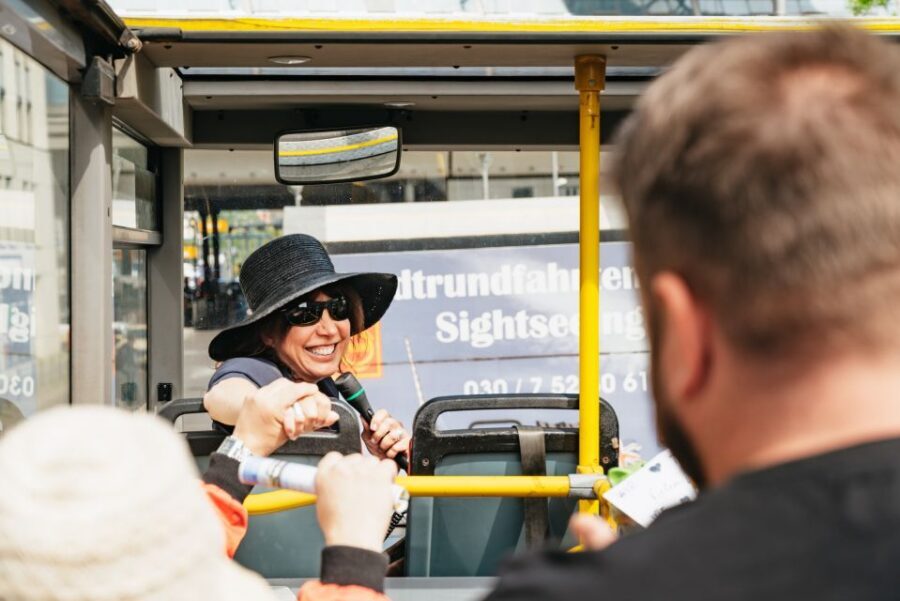
See Berlin’s major sights by hop-on hop-off bus, with live German and English commentary, practical stops and a full day to explore.
Berlin’s story is written across its streets: imperial avenues, Nazi-era buildings, Cold War divides and a capital still reshaping itself. This hop-on hop-off route gives you a moving introduction to that story, with live commentary as you cross the city and the option to get off at major sights.
I like two things in particular: local guides tell history in their own words, often adding personal stories and humor, and the route connects far-flung landmarks without making you solve Berlin’s transport map on day one. One consideration: commentary is bilingual, so an English-speaking visitor may hear parts in German, and route diversions can affect timing.
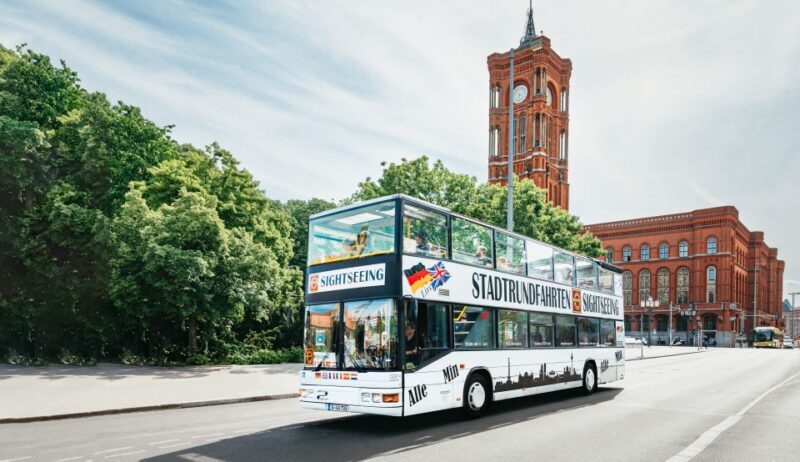
Berlin is not a city where one grand monument explains everything. A few blocks can take you from a former Nazi office to a Cold War crossing, then into a shopping district or a broad parade avenue. A live guide can connect those pieces as they pass your window.
The strongest part of this tour is its human commentary. Guides switch between German and English, and many have made a point of adding humor, local knowledge and personal experience to the usual dates and names. Otti, Dimitri, Simon and Stephanie are among the guides praised for their delivery, but no particular guide is guaranteed. The quality can vary: one visitor found one guide much less informative than another.
That live format is more flexible than a recording. You can ask a question, and guides may offer ideas for museums or other places to visit. But bilingual commentary has a trade-off. If the guide alternates between languages, English speakers may miss some details or find that the English explanation moves on while the German version continues. If you want a steady, English-only account, this may not be the right fit.
Looking for more options in Berlin? Here are some other experiences worth considering.
The route starts at Kurfürstendamm 231, in front of GALERIA, and also serves stops near KaDeWe, Lützowplatz and the Philharmonic. This opening stretch gives you a quick look at the city’s western shopping and cultural districts before the bus heads toward Potsdamer Platz.
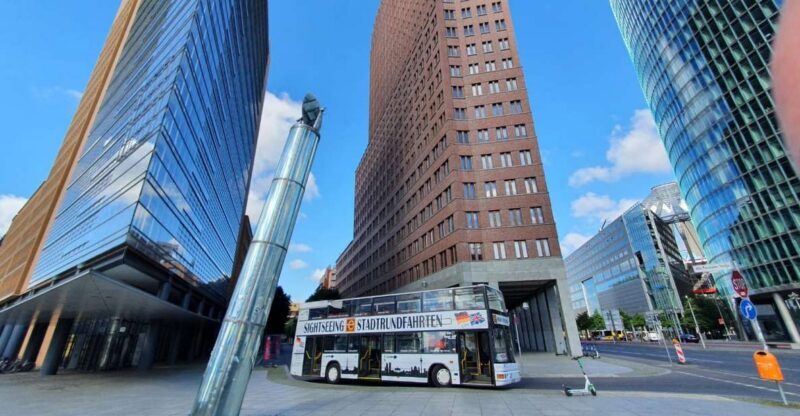
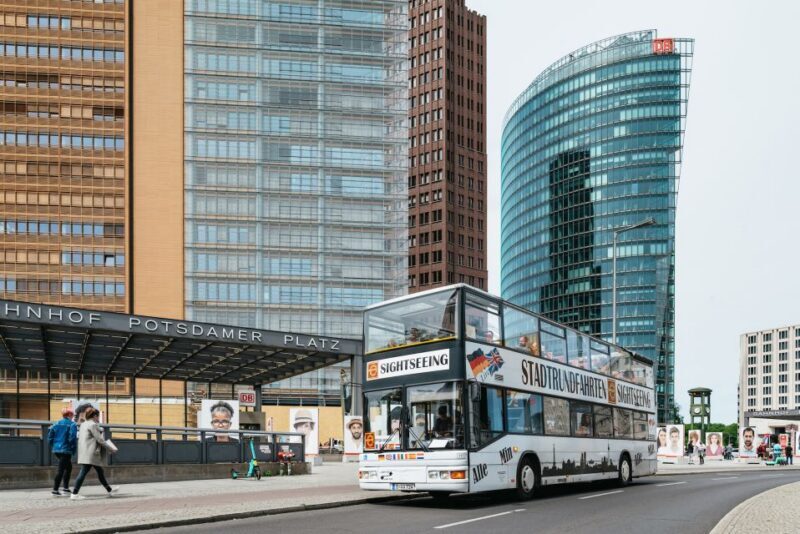
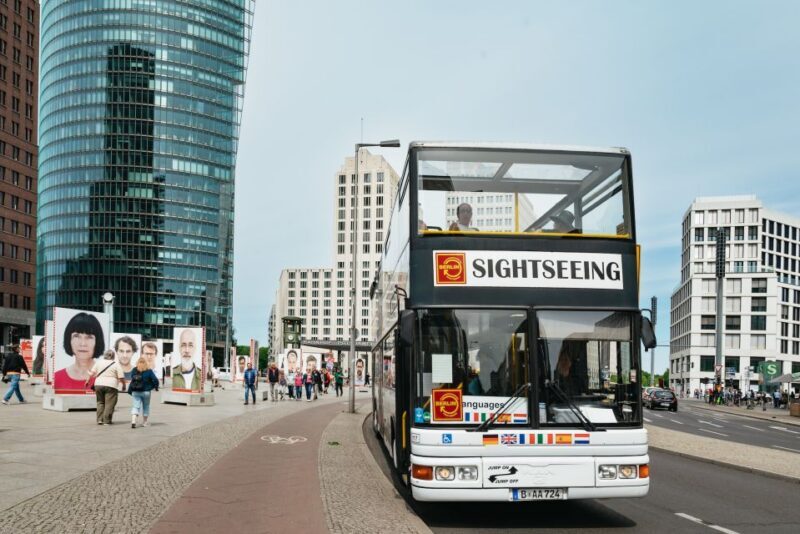
Potsdamer Platz is one of the most revealing places to see from the bus. Before the Second World War, it was a major public square. After the war, the Berlin Wall cut through this area, leaving it exposed and largely empty. Today, towers and busy streets fill the space. The contrast is hard to grasp from a history book, and the guide’s account helps you picture what stood here during the Wall years.
The stop is listed at the Kollhoff Tower, with another nearby at Linkstraße. You can get off to look around, or stay on and use the square as a first lesson in Berlin’s changing shape. Legoland Discovery Center is also here, a possible detour if you are travelling with children.
From Potsdamer Platz, the route moves toward Niederkirchnerstraße and the Topography of Terror. This outdoor and indoor exhibition deals with the Nazi regime and the suffering it inflicted, including the persecution of Jewish people. Nearby are the Berlin parliament, Martin-Gropius-Bau, and the Ministry of Finance, once the Nazi Ministry of Aviation.
This is a compact area with a heavy concentration of history. Getting off gives you time to visit the Topography of Terror rather than trying to absorb its subject from a bus seat. Checkpoint Charlie comes next, with a stop by the Wall Museum. The crossing became one of the best-known Cold War checkpoints, but the nearby streets are also useful for understanding how the division of Berlin shaped ordinary movement through the city.
These stops are close enough to combine on foot if you want a focused history visit, though the tour’s one-day ticket also lets you split them up. I would not try to visit every museum along the route in one day. The bus is most useful as a link between a few chosen stops, not as a race to tick them all off.
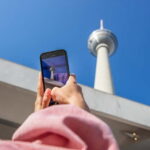
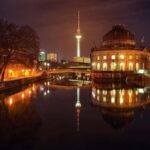
The bus continues to Gendarmenmarkt, one of Berlin’s grand central squares, then toward Alexanderplatz and the TV Tower. The Alexanderplatz stop is near the Neptune Fountain, between the Red City Hall and the fountain. The square gives you a very different sense of the city from the carefully composed avenues around Gendarmenmarkt: it is a major transport and shopping area, with the TV Tower marking the skyline.
SEA LIFE Berlin is among the attractions along this section. If you want to visit, check the time you have before hopping off; the bus service ends at about 5 p.m., so a long indoor visit can use up much of the day’s flexibility.
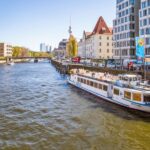
A further stop on Karl-Liebknecht-Straße, near the Radisson Hotel, is the transfer point for a boat trip. The boat is not included in this bus ticket, but the stop gives you the option to add a river perspective. From nearby streets, you can also see the golden dome of the New Synagogue, and the Hackesche Höfe courtyards are a few minutes away.
More Great Tours Nearby
Museum Island gathers several major museums in one central area, beside the River Spree. The route serves the Museumsinsel and Humboldt Forum area, then continues along Unter den Linden, Berlin’s famous tree-lined boulevard. Humboldt University, Bebelplatz and the Bud Spencer Museum are among the landmarks on or near this stretch.
Unter den Linden is a lesson in layers: ceremonial buildings, cultural institutions and modern city life share the same long avenue. The route also passes Friedrichstraße and Madame Tussauds Berlin. Those stops make the bus useful for more than history, especially if your group wants to mix museums and city sights with a lighter attraction.
There is an important route caveat here. A tunnel structure under Unter den Linden is considered at risk from heavy vehicles, so some buses may bypass part of the street and be unable to serve stops 11 to 13. The detour can pass Hackescher Markt, the New Synagogue and Friedrichstadt-Palast instead. The tour provider also notes that bridge restrictions can force longer routes. The stops themselves are not generally affected by those bridge restrictions, but delays are possible.
In practical terms, check with staff before planning your day around a particular stop. The sights remain, but a bus route through a busy capital is not immune to construction and safety limits.
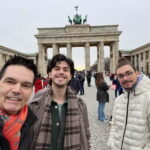
The bus heads from Unter den Linden toward the Brandenburg Gate, passing the embassies of the United Kingdom, Russia, France and the United States. The Holocaust Memorial lies nearby, and the tour stop is at Platz des 18. März. Give yourself time to walk through the memorial if you get off. It is a place for quiet attention, not a quick photo stop.
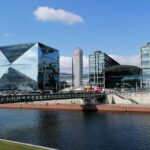
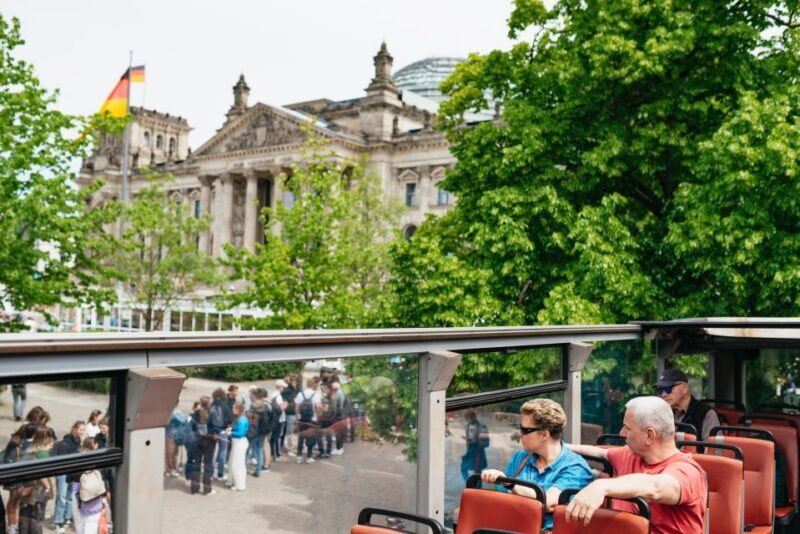
From there, the route passes the Reichstag and the government district, then reaches Berlin Hauptbahnhof. This stretch puts the city’s political centre in view: the Reichstag, the German Chancellery and the broad spaces around the government buildings. The main station stop is at the Washingtonplatz exit, a handy place to begin or end your ride if you are staying nearby.
The tour description points out a special view of Berlin’s “Fujiyama” from this area. The nickname is a playful local reference, not a reason to expect a mountain. The larger point is that the government district combines formal architecture with a city that still has room for oddities and reinvention.
After the government district, the route passes the Haus der Kulturen der Welt and enters the Tiergarten, Berlin’s large central park, described as bigger than New York’s Central Park. The bus then reaches Bellevue Palace, the official residence of Germany’s president. From here, you can also see the Victory Column and its golden Victoria statue.
The final stretch passes Bikini Berlin and Zoologischer Garten station before returning to Kurfürstendamm. This makes the western end of the route convenient for KaDeWe and the surrounding shopping district. If you ride the full circuit first, you will get a broad sense of how the western centre, historic core and government quarter fit together.
The Haus der Kulturen der Welt stop is marked out of order, so do not build a tight plan around getting off there. The route also passes major sights that may take longer to visit than the bus timetable allows. Choose a few stops, then use local transit or your feet for the rest of the day.
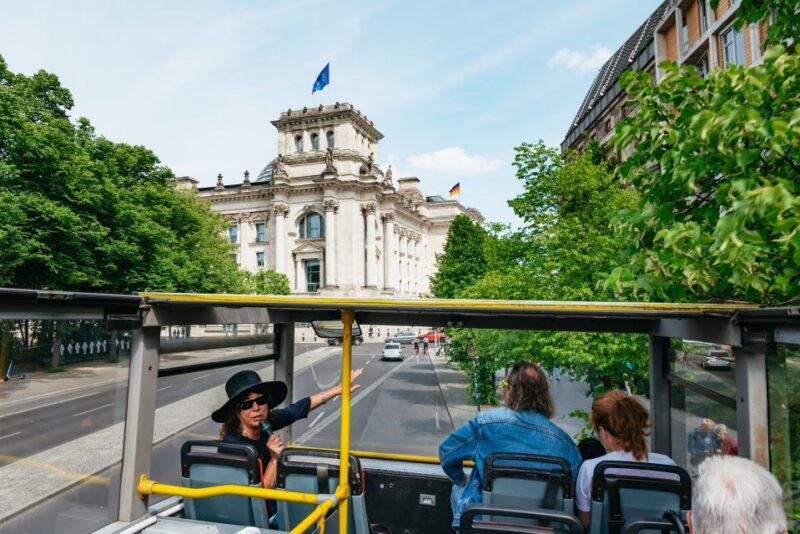
At $22, this is a reasonably priced way to see a wide spread of Berlin, especially if you plan to ride the full circuit and get off at several places. The value comes less from the bus seat alone than from the combination of transport and live context. If you use it only as a ride around town, it is still a useful orientation tour; if you hop off often, the day’s schedule becomes more important.
Buses are scheduled at least every 15 to 30 minutes in the main season, and every 30 to 45 minutes from November through March, from approximately 9:30 a.m. to 5 p.m. Start early if you want time to explore. One visitor noted that the final bus was old and unpleasant, while others found their buses clean and comfortable. Vehicle condition can vary, so I would not assume every bus will feel identical.
The tour is wheelchair accessible. Food and drinks are not included, and large bags and luggage are not allowed. Bring a passport or ID card; a copy is accepted. Smoking is prohibited.
During the Christmas market period, the Alexanderplatz stop at Neptune Fountain may move to Karl-Liebknecht-Straße 5. The Gendarmenmarkt stop also shifts to Französische Straße and Markgrafenstraße for security reasons. Confirm the day’s stop positions if you are visiting in December.
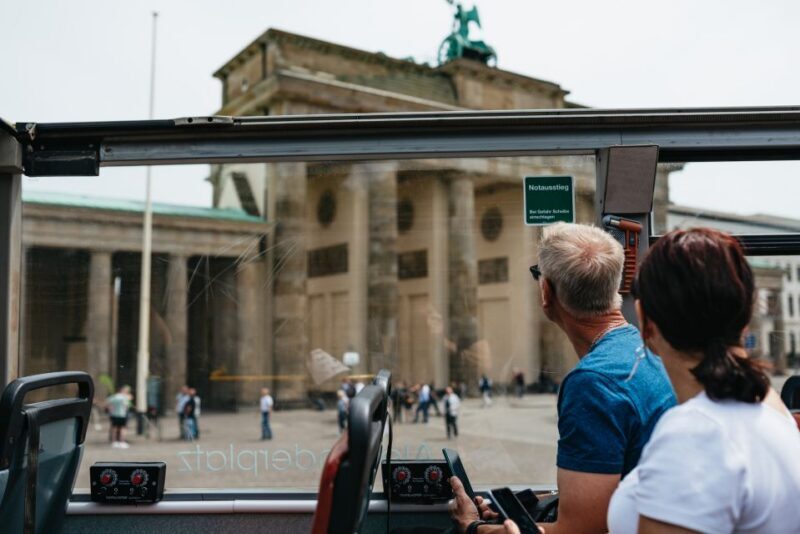
I’d choose this tour if you want a fast orientation to Berlin, appreciate a live guide, or have limited time and want to connect distant sights without planning every transfer. It is also a good first-day option: ride the full route, note the places you want to revisit, then return to your favourites on foot or by public transport.
It is less suited to anyone who wants uninterrupted English commentary, a fixed route with no detours, or long visits at every museum. The guide’s language switches and bus restrictions are real considerations, not fine print to ignore.
For $22, the route and live commentary make a solid introduction to a complex city. Book it for the overview and the stories, then leave time to explore the places that deserve more than a glance through the window.
“Really great way to explore the city during a quick break -Martin our guide was excellent in explaining things switching between German and English…”
The ticket is valid for one day.
You can start at any stop on the route, including Kurfürstendamm, KaDeWe, Potsdamer Platz, Checkpoint Charlie, Alexanderplatz and Berlin Hauptbahnhof.
The live commentary is in German and English. The driver languages are also listed as German and English.
Buses run at least every 15 to 30 minutes, roughly from 9:30 a.m. to 5 p.m. From November through March, the stated interval is 30 to 45 minutes.
No. The bus route has a stop where you can transfer to a boat, but the boat trip is not included in the bus ticket.
No. Food and drinks are not included.
Large bags and luggage are not allowed. Smoking is also prohibited.
Bridge restrictions and a tunnel structure on Unter den Linden can cause detours or delays. Some buses may be unable to reach stops 11 to 13, and the route may pass places such as Hackescher Markt, the New Synagogue and Friedrichstadt-Palast instead.
You can check availability for your dates here: