Physical Address
304 North Cardinal St.
Dorchester Center, MA 02124
Physical Address
304 North Cardinal St.
Dorchester Center, MA 02124


Compare Stansted to London bus transfer costs, stops, comfort, journey times, and the traffic risks to plan your arrival with confidence.
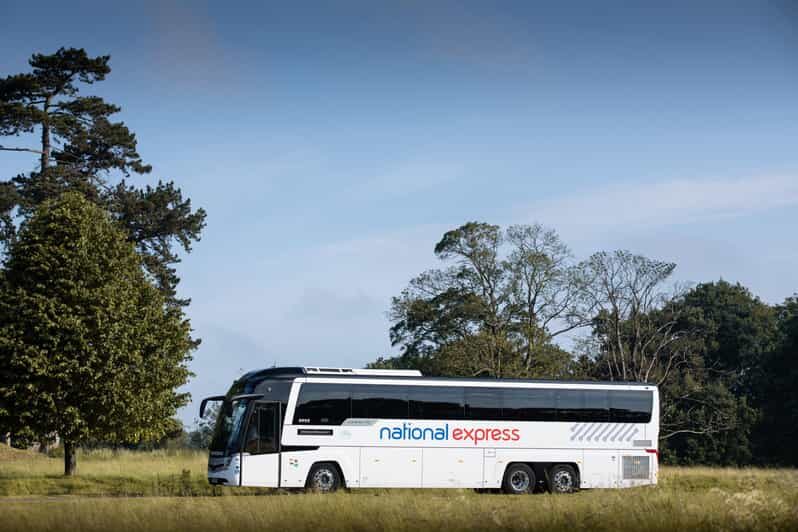
Stansted sits well outside central London, so this coach transfer can save you the bother of arranging several connections after a flight. It runs between the airport and London, with central stops including Victoria Coach Station and, on services that call there, places such as Liverpool Street and Baker Street.
I like two things in particular: the ride is direct enough to keep luggage handling simple, and the coaches offer useful comforts such as toilets, power sockets, and reclining seats. At about $9 per person, the fare can be a strong deal compared with a taxi, especially if you are travelling alone or as a pair.
The trade-off is time. The advertised journey can range from 45 minutes to two hours, but London traffic can push it longer, and some ticket types may not guarantee a seat on a particular departure. Leave a generous margin if you are heading to the airport.
After landing, the first task is to find the correct bus stop. The coach service leaves from the airport, and passengers often find the directions clear. Still, Stansted’s bays can be confusing if you are tired or in a hurry. One passenger joked that finding Line 06 was not as simple as looking between bays 05 and 07. If the signs do not make sense, ask National Express staff nearby. Several passengers found them helpful.
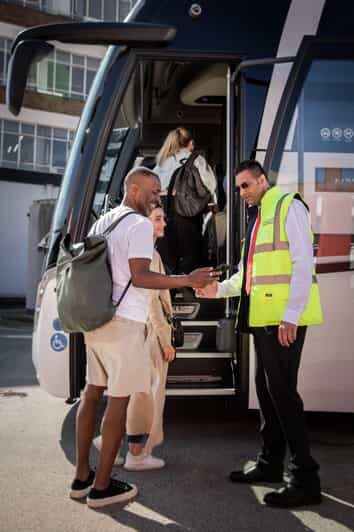
Have your voucher ready on your phone. Instructions say you can board using the GetYourGuide voucher, and passengers report showing the online ticket directly to the driver without exchanging it for a paper ticket. Keep the screen accessible while you are in the queue, particularly if you have luggage in hand.
Once aboard, the driver or staff can help you work out where to get off. Stops are displayed and called out on some services, which is useful if London is new to you or you are watching the city through the window rather than following a map. One passenger praised driver Dave for sharing small bits of information about London, while another singled out Mr Hau for attentive service. Treat that as a welcome possibility, not a promised guided tour.
You might also be interested in these London experiences

This is transport first, not a sightseeing excursion. But the route offers a gradual introduction to London: from the airport, through outer and inner parts of the city, then toward your chosen central stop. Depending on the service, you may see a few city sights from your seat. One passenger recalls spotting Parliament on the way, though views will depend on the route, traffic, and where you sit.
The stops make this service useful for more than one kind of arrival. Golders Green can suit you if your plans are in that part of north London. Baker Street and Liverpool Street put you closer to different central areas, while Stratford serves another major destination. Victoria Coach Station is the endpoint for many services and a practical arrival point if you are staying nearby or connecting onward.
Do not assume every departure calls at every stop. Check the exact route and destination shown for the coach you plan to take. A service that passes through several stops may be convenient, but each call adds time, and the final leg can be slower than the airport-to-city estimate suggests.
The most valuable feature is not a view of London, but the chance to avoid changing vehicles with suitcases. You can settle in once and stay aboard until your stop. That is a real relief after a flight, especially if you are travelling with children, carrying more than a small bag, or arriving late.
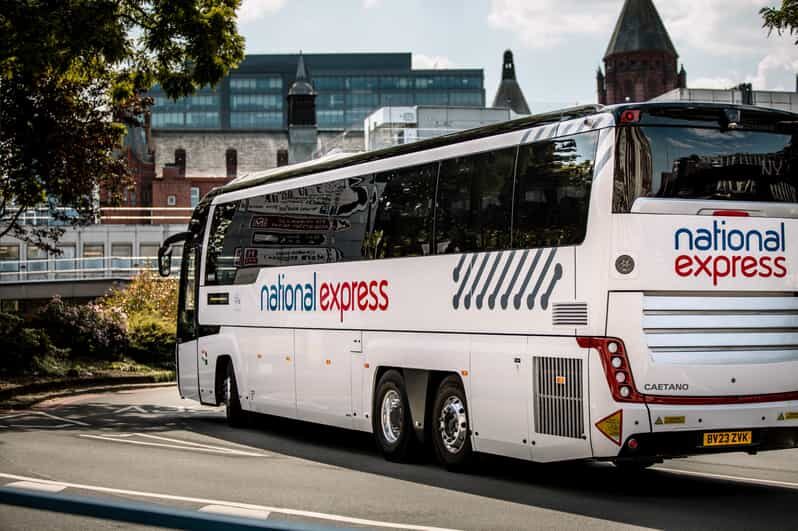
These are high-specification coaches, with reclining leather seats, headrests, seat-back tables, and ample legroom. The seats are one of the most consistently praised parts of the ride. After a cramped flight, a chance to stretch your legs and settle back can make the transfer feel like a proper breather rather than one more chore.
Air conditioning and onboard toilets are useful on a journey whose length can vary. Power sockets let you charge a phone, though it is sensible to start with some battery in case the socket on your seat is unavailable or not working. Wi-Fi is available on selected services, so do not plan around having a connection for the entire trip.
Comfort is personal. One passenger found the heating too warm, while another found the air conditioning too cold. Bring a light layer you can take off or put on, rather than expecting the cabin temperature to suit everyone. Luggage is included, with space for stowed bags and hand luggage, so you do not need to book a separate baggage transfer.
The stated duration is 45 minutes to two hours. That is a broad range, and it reflects the reality of travelling by road between Stansted and London: conditions vary, and central London traffic can slow the final stretch considerably. Several journeys took around an hour and a half; others exceeded two hours, with one reaching about two and a half.
The airport-to-city leg and the city-to-airport leg are not equally easy to plan. On the way into town, a delay may mean arriving later at your hotel. On the way to Stansted, the same delay could mean a missed flight. Build a generous buffer for the return trip, especially during rush hour. One passenger advises reaching the airport at least three hours before departure, and that is sensible if your coach journey starts in central London.
Late-night trips may be quicker when roads are quiet. A passenger travelling on an 11:50 p.m. coach reached Victoria in about an hour and 40 minutes. That is a helpful example, not a guarantee. Your best plan is to check the schedule, allow for traffic, and avoid booking the last possible coach that still gets you to your flight.
More Great Tours Nearby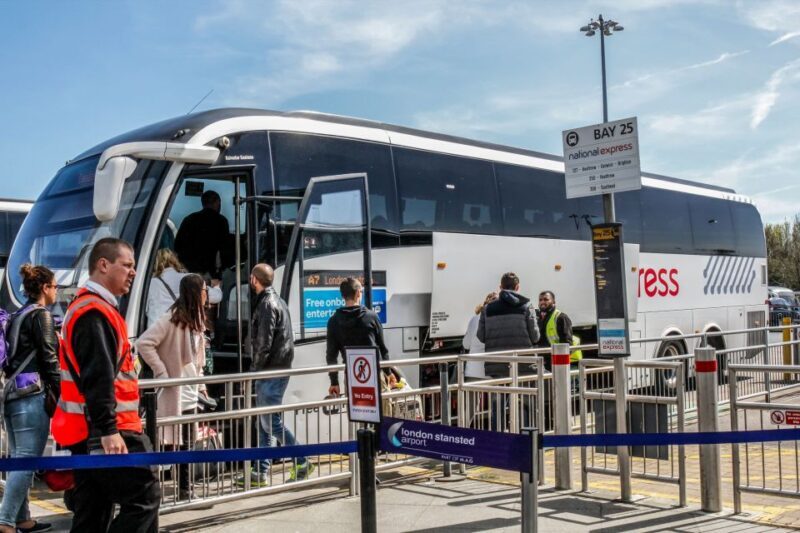
Some passengers were able to board an earlier coach or use a later service after a delayed flight. That flexibility can be a lifesaver when your plane lands late or you reach the stop ahead of schedule. But it is not safe to assume every ticket works this way. The precise conditions depend on the option you book.
In particular, some tickets may be open or standby rather than a guaranteed seat on a specific departure. A passenger with a standby ticket described being moved to another bus when the first one was full. That worked out, but a busy coach can mean a wait while passengers holding timed tickets board first.
For an arrival transfer, a short wait is usually manageable. For a ride to catch a flight, it is a bigger risk. Check whether your ticket is tied to a particular departure or gives you standby status, and allow enough time to take another coach if needed. If your flight is delayed, ask staff what your ticket permits rather than assuming you can simply board any service.
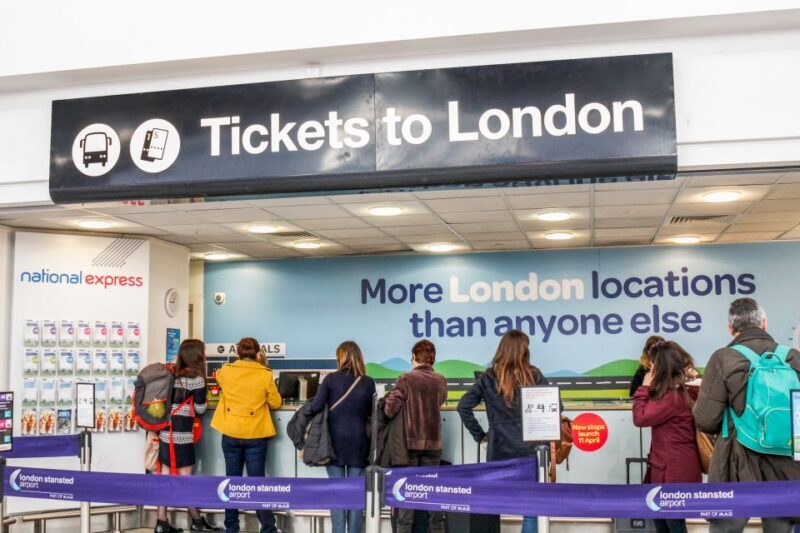
At around $9 per person, this is a budget-friendly way to cover the long distance between Stansted and central London. The coach includes luggage allowance and onboard facilities, and it takes you to a central stop without requiring you to arrange a taxi or manage a series of transfers. For solo travellers and couples, the price is particularly appealing.
The fare is not the whole calculation, though. A longer ride and multiple stops can make a direct coach less attractive if you are short on time. A train may be a better fit for someone who values speed over cost, while a taxi or ride-hail vehicle may suit a group with lots of bags, though that comes at a different price. The coach’s strength is its mix of low cost, luggage capacity, and direct service.
It can also be a useful backup during transport disruption. One passenger used it during a strike and was glad to have a way to reach the airport. That does not make any one service immune to disruption or road delays, but having a booked coach option can simplify a trip when other plans change.

I would consider this transfer if you want a reasonably priced ride, have luggage, and are comfortable allowing extra time. It is especially practical if one of the listed stops is close to your accommodation or onward plans. The frequent service and helpful staff can make it a straightforward start to a first London visit.
It is less suitable if you need a precise arrival time or have a tight connection. Road traffic is unpredictable, and standby tickets can add uncertainty at busy times. If punctuality is more important than price, compare the coach with the train and choose based on your schedule, not just the lowest fare.
For many people, the coach is a good first or last leg: simple, comfortable, and inexpensive, with the caveat that London roads set the pace. I would book it when the timetable leaves room for a delay, and choose another option when every minute counts.
“Smooth. Easy to find the bus stop at Stansted.”
The stated duration is 45 minutes to two hours. Traffic can make the trip longer; some journeys have taken more than two hours.
Stops listed include Golders Green, Baker Street, Liverpool Street, Stratford, and Victoria Coach Station. Check the specific service to confirm which stops it calls at.
Coaches have reclining leather seats, headrests, seat-back tables, legroom, air conditioning, toilets, and power sockets. Wi-Fi is available on selected services.
Yes. The ticket includes a generous luggage allowance for stowed bags and hand luggage.
Some passengers have been allowed onto an earlier or later coach, but this depends on the ticket conditions and available seats. Some options may be standby, so check the terms of your booking.
Yes, the activity is listed as wheelchair accessible.
You can check availability for your dates here: