Physical Address
304 North Cardinal St.
Dorchester Center, MA 02124
Physical Address
304 North Cardinal St.
Dorchester Center, MA 02124

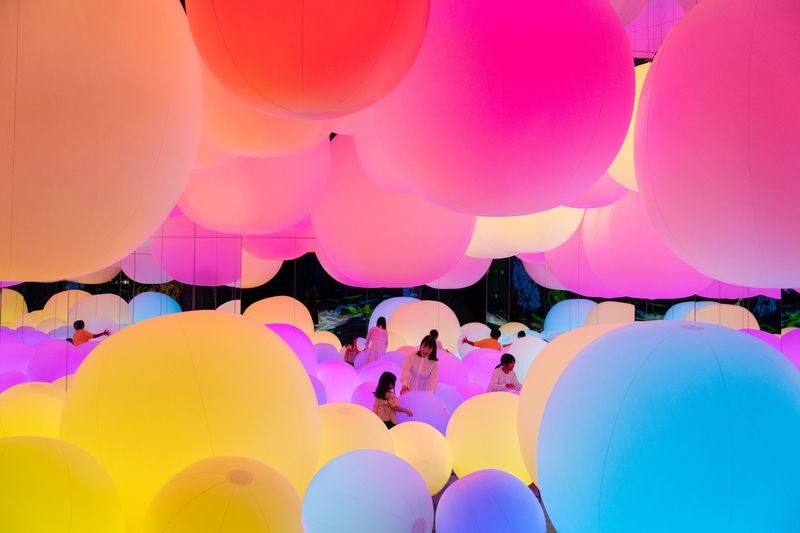
See your drawings swim, roll glowing balls, and play at teamLab Future Park Okinawa, a creative indoor stop for families in central Naha.
At teamLab Future Park Okinawa, a child’s drawing can become part of a giant digital aquarium. You color a sea creature, watch it swim across the screen, then move on to interactive art where your actions change the lights, sounds, and shared display.
I like two things here: the art asks you to take part, rather than just look, and the Sketch Factory lets you turn a drawing into a personal souvenir. The main caveat is scale. This is a compact attraction, not a sprawling teamLab exhibition, so set aside an hour or two rather than half a day.
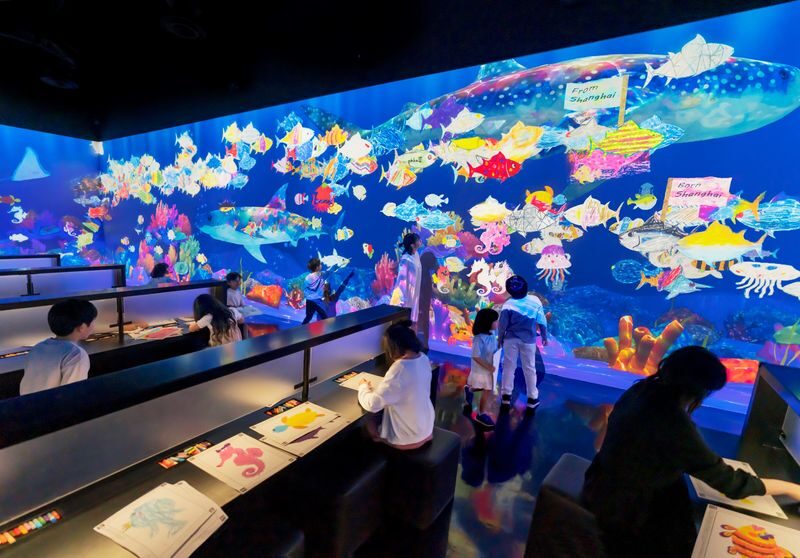
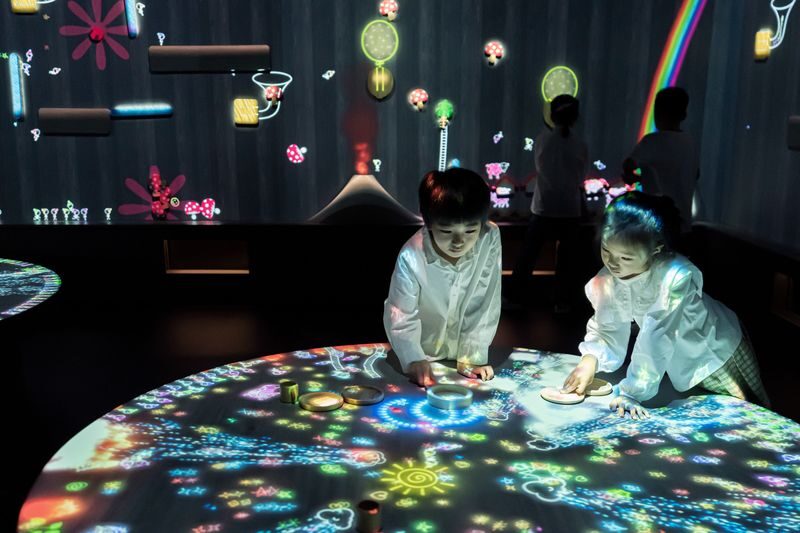
Future Park is built around co-creation: people make parts of the artwork, and the exhibition changes as they take part. That idea is easy to grasp even if you arrive with young children. Draw something, send it into the digital world, and watch it become one part of a larger scene.
The attraction’s appeal is less about a long checklist of exhibits than about the shift from looking to doing. You are not simply standing in front of a screen. You make a drawing, move your body, or roll a ball, then see the environment respond. For children, that can turn a museum-style visit into active play. For adults, it offers a low-pressure way to join in rather than supervise from the edges.
The same approach can make the experience feel personal. If your drawing appears among the digital creatures, it gives you a reason to look again and find it in the larger display. The Sketch Factory carries that idea beyond the screen by putting your artwork on a take-home item.
Looking for more options in Naha? Here are some other experiences worth considering.
Sketch Aquarium: Connected World is the clearest example of the park’s co-creation concept. You draw a sea creature, and the finished design appears to swim through a large projected aquarium. The pleasure is simple: your own work becomes part of the scene, instead of staying on a sheet of paper.
That makes the activity a good fit for families with children who like drawing, even if they are not especially confident artists. The point is participation, not producing a perfect picture. You can also take time to scan the display and spot the drawings that have entered the shared world.
The attraction is designed for adults as well as children, but younger visitors are likely to get the most out of making and finding their own creations. If your group prefers to watch rather than join in, the digital scene still gives you something to see, but the main idea is active involvement.
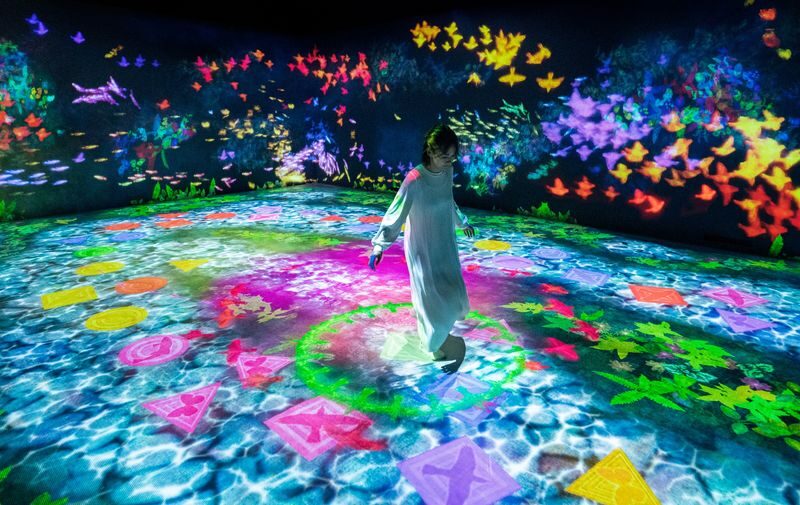
Light Ball Orchestra adds sound and changing color to the mix. Roll the balls and their movement affects the display, turning a simple action into a small experiment in cause and effect. It is easy to understand without a long explanation, which matters when you are visiting with children who want to get started quickly.
Other activities bring movement into the visit, including a slide and hopscotch. These are useful counterpoints to the drawing activities: children can switch from making art to burning off energy, while adults can join in or keep an eye on the play. The slide is a particular draw for younger children, but expect the venue’s scale to limit how many different activities you can cycle through.
The overall experience is an indoor option that can suit a rainy day or a hot afternoon. Its colorful projections and hands-on format give families a shared activity without requiring a long outing. Still, it is a relatively small venue. If you are comparing it with larger teamLab sites in Tokyo, adjust your expectations accordingly.
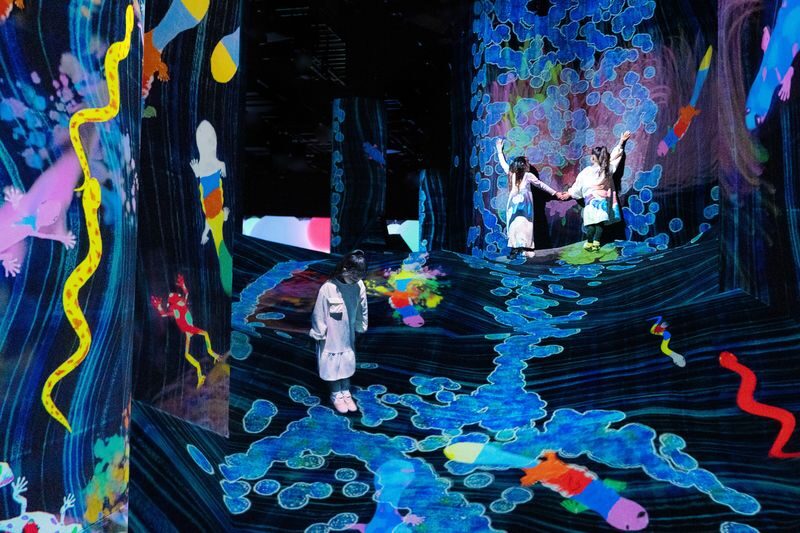
At the Sketch Factory, ordering terminals let you choose drawings made during the visit and place them on gift designs. Options include badges, towels, T-shirts, and tote bags. The item is produced on the spot, so you can leave with a one-of-a-kind keepsake tied to your visit.
This feature adds a useful second chapter to the drawing activity. A child’s artwork can shift from the screen to something they can carry home, and adults can choose a practical item instead of a generic souvenir. If you are deciding whether to buy something, think of it as an optional extra rather than part of admission. The ticket covers entry to the attractions; personal purchases are separate.
A badge or small item may be an easier choice than clothing if you want a simple memento. The attraction offers several formats, but the supplied details do not list prices, so check the terminals before you commit.
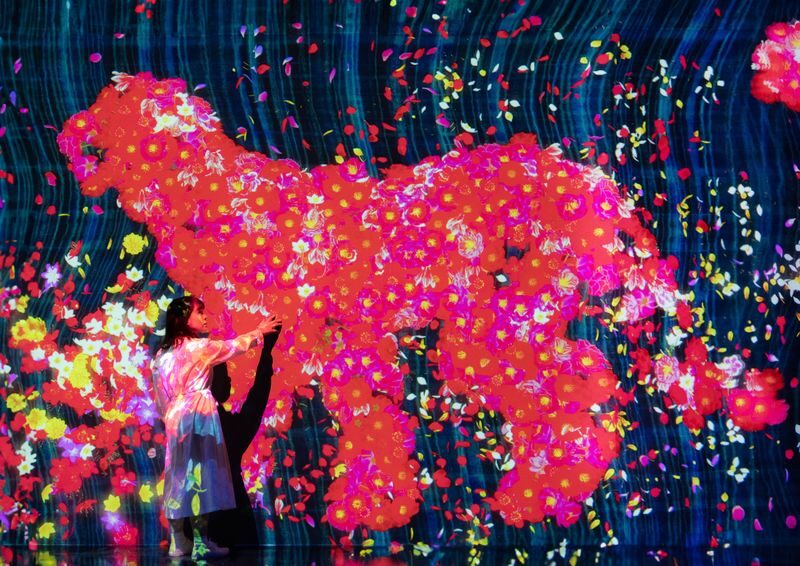
The stated visit duration is one to two hours. In practice, about 1.5 hours is a sensible starting point for a family that wants to try the main activities, while two hours gives you more room to draw, play, and revisit a favorite area. Children who want to linger may ask for longer, but the venue is compact and some groups will finish sooner.
That scale is the key trade-off. A smaller space can be a plus if you want a manageable family outing or a break between other Naha plans. It also means you should not expect the number of installations or the breadth of a major exhibition in Tokyo. Think of Future Park as a focused, playful stop, not a full-day destination.
The best value comes when your group takes part in the activities and makes use of the drawing-to-souvenir option. If you mainly want a large collection of digital rooms to explore, the short visit may feel less satisfying. At a starting price of $12.65, it can be a reasonable family activity, especially if you value the chance for children and adults to play together. The final value depends on the ticket price for your selected date and whether you choose to buy merchandise.
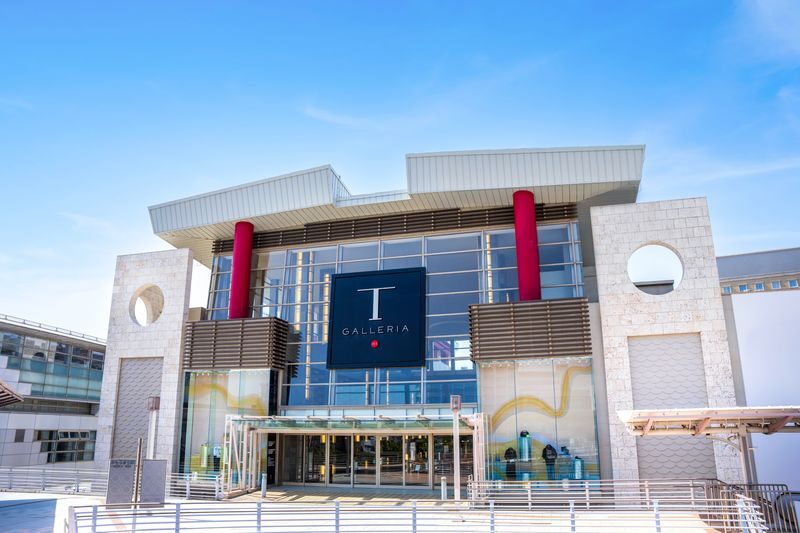
The address is T Galleria Okinawa by DFS, 3F, 4-1 Omoromachi, Naha. Omoromachi Station on the Yui-Rail is next door, and the trip from Naha Airport takes about 19 minutes by monorail. Driving from the airport takes about 30 minutes. The venue lists parking for 180 vehicles, though it is worth checking parking arrangements before you set out by car.
Wear sneakers or other permitted closed-toe shoes with soft soles. High heels, hard-soled shoes, open-toe shoes, and open-heel shoes are not allowed for safety reasons. Shoe rental is available for ¥500, but sizes and quantities are limited, so bringing suitable shoes is the safer plan.
Large bags and pull carts may not be taken inside. Lockers are available for personal bags, and some visitors have found that luggage storage is elsewhere in the building, so travel light if you can. Re-entry is not allowed after you leave, so use the restroom and collect anything you need before exiting.
Opening hours are listed as 10:00 a.m. to 8:00 p.m. daily, with last admission at 7:00 p.m. Hours can change, so check the official site before going. If you are visiting with children, those under 13 must be accompanied by an adult aged 20 or older. There must be one accompanying adult for every three children, including children who enter free.
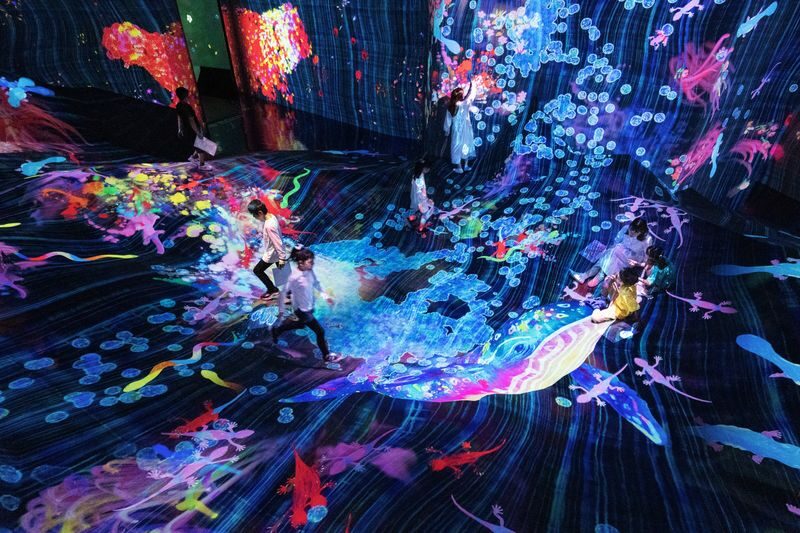
This is especially well suited to families with young children. Ages three and up are a good fit for the drawing, movement, and interactive play, and children who enjoy slides or making things may be reluctant to leave. Children aged zero to three enter free, which helps keep the cost down for families with toddlers.
Older children can enjoy the light, sound, and digital art, but the compact size may leave them wanting more if they expect a large attraction. Adults can have fun too, particularly if they are willing to draw, move around, and play along. It is less compelling for anyone who wants a quiet gallery visit or a long sequence of exhibits.
The location helps make it easy to pair with shopping or other plans in central Naha. Since it is inside T Galleria Okinawa by DFS and close to the monorail, you do not need to build a complicated day around it. That convenience is part of the attraction’s value: it can fill a rainy spell or make a short family outing without taking over the itinerary.
Book it if you want a colorful, interactive indoor activity where children can draw, move, and see their work appear in a shared digital world. The aquarium, ball-based light and sound activity, slide, and take-home art options make a varied visit for a compact venue.
Skip it, or keep expectations modest, if you are seeking a large-scale exhibition or several hours of extensive displays. Plan for roughly 1.5 to 2 hours, bring closed-toe sneakers, and check the date-specific ticket terms before buying. Tickets are valid only for the selected date and cannot be cancelled or refunded, so this is a better choice when your Naha plans are firm.
“I really love this place. It's so magical and colorful, and you can even make things yourself. Seeing my own work become part of the display was tr…”
It is on the third floor of T Galleria Okinawa by DFS, at 4-1 Omoromachi, Naha. Omoromachi Station on the Yui-Rail is next door.
The estimated visit is one to two hours. About 1.5 to 2 hours is a practical allowance if you want time for the interactive art and play activities.
The listed hours are 10:00 a.m. to 8:00 p.m. daily, with last admission at 7:00 p.m. Hours may change, so check the official website before your visit.
Wear sneakers or other suitable soft-soled, closed-toe shoes. High heels, hard soles, open-toe shoes, and open-heel shoes are not allowed. Shoe rental is available for ¥500, but sizes and quantities are limited.
Yes. Children under 13 must be accompanied by an adult aged 20 or older. One accompanying adult is required for every three children, including children eligible for free entry.
No. Tickets cannot be cancelled or refunded, and the number or type of tickets cannot be changed after purchase. The voucher is valid only on the selected date and time, if a time is specified.