Physical Address
304 North Cardinal St.
Dorchester Center, MA 02124
Physical Address
304 North Cardinal St.
Dorchester Center, MA 02124

Visit the Korean DMZ from Seoul, walking the Third Tunnel, viewing North Korea at Dora Observatory, and choosing an add-on Red Suspension Bridge stop.
At the DMZ, the border is not just a line on a map: you can walk through the Third Tunnel, built as a secret route from North Korea, then look across the frontier from Dora Observatory. It is a striking mix of close-up history and a view you cannot get in central Seoul.
I like two things in particular: guides explain the Cold War context as you go, and the tour runs without shopping stops. The Red Suspension Bridge option adds a scenic walk at a site tied to the Battle of Gloster Hill, also referred to in the tour details as the Battle of Solma-ri.
The main consideration is the time commitment. Although described as a half-day tour, early departures and traffic can make it a long day, and military rules can change the schedule or cancel access.
The Korean Demilitarized Zone is one of the few places where the division between North and South Korea becomes a physical, visible part of a trip. This outing gives you a guide, transport from Seoul and access to several sites that would be hard to combine independently in a day.
I like that the experience is not only a lookout stop. The Third Tunnel puts you underground, while Imjingak Park and the Bridge of Freedom connect the border to the human cost of the Korean War and its aftermath. At Dora Observatory, the view across to North Korea turns a political story into a real place on the horizon.
This is a guided visit, not an unsupervised trip into a restricted zone. The DMZ operates under military rules, so the route and departure time can change at short notice. Go in expecting a worthwhile, carefully managed excursion rather than a fixed schedule with every stop guaranteed.
The bus ride from Seoul takes about an hour in each direction under the stated itinerary. You can depart from outside Myeong-dong Station Exit 10 or Hongik University Station Exit 2. Morning departures are listed at 7:20 or 9:00 from Myeong-dong, and 7:40 or 9:30 from Hongik University Station. Choose carefully at booking, since you need to meet at the location and time you selected.
Arrive at least ten minutes early. Late arrivals and no-shows are not refundable, and the bus cannot wait indefinitely for someone navigating the subway exit at the last minute. The exact meeting details and confirmed departure time are provided after booking.
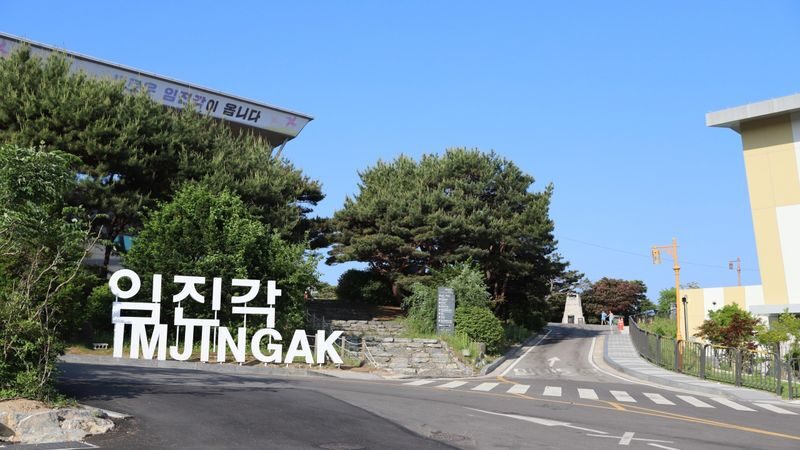
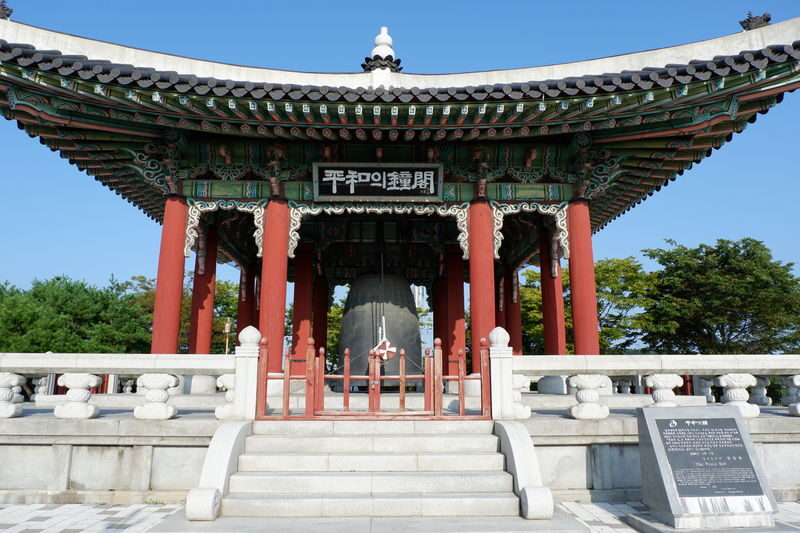
Imjingak Park is a useful first stop because it gives the guide a place to set the scene before you reach the tunnel and observatory. The itinerary also includes the Bridge of Freedom, a landmark that helps explain the division and the movement of people across the border. Your guide’s account is important here: the sites can look like ordinary park structures unless you know the history attached to them.
Looking for more options in Gangwon? Here are some other experiences worth considering.
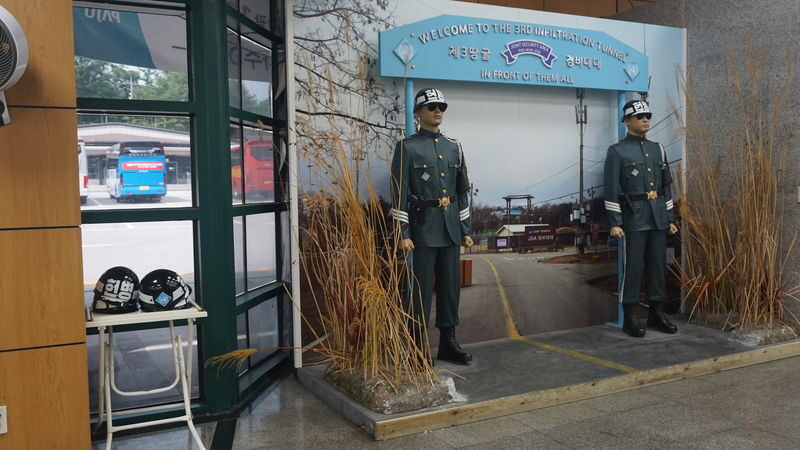
The Third Tunnel is the tour’s most physical stop. It was built by North Korea as an infiltration route, and you walk through part of the underground passage to see its scale firsthand. A guide explains the tunnel’s role in the history of the two Koreas, giving the visit more meaning than a quick look at a sign.
There is a short uphill walk. That detail matters if you have limited mobility or simply want to pace your energy for the rest of the day. Wear comfortable shoes and be prepared for a more active stop than a bus-to-viewpoint visit.
This is also where the tour feels most immediate. At the observatory, you look across a border; in the tunnel, you are inside a structure connected to the conflict. The experience can be sobering, and the value lies in taking time to understand what you are seeing rather than treating it as a novelty.
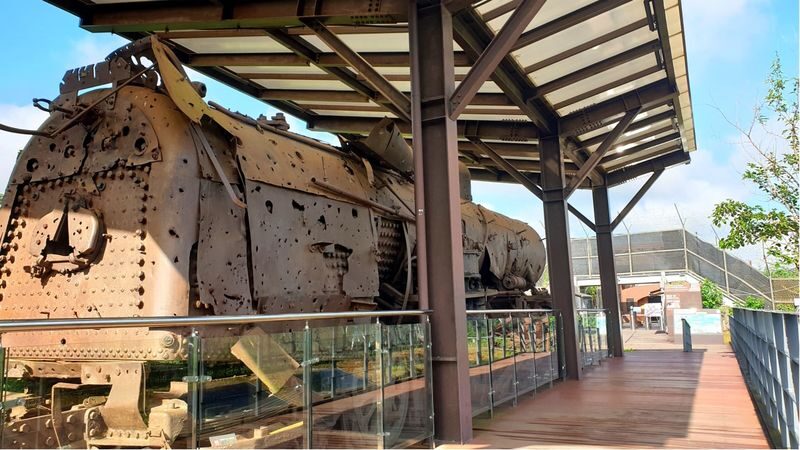
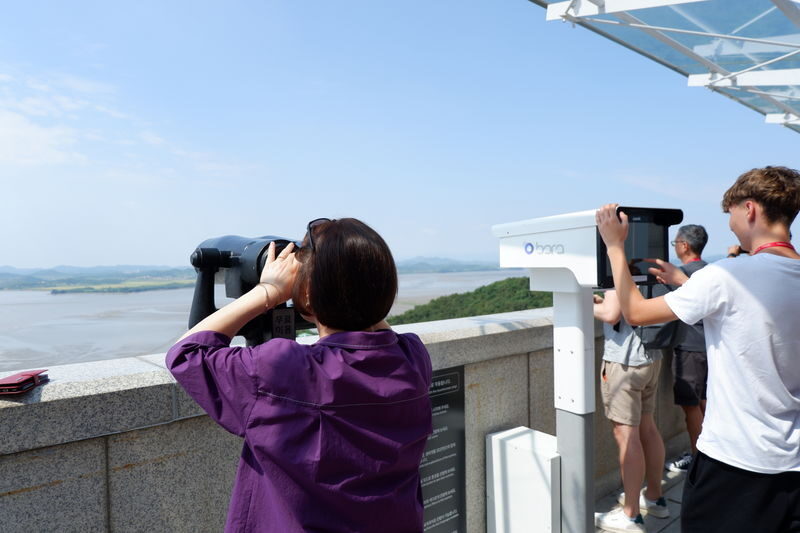
At Dora Observatory, you can use binoculars to view North Korea across the border. The stop offers a rare chance to look toward the country from the South Korean side, but it is a distant view, not a close encounter. Bring realistic expectations: the appeal is the geographical perspective and the context your guide adds, not a guarantee of a clear or dramatic sighting.
Photography rules can apply at some locations. Do not assume you can take pictures everywhere, and follow instructions from the guide and site staff. One guide, Henry, has helped make up for restricted photography by sharing approved images with the group. That is a thoughtful touch, but it should not be treated as a standard service on every departure.
Guides are a major part of this tour’s value. Recent trips have been led by people including Anna, Thomas, Nara, Winnie, Kenny and Henry. Their styles differ, but the useful qualities to look for are clear explanations, good pacing and the ability to answer questions. Anna has used pictures, video and audio to illustrate the history; Thomas and Kenny have been praised for mixing detail with humor; Nara and Winnie have also been noted for warm, engaging explanations. The guide assigned to your tour may be someone else.
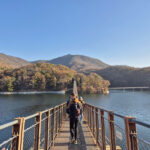
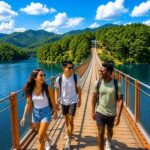
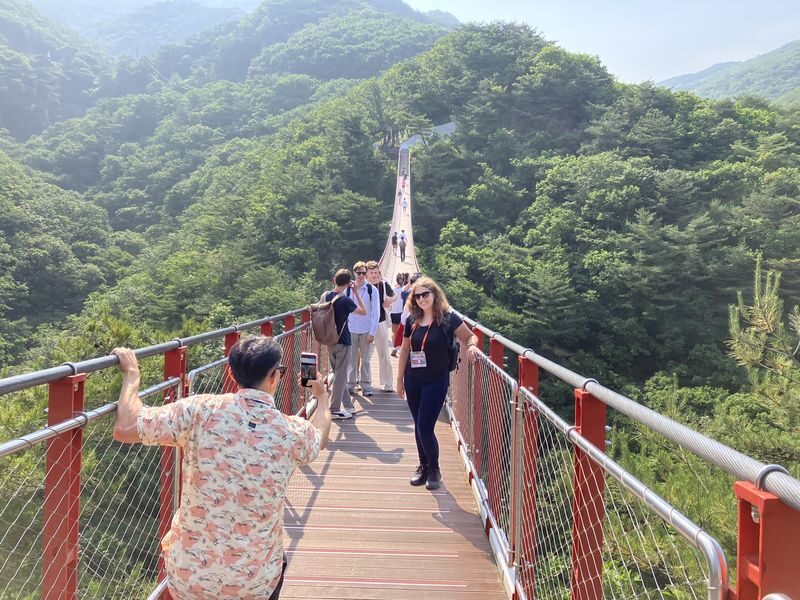
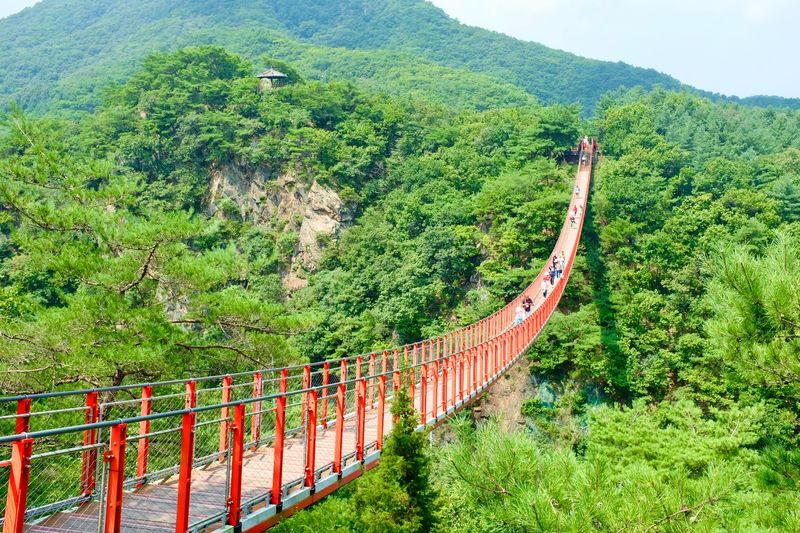
The Red Suspension Bridge package adds a walk at a scenic site associated with the Battle of Gloster Hill, also described as the Battle of Solma-ri. It is a change of pace after the tunnel and border history: you can stretch your legs, take in the setting and consider the battlefield history tied to the area.
The bridge option starts at US$60, compared with US$45 for the standard DMZ tour. That extra cost makes sense if you want both the core DMZ sites and an additional outdoor stop. It is less compelling if your main goal is simply to see the tunnel and observatory, or if you are trying to keep the day short. Confirm the package name when booking, since the standard and bridge itineraries are distinct options.
The Red Suspension Bridge is also a place where the trip can feel less like a sequence of military-history stops. If you enjoy a scenic walk and want more variety, it adds something tangible to the day. But it does not replace time at the main DMZ sites, and the full schedule may feel tiring if you are already short on sleep.
A separate scenic package focuses on an observatory and North Korea viewpoint, with a Starbucks café about 1.4 km from North Korea. It is listed from US$45. This can suit you if you want a view across the border and a café stop rather than the standard itinerary of Imjingak Park, the Third Tunnel and Dora Observatory.
Do not assume that the Starbucks stop is part of the regular DMZ tour. It is presented as its own scenic option, so check the exact package before booking. The same principle applies to the language choices: Japanese and Chinese tours are available, as well as the English-language option.
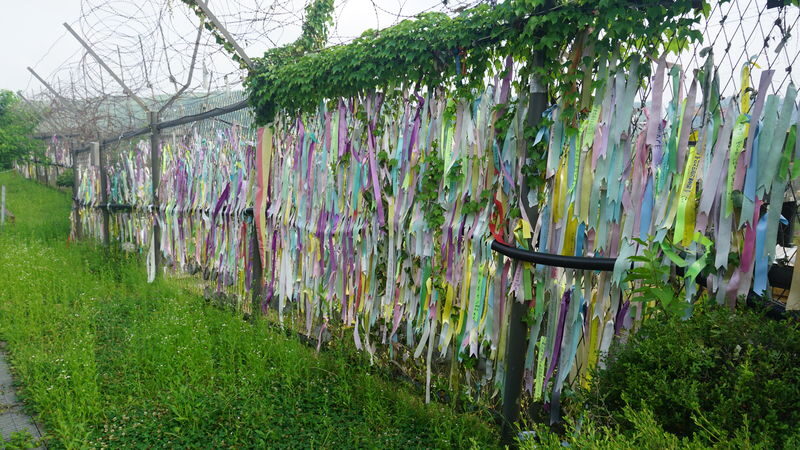
The listed itinerary has about one hour of bus travel each way, plus guided visits at Imjingak Park, the Third Tunnel and Dora Observatory. In practice, the overall day can be much longer than the phrase half-day suggests. Return times are listed as 3:30 or 4:30 p.m., depending on the departure and itinerary, and delays can push arrival later.
Traffic, weather, large visitor numbers and changes to military operations can all affect timing. A national holiday or other special event may also lead to a different route; one trip, for example, was redirected to the Second Tunnel and ran from early morning until evening. That kind of change is not the normal plan, but it shows why you should avoid scheduling a tight connection or important appointment after the tour.
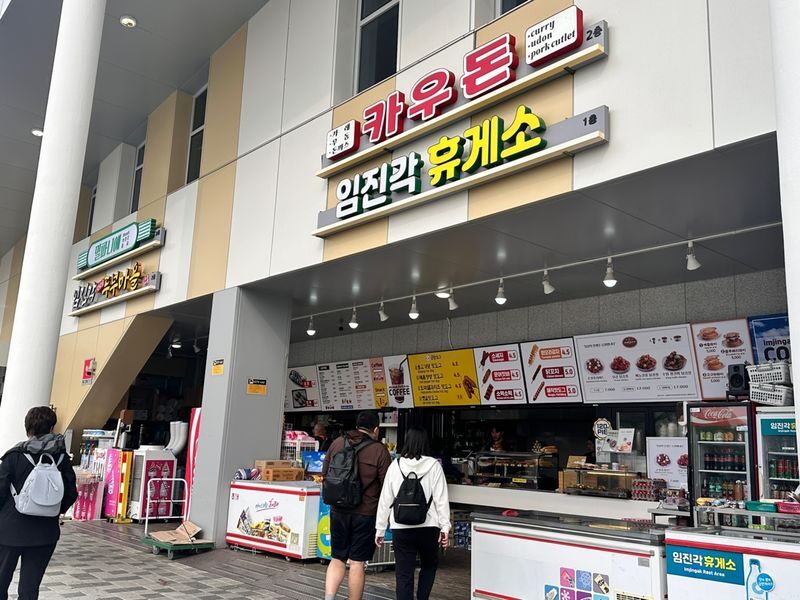
The pace is full, and early starts are common. Get a good night’s sleep and bring water or snacks if you prefer to have something on hand. Meals and beverages are not included, though there are opportunities to buy food and use restrooms during the day.
At US$45, the standard trip includes round-trip transfers from the chosen Seoul meeting point, an English-speaking guide and admission to attractions. For a site controlled by military regulations and located outside Seoul, having transport and a guide arranged is a practical part of the value, not just a convenience. You also avoid the hassle of trying to connect multiple stops on your own.
At US$60, the bridge version costs more but includes an extra scenic stop. The private tour starts at US$500, which is a steep jump and makes most sense if you specifically want a private arrangement. Japanese tours start at US$45, Chinese tours at US$49.50, and the scenic observatory option at US$45.
The price does not cover meals, drinks, personal expenses or insurance. Also, the advertised entry price is a starting price, so check the chosen package and date before paying. The tour’s no-shopping-stop format is a plus if you want to spend the day on history and sights rather than commercial detours.
I would recommend this tour to anyone who wants a grounded introduction to the division of Korea and does not want to arrange the transport and site visits alone. It is especially useful if you value a guide who can add context beyond the signs, or if you want to see both the tunnel and a viewpoint across the border in one outing.
Families can take part, and children aged 0 to 2 can join free if they do not need a separate seat. Still, consider the early start, long day and uphill walk before booking for young children or anyone with limited mobility. The bridge option adds more walking, and a changing schedule can make the day longer than planned.
If you prefer an unhurried visit, dislike group schedules or need a guaranteed return time, this may not be the right fit. The tour gives you a lot in a day, but military access rules mean flexibility is part of the deal.
A passport is mandatory for every participant, with six months of validity specified. Bring it with you rather than relying on a photo or copy. You will present a mobile voucher, and the voucher is valid only on the date and time shown.
The tour includes transfers only from the meeting point you selected. It does not include hotel pickup unless that is explicitly part of your chosen departure arrangement. Be at the correct station exit ten minutes early, and check your booking confirmation for the final time.
Changes are allowed up to 24 hours before the activity starts, subject to the stated booking restrictions. Cancellation at least 24 hours before the activity date qualifies for a full refund. If extreme weather or another unforeseen event causes activities to be canceled, the stated terms do not provide a refund in that case.
Book it if you want a clear, guided introduction to the DMZ, especially the Third Tunnel and Dora Observatory, and you can spare most of a day. The standard option is the best-value starting point; pay more for the Red Suspension Bridge if that extra walk and battlefield setting matter to you.
Think twice if you need a fixed return time, have trouble with uphill walking or want to avoid a long, early start. Bring your passport, leave room in your schedule and treat the route as subject to change. With those expectations, this is a practical way to see a part of Korea that is difficult to understand from Seoul alone.
“Interesting tour learning all about Korea. Tour guide Winnie was very informative and energetic throughout”
It is described as a half-day tour, but listed return times are 3:30 or 4:30 p.m. depending on the selected departure and itinerary. Delays from traffic or visitor numbers can make the return later.
You can choose to meet outside Myeong-dong subway station Exit 10 or Hongik University Station Exit 2. Your selected departure point and time are confirmed after booking.
Arrive at least ten minutes before your selected departure time. Late arrivals and no-shows are not refundable.
Yes. Every participant must bring a passport, and six months of validity is specified.
The tour includes admission to attractions, an English-speaking guide and round-trip transfers from the selected meeting point. Meals, drinks, personal expenses and insurance are not included.
No. It is included in the separate DMZ with Suspension Bridge Tour package, which starts at US$60. The standard DMZ tour starts at US$45.
The visit includes a short uphill walk. The tour information notes that this may be challenging for people with limited mobility.
Yes. The DMZ operates under military regulations, and the tour may be canceled or its departure time adjusted. Traffic, weather and visitor numbers can also affect the schedule.