Physical Address
304 North Cardinal St.
Dorchester Center, MA 02124
Physical Address
304 North Cardinal St.
Dorchester Center, MA 02124

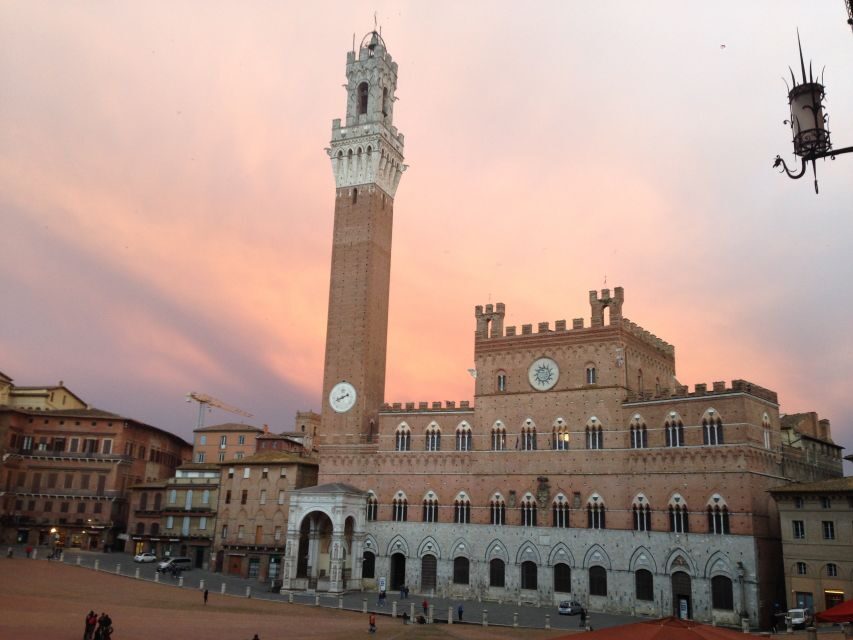
Walk Siena’s medieval streets with a private guide, from Piazza del Campo to San Domenico, with an optional guided visit to the Duomo.
Siena’s story makes more sense when you hear it on its streets. This private three-hour walk links the grand curve of Piazza del Campo with Saint Catherine’s world, the city’s proud contrade, and the striking Duomo, giving you a useful introduction before you set off on your own.
Two things I like here: you get a private guide, so there’s room to ask questions and shape the conversation, and the route balances famous sights with local traditions such as the Palio. One consideration: the cathedral entrance fee is not included, and the optional guided visit needs to be booked separately.
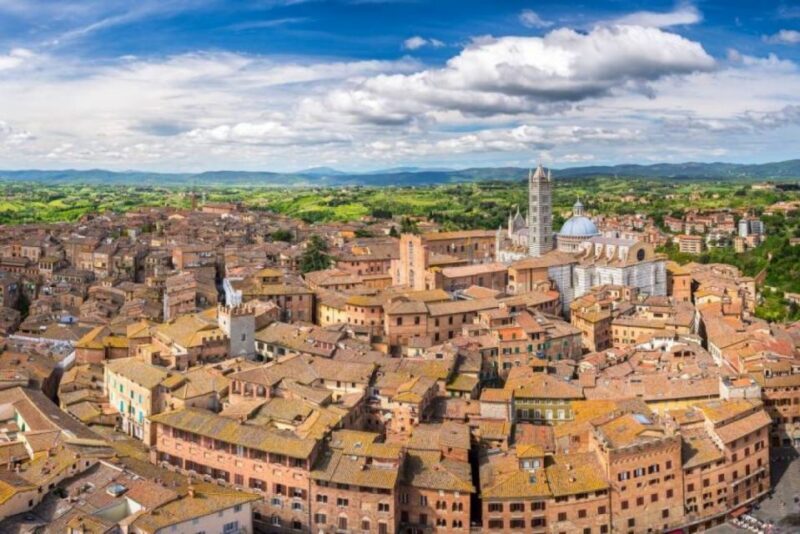
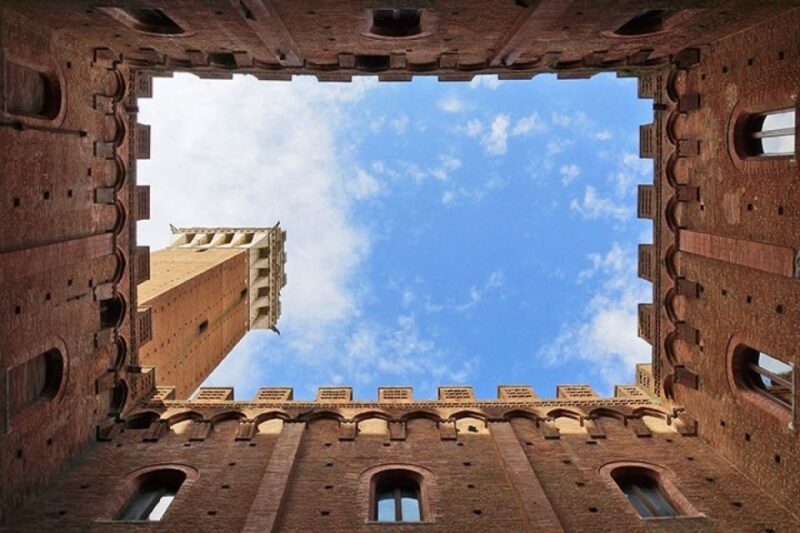
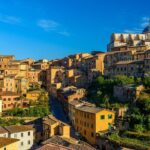
Siena’s central sights are close enough to connect on foot, but their meaning is not always obvious at first glance. A guide can help you see how civic buildings, religious sites, and the city’s old commercial street fit together, instead of treating each as a separate photo stop.
This tour is a good fit if you have limited time in town or want a clear framework for a longer stay. In three hours, you’ll cover several major landmarks and hear about the traditions that continue to matter to Sienese people. It is an introduction, not an exhaustive account of every church, museum, and neighborhood.
The private format is the main advantage. You can ask about a detail that catches your eye, or follow up when a story about the Palio or Saint Catherine prompts another question. Guides associated with this experience include Mare, Ludovica, and Ludmila. Their personal approach and ability to explain local customs have been especially appreciated, though a particular guide is not guaranteed.
If you enjoy exploring Siena on foot, these walking tours might also suit your style
Meet your guide in front of the Basilica Cateriniana San Domenico, under the big tree. This is a practical place to begin because the basilica is also one of Siena’s important sites, not merely a spot to gather before walking elsewhere.
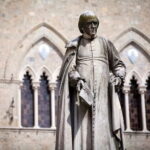
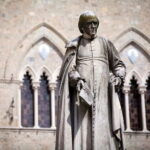
Inside, the Basilica of San Domenico is associated with Saint Catherine of Siena and holds her relics. The stop gives you a direct connection to one of the city’s most important religious figures. Your guide can help place Catherine in the story of Siena and explain why the basilica matters, rather than leaving you to piece it together from a brief label.
The route also includes Via Camporegio for a photo stop. The itinerary does not specify a particular viewpoint or the amount of time there, so think of this as a chance to pause and take in the surroundings, not a separate visit with a long presentation.
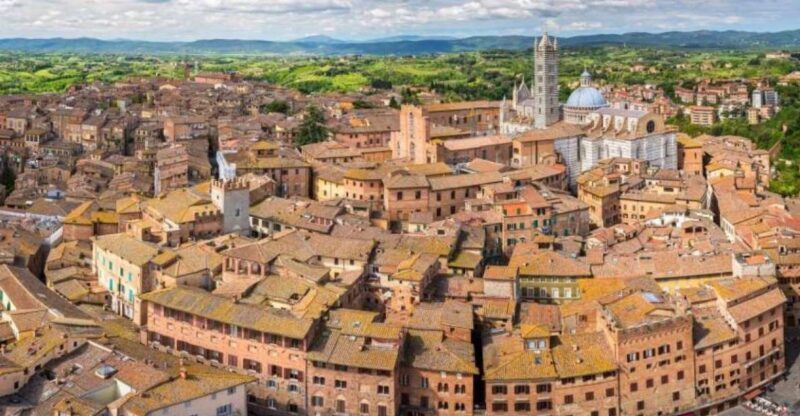
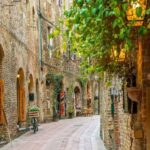
From the basilica, the walk moves through the city toward Palazzo Tolomei and the historic Banchi di Sopra. Palazzo Tolomei is one of the buildings you pass on foot, while Banchi di Sopra was Siena’s ancient commercial thoroughfare. These streets help show how the city’s civic and trading life took shape around its central spaces.
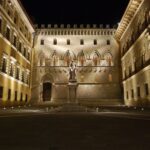
You’ll also encounter Palazzo Salimbeni and the Palazzo Pubblico as part of the broader introduction to Siena’s significant buildings. The guide discusses which locations hold UNESCO World Heritage status and why. That context matters: it helps you understand the value of the historic center as a whole, rather than assuming every notable building has the same designation.
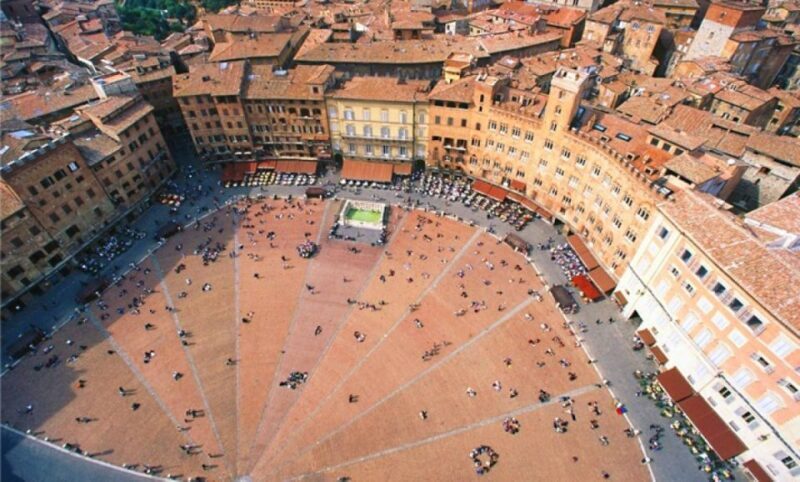
Piazza del Campo is the route’s defining stop. The shell-shaped square is one of Siena’s best-known landmarks and the setting of the Palio, the city’s historic horse race. You’ll have time to walk around, take photos, and hear how the contrade, or neighborhood districts, connect to the event and to local identity.
The Palio is more than a spectacle to watch from the square. The contrade carry their own traditions and loyalties, and a guide can give you a starting point for understanding those relationships. Several visitors have particularly valued hearing about the Palio and contrade from a local guide. If you want more detail, ask questions as you go; a private tour gives you more room for that than a large group walk.
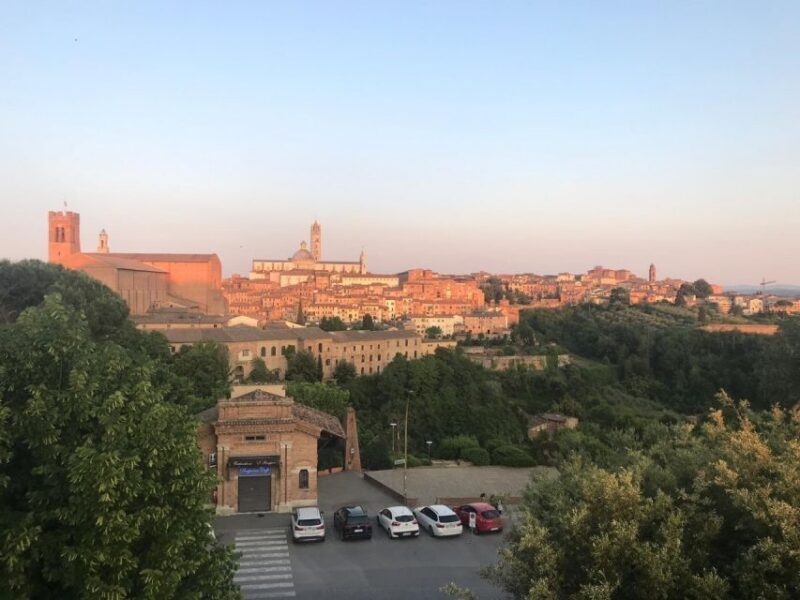
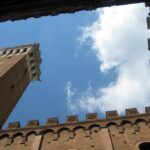
The Palazzo Pubblico faces Piazza del Campo and is among the city’s most important civic landmarks. The walk includes a photo stop and visit here, though the information provided does not promise entry into the building or its museum. Museum entrance fees are not included, so treat this as an exterior-focused stop unless your guide confirms otherwise.
The nearby palaces offer another way to read Siena’s past through its streets. Palazzo Tolomei and Palazzo Salimbeni are part of the route, along with Banchi di Sopra. Your guide’s role is to connect these buildings to the city’s development and explain why their place in the historic center matters.
This is where a little local context pays off. You can admire façades on your own, but it takes a guide to turn a string of palaces into a story about Siena’s public life, trade, and identity. If you’re keen on architecture, ask what to look for in the buildings as you pass. The tour is designed to move through several sites in three hours, so it won’t linger at every one.
More Great Tours Nearby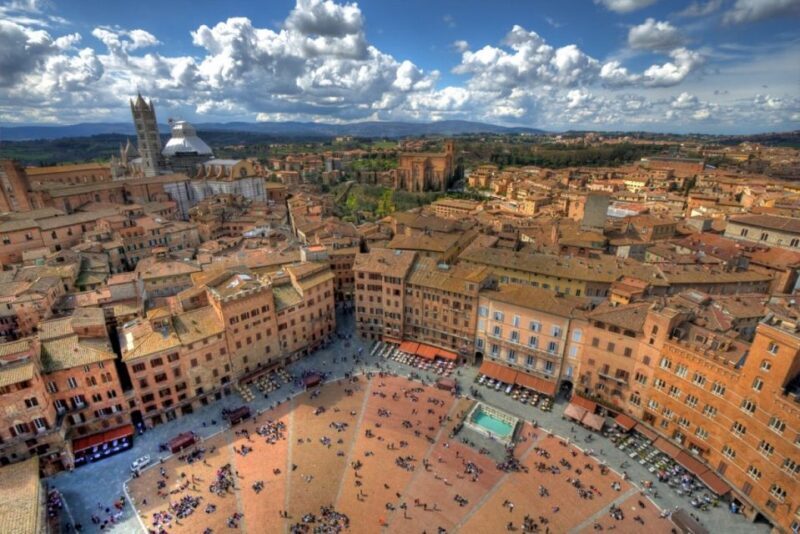
After the central square and its civic landmarks, the tour returns to Saint Catherine’s story. You’ll pass the Sanctuary of St. Catherine of Siena, where she once lived with her family. Along with the basilica that holds her relics, the sanctuary gives you two distinct places tied to her life: one connected to her home, the other to her veneration.
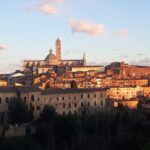
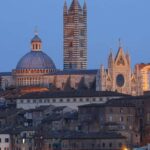
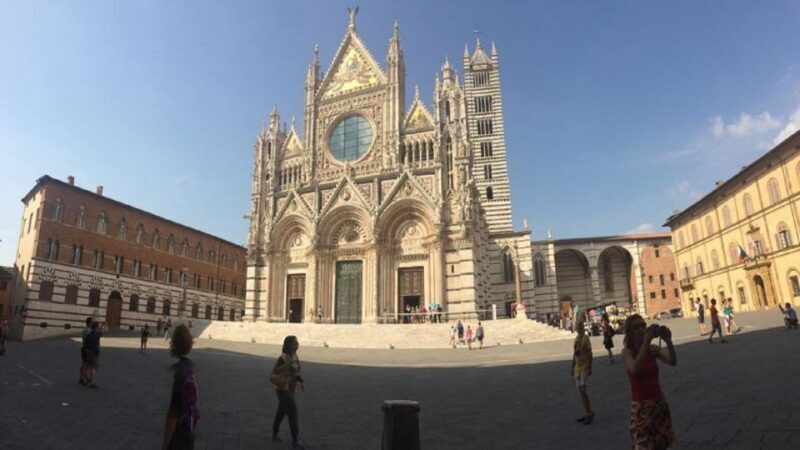
The route then heads toward Piazza del Duomo, passing the Baptistery and the Siena Cathedral. The change in setting is useful: the tour moves from the city’s civic center to its religious heart, while keeping the walk compact enough to fit into a half-day plan.
There is a small logistical wrinkle in the published route details. The itinerary names Piazza del Duomo as the finish, while the meeting information says the activity ends back at the starting point in front of San Domenico. Confirm the precise ending with your guide when you meet, especially if you have a timed cathedral visit or another plan immediately afterward.
Looking to discover more of Siena? Consider these other city tour options
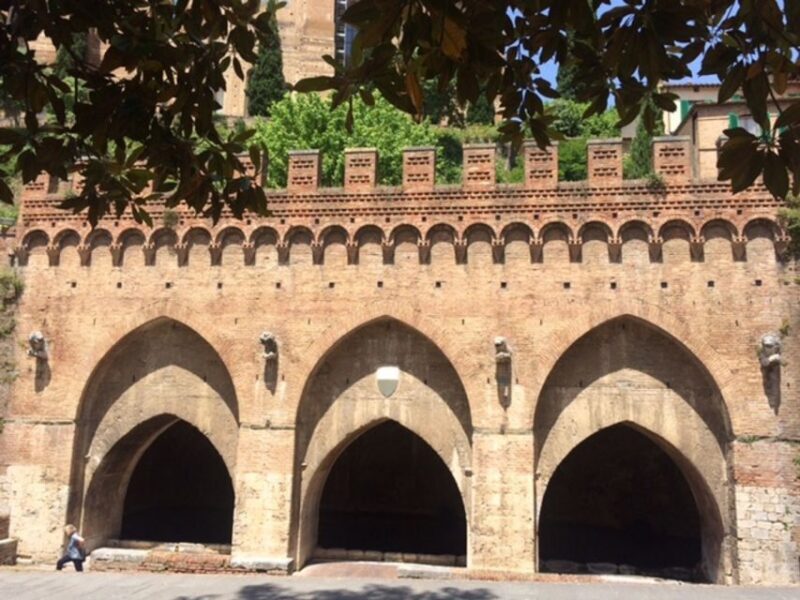
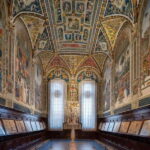
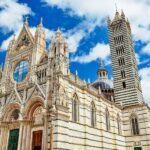
The Siena Cathedral, or Duomo di Siena, is the most substantial optional addition. If you book the guided cathedral visit, you go inside with your guide and see works by important Italian artists. The tour’s cathedral explanations have been a highlight for people interested in its art and marble work.
The entrance fee is not included and is paid separately on site. Museum fees are also excluded. The activity information notes skip-the-ticket-line access, but that does not mean the cathedral ticket is part of the tour price. Check the current arrangements when booking, and allow for the separate entrance cost.
The cathedral may not be visited during certain periods on Sunday mornings. If the interior is a priority, check availability and timing before choosing your tour slot. You can still follow the outside portion of the route, but the optional guided interior visit is the part that brings you close to the art inside.
Church dress rules apply: cover your knees and shoulders. This is easy to plan for, but worth remembering on a warm day when you may otherwise dress for the weather.
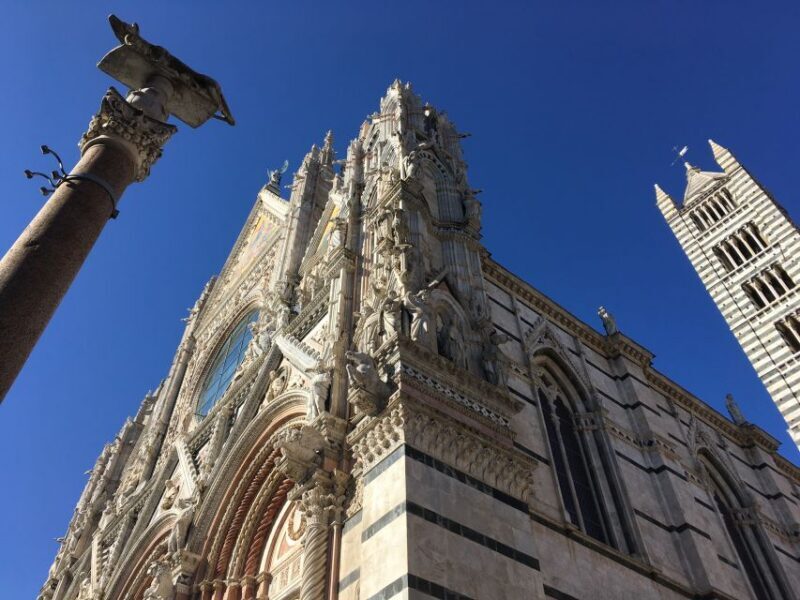
Three hours is enough to cover the city’s main historic landmarks at a steady walking pace, hear the stories behind them, and pause for photos. It is also short enough to leave room in your day for a meal, a museum, or time to return to a favorite street.
There is a trade-off. The tour visits many locations, so some stops are brief, and you should not expect a long interior visit at every palace or church. The cathedral is the clear exception, and even there you need to book the optional guided visit and pay the entrance fee separately.
A private tour is especially useful if you want to learn about a few key subjects rather than collect a long list of dates. The most rewarding themes here are Saint Catherine, the Palio, the contrade, and Siena’s civic buildings. Guides have been praised for explaining these subjects clearly and adjusting to the interests of the people they are leading.
At $164.26 per person, you’re paying for a three-hour private tour with a live guide, not simply access to a set route. The price makes the most sense if you value direct conversation, want a local introduction, or are sharing the booking with others. The price is listed per person, and the group is private; check the total for your party before booking.
The cathedral visit changes the value calculation because its ticket costs extra. If you want to see the interior, include that separate expense in your budget. The tour can still be worthwhile without going inside, but the cathedral’s art and marble are a major reason to consider the optional guided visit.
The rating is 4.7 from 392 reviews, and the strongest recurring praise concerns the guides’ clear explanations, personable manner, and local knowledge of the Palio and contrade. That matters on a city walk: the quality of the interpretation can make the difference between seeing a fine square and understanding why it holds such importance for Siena.
The tour runs in Italian, English, and Spanish. It is listed as wheelchair accessible, and it operates in all weather, so wear comfortable shoes and bring clothing suited to the forecast. The route includes outdoor walking and photo stops.
If you want to visit a contrada museum, a donation for entry starts at €5 per person. That is a separate cost, and the tour does not promise a museum visit as part of the route. Ask your guide whether one can fit into your plans.
Booking offers free cancellation up to 24 hours in advance for a full refund, and a reserve-now, pay-later option is available. Starting times depend on availability. Those terms can help if your plans are still shifting, but check your selected date and time before you finalize the day.
Book it if you want a personal, well-paced introduction to Siena’s main sights and traditions, especially if the Palio, contrade, and Saint Catherine interest you. The route links the Campo, civic palaces, San Domenico, and the Duomo without trying to turn the whole day into a museum visit.
I would add the cathedral option if seeing its interior is high on your list, while budgeting for the separate ticket and checking Sunday morning restrictions. If you prefer to explore independently and only need directions, you may not need a private guide. But if you want the stories that connect Siena’s landmarks to its living traditions, this is a practical way to get them.
“Great tour. Our tour guide was very knowledgeable and friendly. Would definitely recommend!”
The private walking tour lasts three hours. Starting times vary, so check availability for your date.
Meet your guide in front of the Basilica di San Domenico, under the big tree.
No. The cathedral entrance fee is not included and is paid separately. The guided cathedral visit is optional.
The cathedral may not be visited during certain periods on Sunday morning. Check the timing when booking if the interior visit is important to you.
The live tour guide is available in Italian, English, and Spanish.
Your knees and shoulders must be covered. Comfortable walking shoes are also recommended.
Yes. You can cancel up to 24 hours in advance for a full refund, and a reserve-now, pay-later option is available.
You can check availability for your dates here: