Physical Address
304 North Cardinal St.
Dorchester Center, MA 02124
Physical Address
304 North Cardinal St.
Dorchester Center, MA 02124


Explore Pompeii with an archaeologist on a three-hour small-group tour, including the House of the Vettii and Villa of the Mysteries.
Pompeii’s Villa of the Mysteries is the draw here: a Roman villa beyond the city’s main cluster of ruins, known for its striking frescoes and unanswered questions. With an archaeologist leading the way, you get more than a walk past old walls. You get context for the homes, public spaces, and images that make Pompeii feel like a place where people actually lived.
I like two things in particular: the archaeologist’s on-site perspective, which can turn a detail in a fresco or building into a story, and the route’s mix of famous houses, public landmarks, and the Villa of the Mysteries. The main consideration is time. Three hours gives you a useful guided overview, not a full visit to a site this large, and the walking can be tiring in hot weather.


Pompeii is enormous, and its streets can be hard to read without context. A guide helps you understand what you are seeing, why a house is arranged as it is, and how domestic life sat alongside commerce, politics, and religion. That matters here: without explanation, even famous buildings can look like a sequence of stone rooms.
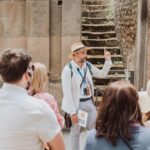
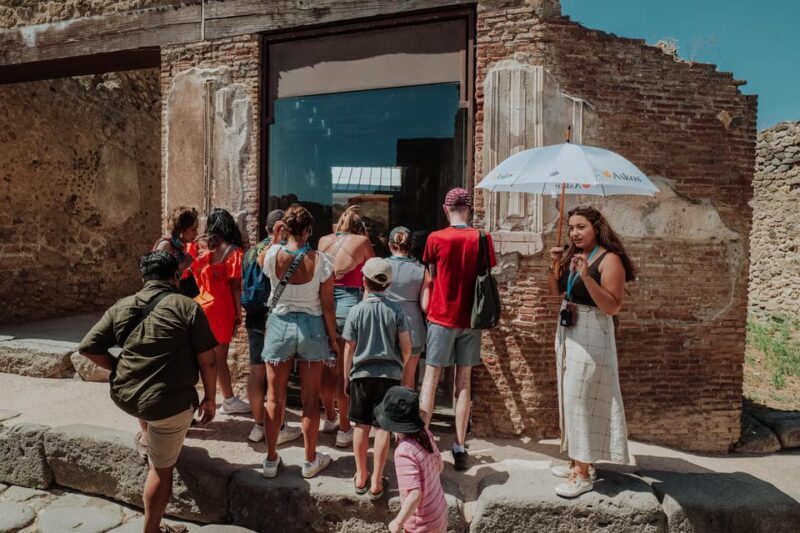
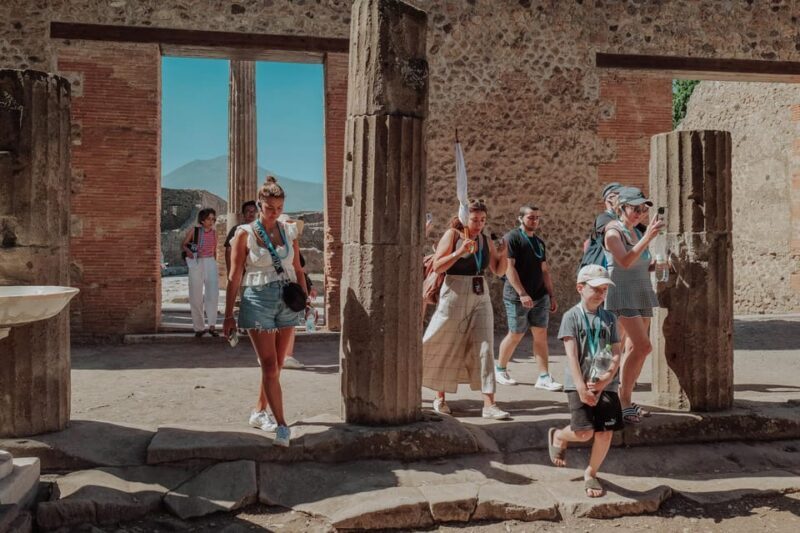
This is a small-group tour, though the exact group size is not specified. One recent group had ten people, a size that allowed the guide to keep everyone together and answer questions. You may have a different group size, but the format is intended to feel more personal than a large coach-style outing.
The guides are the tour’s biggest asset. Past groups have explored with guides including Teresa, Julia, Anna Sorrento, Antonella, and Yolanta. Several have archaeological experience at Pompeii, and one guide shared details from her own work on site. Guide assignments vary, so don’t book expecting a particular person. The consistent benefit is an expert who can explain the evidence and bring human stories into the walk.
Looking for more options in Pompei Campania? Here are some other experiences worth considering.
Meet at Via Villa dei Misteri, 2, at the entrance gate called Porta Marina Superiore. Your guide will be holding a sign marked ASKOS TOURS. Arrive ready to walk, and bring your passport or ID card, which is listed as a required item.
The ticket is included, and the tour offers skip-the-ticket-line entry. That saves you from arranging a separate park ticket, while also bringing the Villa of the Mysteries into the same visit. Transportation, food, and drinks are not included, so plan your trip to Pompeii and any meals separately.
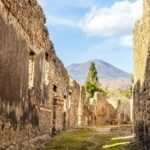
The park is an active archaeological site, not a paved museum. Expect uneven ancient streets and a steady walk between stops. Wear comfortable, closed-toe shoes. Flip-flops are not suitable, and in summer a hat is recommended. The tour runs rain or shine, so bring weather protection if the forecast calls for it.
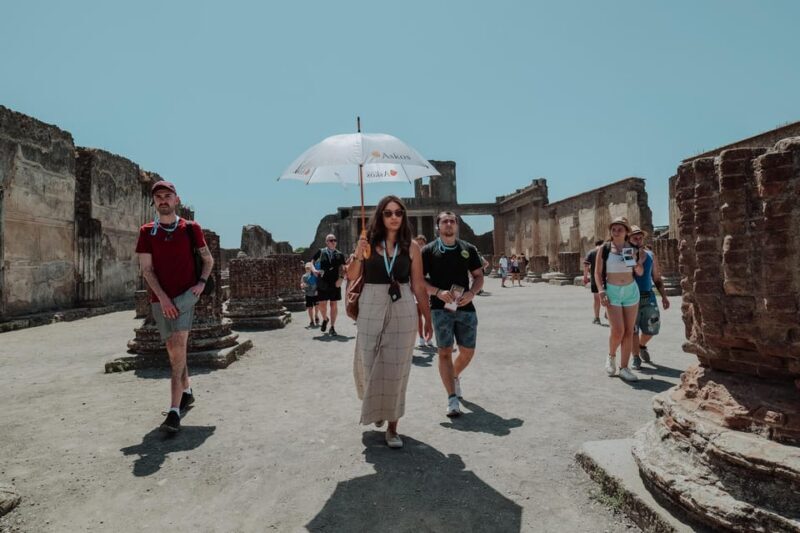
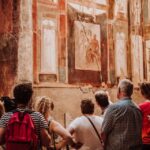
Several stops focus on homes, which is one of the best ways to picture daily Roman life. Pompeii’s houses were not just private spaces. Their rooms, decoration, and layout can tell you about status, taste, and the routines of the people who lived there. Your guide can point out details you might pass without noticing.
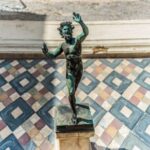
The House of the Vettii is among the tour’s major residential stops. Its decoration gives the guide a chance to discuss Roman art and domestic life, rather than treating the house as a set of empty rooms. The House of the Faun offers another look at the scale and design of a Pompeian home. Together, the two visits help you see that Roman houses varied, and that each one can be read as evidence of its owner’s world.
The House of Menander and House of the Tragic Poet extend that picture. They are useful stops for a guide to connect architectural features and wall art to the people who might have used the rooms. The appeal is not simply the names or the famous status of the houses. It is learning how to look: where attention falls, what a room’s decoration might communicate, and what remains uncertain.
There is a limit, though. The route visits several houses in a short time, and you may wish you could linger longer in each one. One visitor specifically wanted more time inside the houses. If domestic architecture is your main interest, take note of the stops that catch your eye and ask your guide what you should revisit afterward.
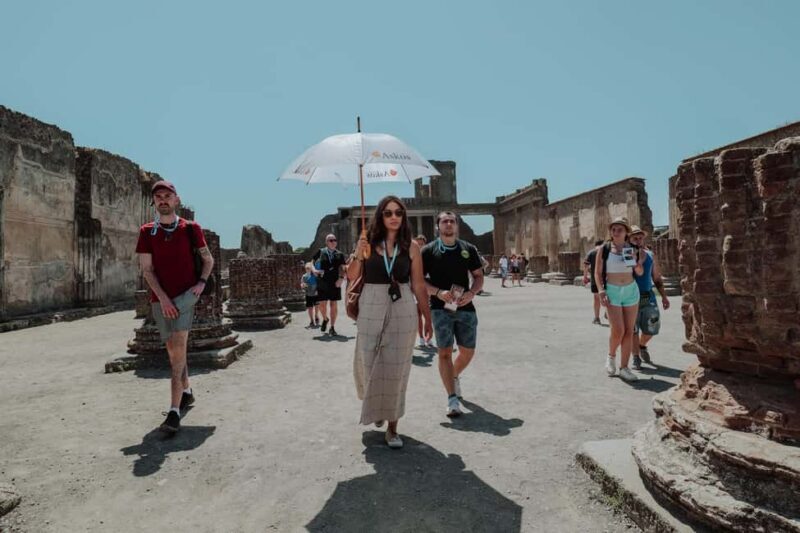
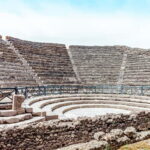
Pompeii’s public buildings show another side of the city. The Large Theatre gives the guide a natural opening to explain public entertainment and the role it played in Roman life. The stop is a welcome change of pace from house interiors, though the three-hour schedule means you should expect an overview rather than a long, quiet visit.
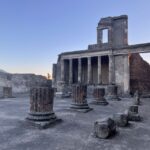
At the Forum Baths, you can consider how shared bathing spaces fitted into city life. The Basilica and Foro Civile di Pompei, or civic Forum, shift the focus toward public affairs and commerce. These places once supported the business and civic activity of the city. A guide can help you imagine their purpose while also pointing out the physical evidence still visible among the ruins.
The Temple of Apollo adds a religious dimension. Together, these public stops make the route more rounded than a house-only walk. You get a sense of Pompeii as a working city, with spaces for worship, trade, meetings, and entertainment. That variety is valuable when you have just one guided visit and want a framework for understanding the site.
The Lupanare is another distinctive stop. It brings the tour into a more intimate, everyday subject, and is part of the broader picture of how Pompeii functioned. The tour does not present the city only through grand buildings or elite homes. Its mix of sites helps you think about ordinary routines as well as public life.
More Great Tours Nearby
The Villa of the Mysteries is the tour’s defining stop. It lies away from the city’s central cluster, and its inclusion makes this more than a standard highlights walk. The Pompeii Plus ticket includes access to the villa, so you do not have to arrange a separate entry for this part of the visit.
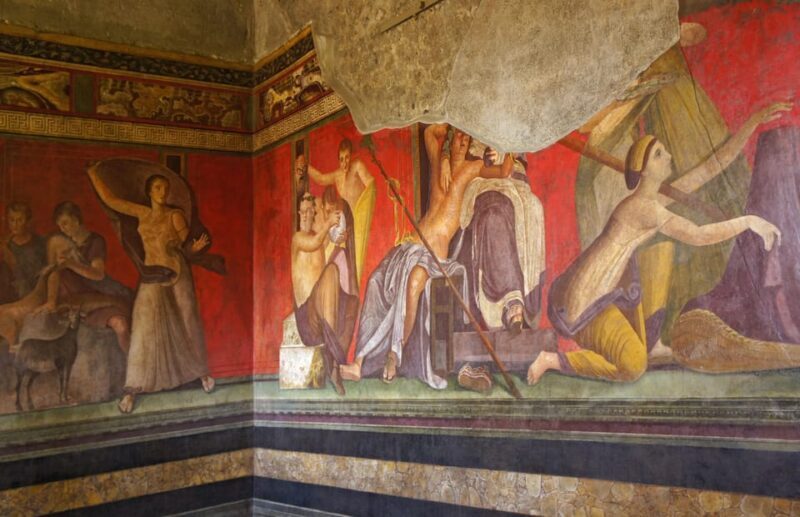
The villa is famous for its frescoes, whose subject and meaning have long prompted questions. This is where an archaeologist’s commentary can be especially useful. Rather than simply looking at painted figures and moving on, you can hear how the images fit into the villa’s setting and why they remain a point of historical intrigue.
The quieter setting can also feel like a change from the busier central sites. One family appreciated having space around the villa, including a nearby area with another villa and a cemetery where they could pause. The tour’s focus is the Villa of the Mysteries itself, so don’t assume you will have time to explore every nearby feature at length. If you want a rest or a snack, bring your own and plan ahead.
Three hours is a sensible length for a guided introduction. The route includes a substantial selection of Pompeii’s signature sites, and an archaeologist can help you make sense of them without asking you to study a guidebook on the spot. Many past visitors found the time passed quickly, which is a good sign of an engaging pace, but it also means you should not expect to see every corner of the park.
Pompeii is larger than this tour can cover. One guide advised leaving time to explore additional areas, and another visitor spent several more hours in the site after the guided walk. If you can spare the time, consider making the tour your orientation and then continuing independently. You will have a better sense of what interests you and where to spend your remaining energy.
The route can also be affected by crowds and weather. Guides such as Antonella and Anna Sorrento have been praised for adjusting the order or timing of stops to avoid the busiest moments. That is a practical advantage, not a promise that every room will be quiet. Rain does not cancel the tour, and summer heat can make the walking harder. Carry water: refill stations are available in the park, but you may not reach one immediately.
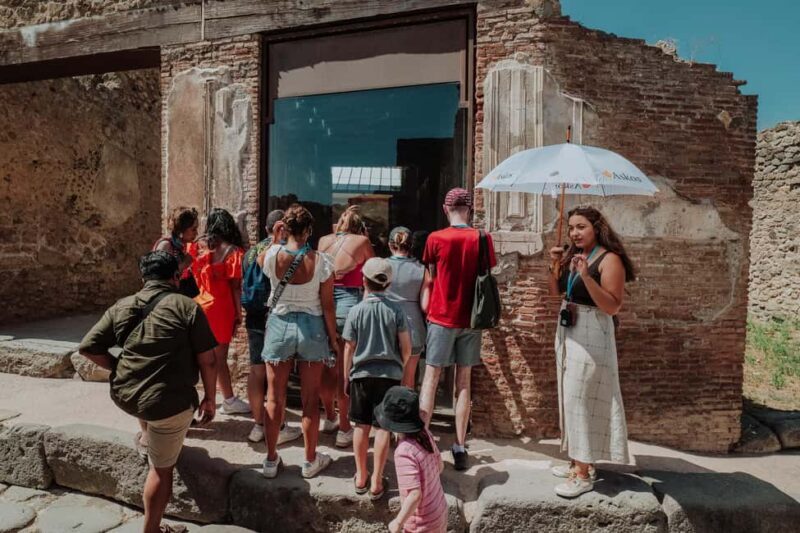
At $88 per person, the tour costs more than entering the site on your own. The price includes the three-hour small-group guided visit, an archaeologist guide, and the Pompeii Plus ticket for the Archaeological Park and Villa of the Mysteries. The value comes from the combination: admission, a planned route through a sprawling site, and expert interpretation of what you see.
I think the price makes sense if you want to understand Pompeii rather than simply walk through it. The guide’s explanations are the point of the experience, and the villa ticket adds a distinct stop that many visitors may not build into a visit on their own. It is less compelling if you prefer to wander at your own pace, already know the site well, or want to spend long stretches inside individual houses.
Languages offered include German, Italian, French, English, Spanish, and Portuguese. Check the available start times and language before booking. The tour is not suitable for wheelchair users or people with mobility impairments, and the walking surface and distance are important considerations for anyone who finds uneven ground difficult.
Book it if Pompeii is a priority and you want an archaeologist to connect the buildings, paintings, and public spaces into a clear picture of Roman life. It is especially useful for a first visit, for families with curious teenagers, and for anyone who would rather have a focused route than face the site’s size alone.
Think twice if you need a slow pace, have mobility limitations, or want to spend most of your visit studying a handful of houses in depth. Three hours is full and active. If you book, wear proper shoes, carry water, and leave room in your day for more wandering if you can. For a first look that includes the Villa of the Mysteries, this is a practical way to make those three hours count.
“I’m glad this is the tour I chose. Sarah was knowledgeable and willing to answer questions.”
The price includes a three-hour small-group tour, an archaeologist guide, and the Pompeii Plus entrance ticket, which covers the Archaeological Park and the Villa of the Mysteries.
Meet at the Porta Marina Superiore entrance gate at Via Villa dei Misteri, 2. The guide will be holding a sign that says ASKOS TOURS.
The guided tour lasts three hours. Starting times depend on availability.
The tour is offered in German, Italian, French, English, Spanish, and Portuguese. Check the available language when choosing a time.
No. Transportation, food, and drinks are not included.
Wear comfortable, closed-toe shoes. Bring your passport or ID card. A hat is recommended in summer, and it is sensible to bring water.
Yes. The tour takes place rain or shine, so bring suitable clothing for the forecast.
No. It is not suitable for wheelchair users or people with mobility impairments.
You can check availability for your dates here: