Physical Address
304 North Cardinal St.
Dorchester Center, MA 02124
Physical Address
304 North Cardinal St.
Dorchester Center, MA 02124

See Kathmandu Valley’s seven UNESCO sites in one day, with private transport, a local guide, a packed lunch, and practical advice on entrance fees.
Kathmandu Valley’s seven UNESCO-listed monument zones tell a bigger story than any one temple or palace square can. In a single day, this guided tour links three old royal cities with four major Hindu and Buddhist sites, giving you a useful first look at the valley’s architecture, faith, and daily rituals.
I like two things in particular: a guide adds meaning to places that can be hard to read on your own, and private transport makes a seven-stop day possible without planning every connection yourself. Guides including Dipendra, Ramesh, Rajan, and Dipak have led tours, with Dipendra especially often praised for clear explanations and adapting the pace. The trade-off is a packed schedule, with plenty of walking and limited time at each stop.
Kathmandu Valley is not one compact historic center. Its celebrated sites are spread across several cities and neighborhoods, and traffic can make short distances take time. This tour’s main practical advantage is having a driver and guide handle the links while you focus on the places themselves.
The route moves through Swayambhunath, Kathmandu Durbar Square, Patan Durbar Square, Changunarayan, Bhaktapur Durbar Square, Pashupatinath, and Boudhanath. The listed visit times add up to nearly seven hours, before allowing for the drives, meals, and stops along the way. The stated 4.5-to-8-hour duration is therefore a broad estimate, not a promise that every day will fit the shorter end.
The day starts with pickup, with Thamel named as a pickup and drop-off area. You are asked to be ready ten minutes early: in a hotel lobby, or outside the main entrance of an apartment or Airbnb. A comfortable vehicle and a guide holding a sign with your name are described as the pickup markers.
You might also be interested in these Kathmandu experiences
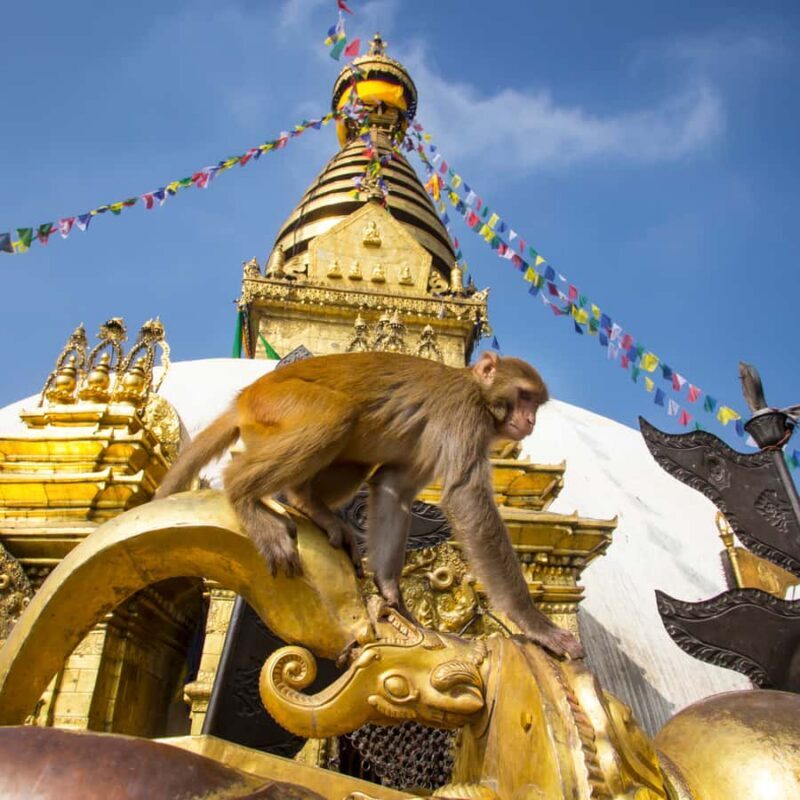
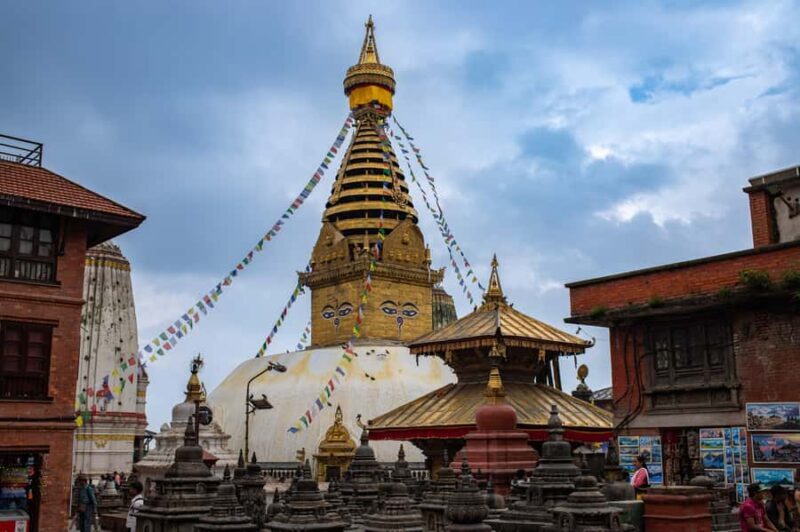
Swayambhunath, often called the Monkey Temple, is a Buddhist stupa said to be about 2,600 years old. Its hilltop position looks over Kathmandu Valley, while the complex brings together the main stupa, old sculptures, monasteries, and a temple dedicated to a child-protector goddess.
The scheduled visit is 35 minutes. That is enough for a guided introduction and a look around, but not a leisurely study of every shrine and carving. The monkeys are part of the site’s everyday character, so keep your belongings close and follow your guide’s advice around them.
I would pay attention here to how the stupa functions as a place of worship, not just a viewpoint. A guide can explain the meaning behind what you see, helping you distinguish religious symbols and practices from the tourist activity around them.
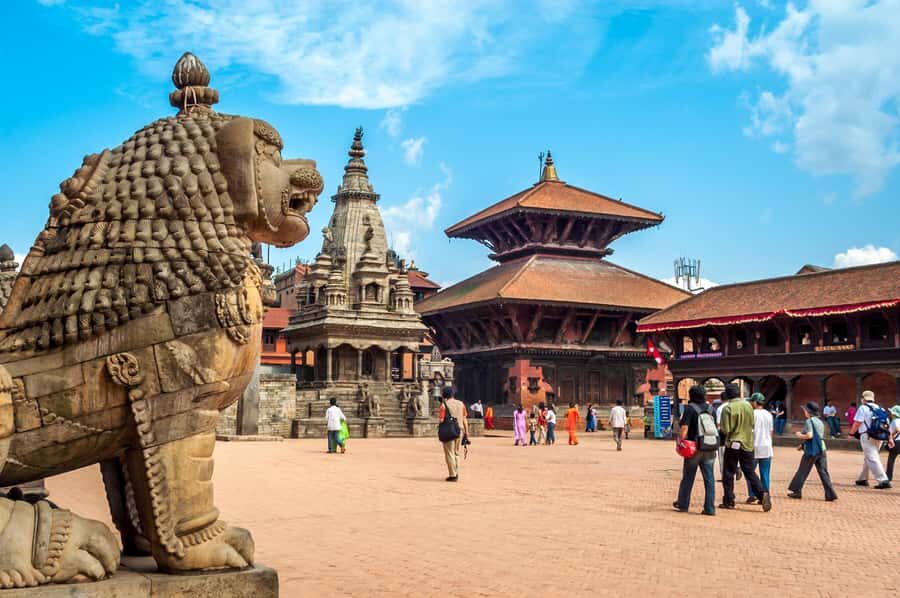
Kathmandu Durbar Square sits in the heart of old Kathmandu, surrounded by palaces, courtyards, and temples. It is also a place where the city’s historic architecture meets present-day street life and shopping.
You have about an hour here for a guided walk, sightseeing, and a little time to browse. The square’s Newari architecture is a central part of its appeal, but the experience is not only about looking up at carved windows and temple roofs. This is a busy urban center, and the guide can help make sense of how the historic buildings fit into the city around them.
The schedule includes shopping at several stops. Treat that as an option, not an obligation. If you have a particular craft or souvenir in mind, say so; Dipendra has been noted for helping a visitor find a specific item, though shopping time will compete with time for the monuments.
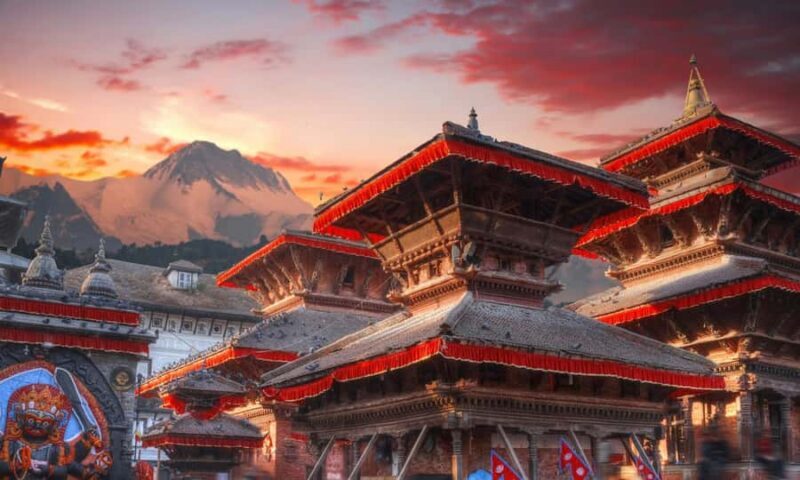
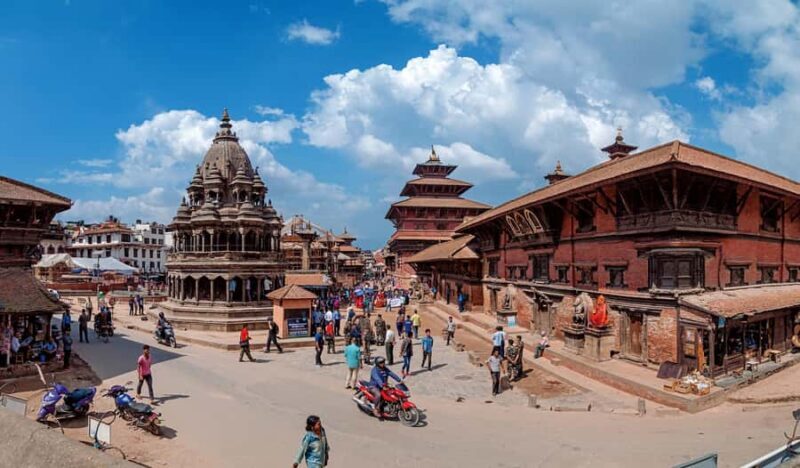
Patan, in Lalitpur district, lies about five kilometers from Kathmandu. Its Durbar Square reflects both Hindu and Buddhist traditions, with palaces, temples, houses, and finely worked doors and windows that show the area’s long craft tradition.
The visit is scheduled for an hour and a half, making it one of the longer stops. That extra time matters: the square rewards a slower look at details, and a guide can point out architectural features you might otherwise pass without noticing. There is also a brunch break listed here, while the tour’s included meal is described as a packed lunch. Confirm what food arrangement applies to your chosen booking rather than assuming brunch means a restaurant meal is included.
Patan is a good place to ask about the Newar community, one of Nepal’s dominant ethnic groups. Newar culture has shaped the valley’s architecture, festivals, and urban life. The tour description specifically highlights meeting and seeing the community, though it does not promise a particular encounter or performance.
More Great Tours Nearby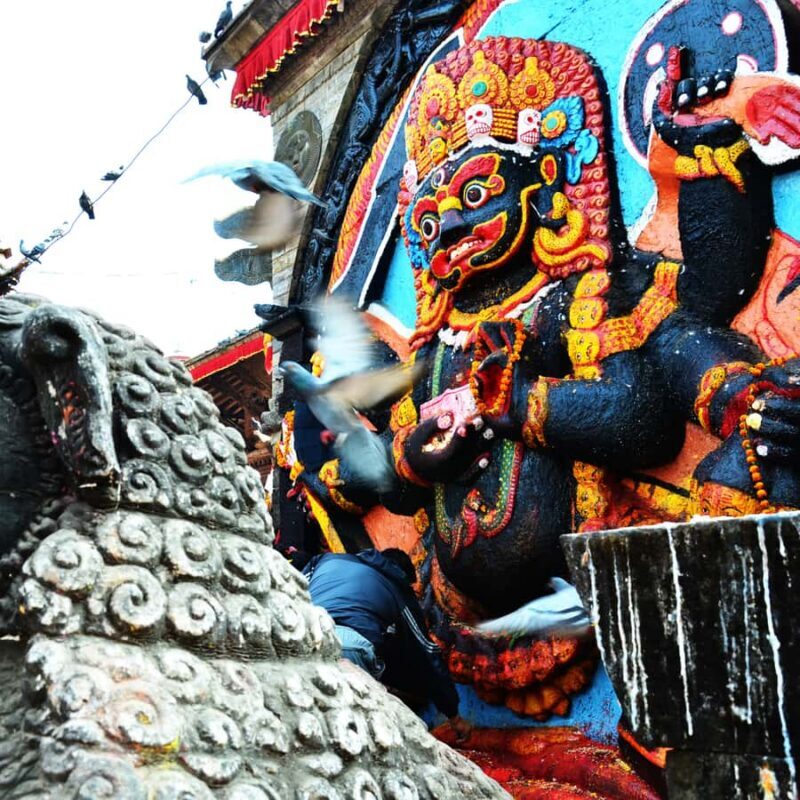
Changunarayan Temple stands on a hilltop near Bhaktapur, in the village of Changu Narayan. It is believed to date to the fourth century, during the Lichhavi dynasty, and is regarded as one of Nepal’s oldest temples and oldest surviving wooden structures.
The stop is brief, at 25 minutes. That makes the guide’s explanation especially useful: you will have limited time to explore independently, so ask about the temple’s age, its woodwork, and what distinguishes it from the larger city shrines. Its hilltop setting also gives this stop a different feel from the dense palace squares.
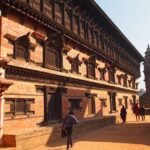
Bhaktapur’s square is known for its preserved medieval architecture, temples, palaces, courtyards, statues, and detailed artwork. The wider city gives the stop a more expansive feel than a quick look at one central plaza. You have two hours here, the longest scheduled visit, with time for a guided walk, sightseeing, shopping, and lunch.
This is the clearest chance to slow down and take in the craft of the buildings. Look at the doorways, windows, and carved details as well as the main monuments. The square is still a lived-in place, so the appeal lies partly in seeing historic forms alongside everyday city life.
The included meal is described as a packed lunch of a croissant, muffin, Danish, cookies, banana, and juice. One account of the day describes a Nepalese meal at a rooftop restaurant, but that should not be treated as guaranteed. If a local sit-down meal matters to you, ask the operator what your chosen option includes.
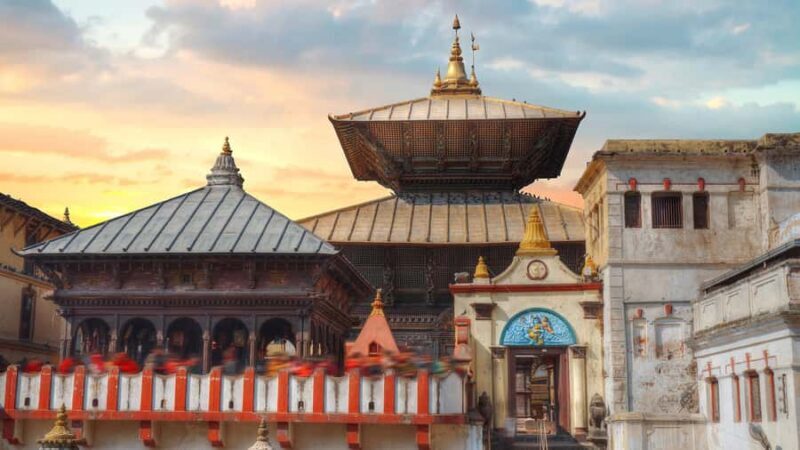
Pashupatinath is a major Hindu temple complex on the bank of the sacred Bagmati River, which flows toward the Ganges. The tour includes about an hour for a guided visit and walk. Depending on the day’s activity, you may see public cremation rites along the river, a solemn part of local religious life rather than a staged attraction.
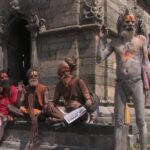
Approach this stop with respect. Cremation is a family and religious ritual, and observing it calls for a quiet manner and attention to your guide’s direction. The tour description also mentions holy men, some of whom pose for photographs. Ask before taking anyone’s picture, and remember that not every person at a religious site is there for visitors.
A guide such as Ramesh has explained Hindu customs and the rituals around the cremation grounds during this tour. That kind of context can help you understand what you are seeing without reducing a sacred place to a photo stop.
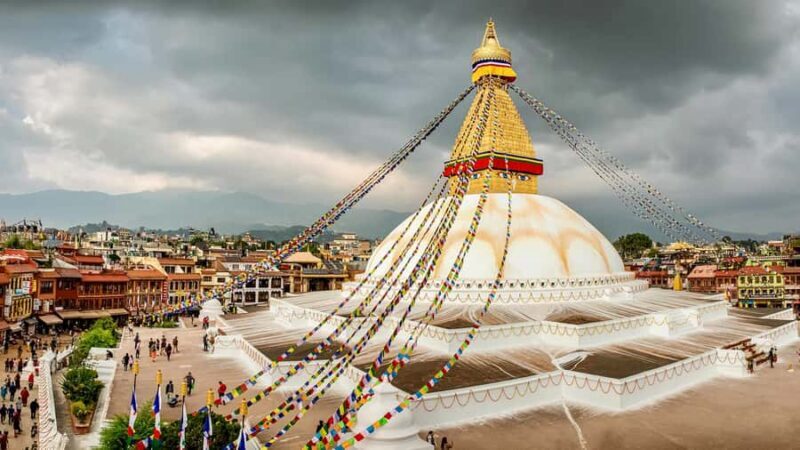
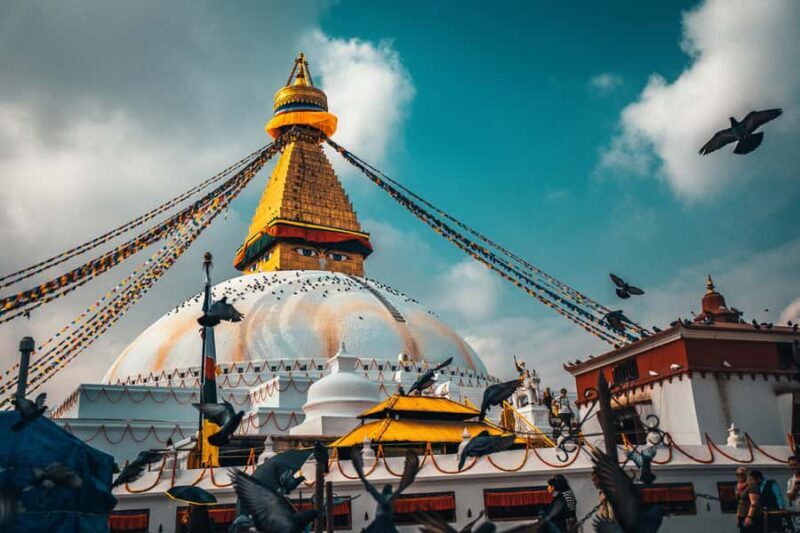
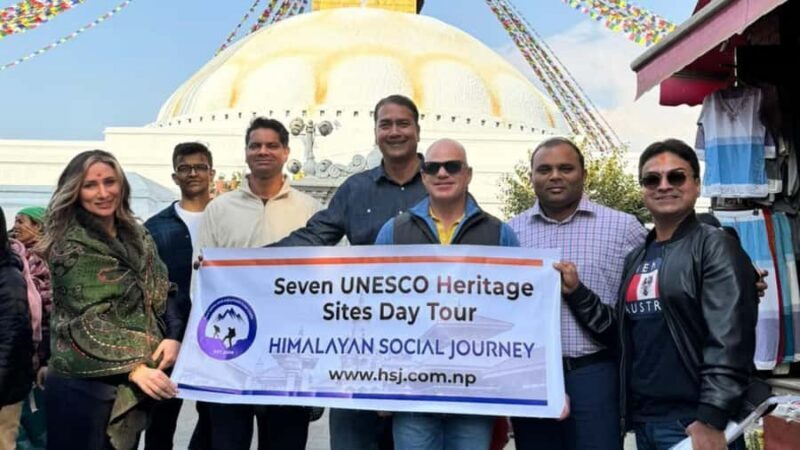
Boudhanath, also called Bouddhanath or Boudha, is considered one of the world’s largest stupas and is said to have been built in the fourth century. The surrounding area has Tibetan monasteries and painting schools where lamas work on thangka paintings, a traditional art form and a popular Nepalese souvenir.
The scheduled visit is 40 minutes, including a guided walk and time for shopping. It is a short introduction to a major Buddhist center, rather than a deep exploration of the neighborhood. If the thangka paintings interest you, you can ask your guide about the art and the nearby schools, while keeping in mind that shopping is optional.
The guide is the key to getting more than a fast sequence of impressive buildings. Names associated with the tour include Dipendra, Ramesh, Rajan, and Dipak. Dipendra is frequently singled out for explaining history and religious traditions in clear English, answering questions, checking how the group is feeling, and helping the day run at a comfortable pace.
That personal attention can matter in a long itinerary. Some visitors have arranged to leave the group early, while private tours have been adapted to suit individual interests and pace. Flexibility depends on your booking and the day’s schedule, so discuss any limits or priorities with the guide at the start.
The driver has an equally practical role. Kathmandu traffic and narrow streets can make independent travel between seven sites tiring to organize. Transport is rated highly, and accounts of the trip describe careful driving and smooth pickups. Still, traffic can affect the timing, so keep some flexibility in your plans after the tour.
The stated price is $2 per person, but the amount alone does not tell you what the day will cost. Entrance tickets are included only with the All-Inclusive option. If you choose another option, monument entrance fees are extra, and you are advised to carry Nepalese currency to pay them. Check the exact ticket choice and current total before booking.
The base package includes private transportation, a guide, hotel pickup and drop-off, government tax and service charge, and the packed meal. That makes the tour most useful for someone who values a guide and organized transport across the valley. If you prefer a slower day with fewer sites, the value may be less compelling than choosing only the places that matter most to you.
The tour is available in English, Nepali, and Hindi, and private groups are available. You can cancel up to 24 hours in advance for a full refund, or reserve now and pay later. Bring an ID card, or a copy, and do not bring alcoholic drinks into the vehicle.
Choose this tour if you have limited time in Kathmandu and want a broad introduction to the valley’s most important heritage sites. It is especially useful for first-time visitors who want a guide to explain Hindu and Buddhist customs, Newar architecture, and the history behind the monuments.
It is also a strong fit if you would rather leave the driving and route planning to someone else. Solo visitors may appreciate the hotel pickup and guide support, and private groups can request a pace or set of stops that suits them, subject to what the operator can arrange.
Skip the full route if you want long, unhurried visits at every site. Seven stops in a day means frequent transitions and plenty of walking. The tour is not suitable for wheelchair users or visually impaired people, and the walking involved is worth taking seriously even if you have no mobility concerns.
Book it if your priority is to understand the range of Kathmandu Valley’s heritage in one day, with transport and a guide keeping the pieces together. The most valuable part is not simply ticking off seven places. It is having someone explain why a stupa, palace square, temple, and cremation ground belong to different strands of the same cultural story.
Before paying, confirm whether your option includes entrance tickets, clarify what lunch means for your booking, and tell the guide if you need a gentler pace or want to prioritize certain stops. If you have several days in the valley and prefer lingering, use this as a sampler or choose fewer sites. If your time is short, this is a practical way to see a lot without trying to navigate the whole route alone.
“Guide was excellent. Made accommodations for me to go home on different tour bus because the rest of the group was doing full 7 sites and I was onl…”
The stated duration is 4.5 to 8 hours. The route includes seven sites and substantial walking, so allow for the possibility of a full day.
The tour visits Swayambhunath, Kathmandu Durbar Square, Patan Durbar Square, Changunarayan Temple, Bhaktapur Durbar Square, Pashupatinath Temple, and Boudhanath Stupa.
Entrance tickets and monument fees are included only with the All-Inclusive option. Otherwise, you need to pay the fees separately.
Carry Nepalese currency for monument fees if you have not selected the All-Inclusive option.
The included packed lunch is listed as a croissant, muffin, Danish, cookies, a banana, and juice.
Thamel, Kathmandu, is named as a pickup and drop-off location. Check the available location details for your booking.
The tour is available in English, Nepali, and Hindi.
A private group is available. If you want a private tour or need a particular pace, confirm the arrangement when booking.
Wait ten minutes before your scheduled pickup. At a hotel, wait in the lobby; at an Airbnb or private apartment, wait outside the main entrance. Look for the tour vehicle and a guide holding a sign with your name.
You can cancel up to 24 hours in advance for a full refund. Reserve-now-and-pay-later is also available.
You can check availability for your dates here: