Physical Address
304 North Cardinal St.
Dorchester Center, MA 02124
Physical Address
304 North Cardinal St.
Dorchester Center, MA 02124

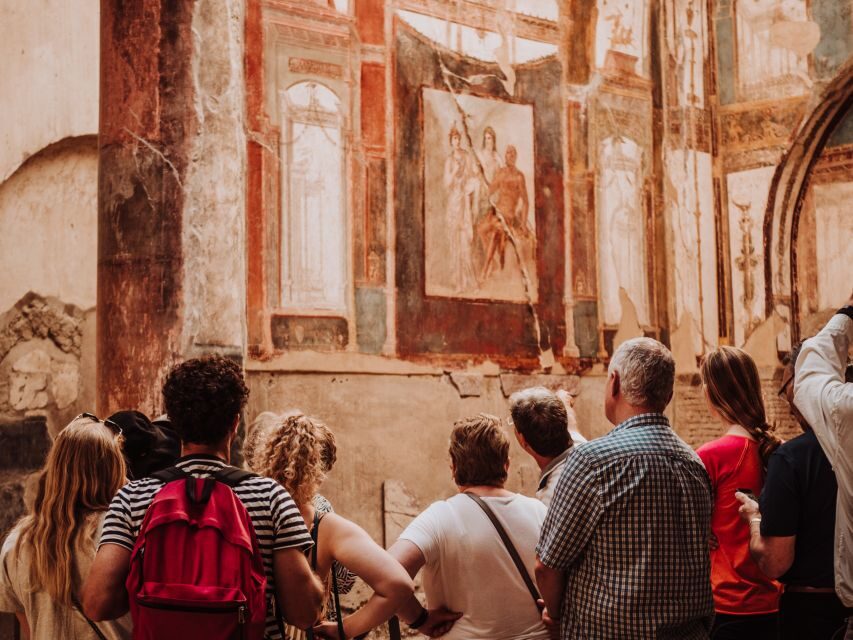
Compare Pompeii’s vast streets with Herculaneum’s preserved homes on a 5.5-hour archaeologist-led small-group tour.
Pompeii is a city-sized window onto Roman life, but Herculaneum can make the past feel closer: wooden objects, upper floors, mosaics, and painted walls survived there in striking condition. This 5.5-hour tour pairs both sites with an archaeologist, so you get stories and context as you walk rather than facing miles of ruins with only a map.
I like two things here: the contrast between Pompeii’s broad streets and Herculaneum’s preserved houses, and the small group of up to 20 that makes it easier to follow a guide and ask questions. Guides have included Sergio, Diego, Julia, Paolo, and Vincenzo, though you cannot count on a particular guide.
The main trade-off is pace. Two hours at each site is a useful introduction, not an exhaustive visit, and the planned 30-minute lunch break is short after a morning on your feet. The tour also ends at Herculaneum, so you need to arrange your own onward journey.
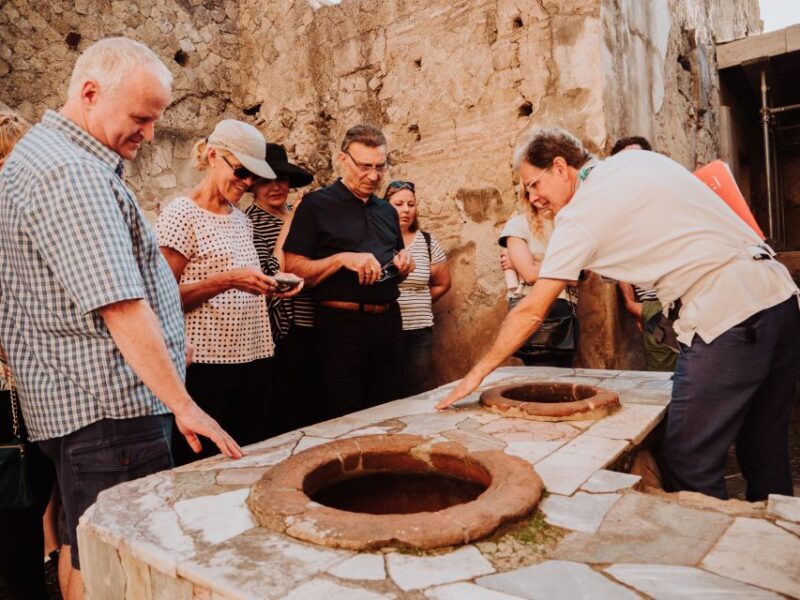
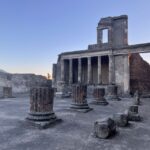
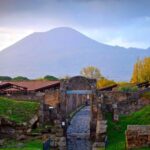
It is tempting to treat Pompeii as the whole story. It is immense and famous, and it can easily fill a day on its own. Herculaneum is smaller, but the two sites make more sense together. You see two ancient towns struck by the same eruption, then compare how their different burial conditions shaped what survived.
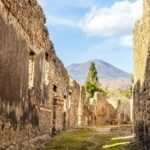
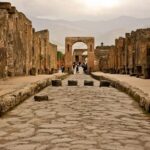
In 79 A.D., Vesuvius covered Pompeii in roughly four metres of ash and pumice. Herculaneum was buried under a much deeper flow of mud, described as about 20 metres thick. The result is a useful contrast: Pompeii gives you broad streets and a wide sense of urban life, while Herculaneum preserves details such as upper storeys, wooden objects, paintings, and mosaics.
That contrast is the tour’s strongest idea. The ruins are not interchangeable stops on a checklist. Each helps you picture a different part of Roman life, from the public city to the homes of wealthier residents. A guide can connect the fragments to the way people lived, worked, and moved through their towns.
Looking for more options in Pompei Campania? Here are some other experiences worth considering.
The meeting point is on the left side of Pompeii’s Porta Marina Inferiore entrance, near the Arte bus stop. It is a few minutes from the Pompei-Villa dei Misteri Circumvesuviana station. Look for the Askos Tours sign.
Take a moment to check the entrance name before setting off. Pompeii has several gates and plenty of tour groups, and one visitor found the meeting point less obvious than expected. If you are arriving by train, allow time to find the correct side of the entrance rather than cutting it close.
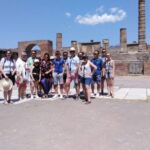
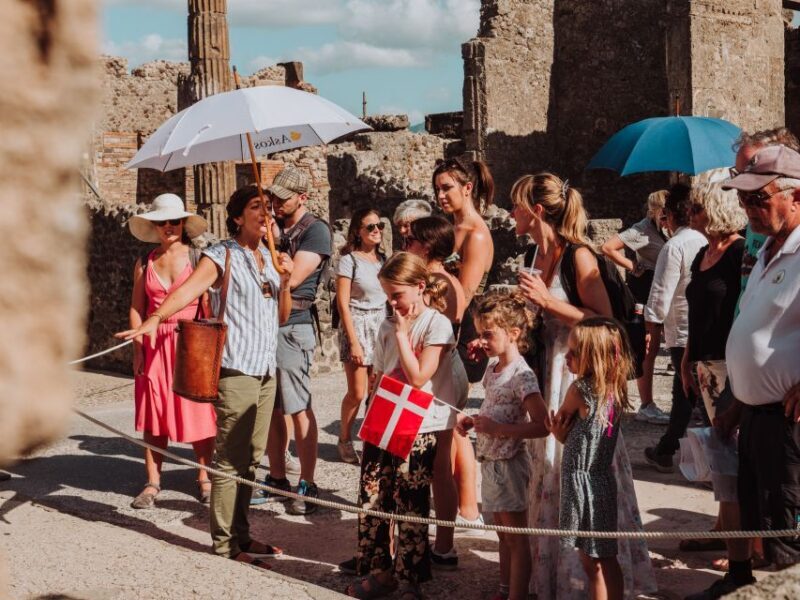
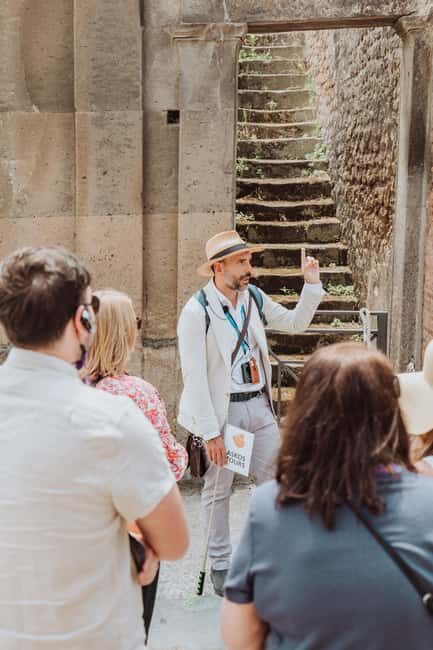
The tour is offered in English and Italian. Groups can include up to 20 people, and headsets are provided when there are more than 10 participants. That matters in an open archaeological site: a guide’s voice can be hard to hear when the group stretches out or other groups pass nearby.
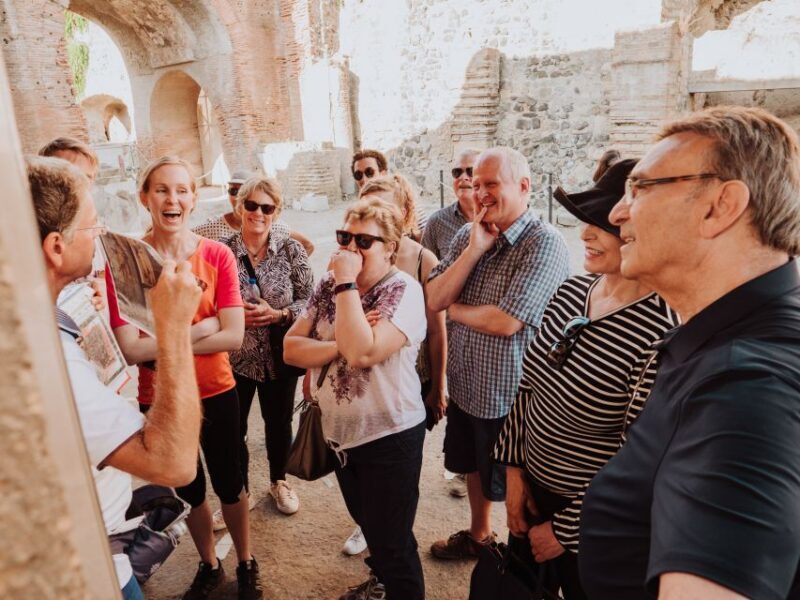
The first guided walk lasts about two hours. That is enough time for an organised route through selected parts of the site and a clear introduction to its history, but not enough to see everything in a city as large as Pompeii. Think of this as a well-chosen overview, not a complete exploration.
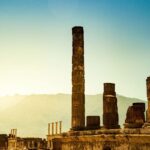
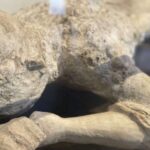
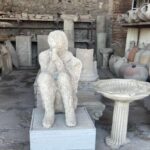
The eruption’s force is not an abstract fact once you are among the remains. Pompeii’s ash and pumice preserved buildings, objects, and traces of daily life, while the casts of victims make the human cost painfully immediate. Several visitors have found those casts especially affecting. They can change the tone of the visit from ancient-city sightseeing to a reminder that this was a lived-in place, not a stage set.
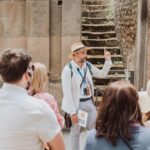
A guide helps you read what remains. Without context, a street, wall, or room can be hard to interpret; with an archaeologist explaining how spaces were used and what excavations have revealed, the fragments become easier to imagine as part of a working town. The guides named by past participants include Diego, Sergio, Vincenzo, Alfonso, and Amedeo, among others. Guide assignments vary, so treat those names as examples, not a promise.
The strongest guides also make room for questions and keep the walk lively. Accounts of tours led by Paulo, Alfredo, and Julia, for example, describe a mix of historical detail, stories, and humour. The pace and style will depend on the person leading your group, but the format gives you a better chance of understanding the site than simply wandering without a plan.
Expect plenty of walking over ancient surfaces. Wear comfortable shoes and clothes, and bring water. In summer, a hat and sunglasses are sensible; in changeable weather, carry a light raincoat or poncho. Shade can be limited, and one guide was praised for adjusting the route to keep the group out of the sun where possible, but you should not count on shelter throughout.
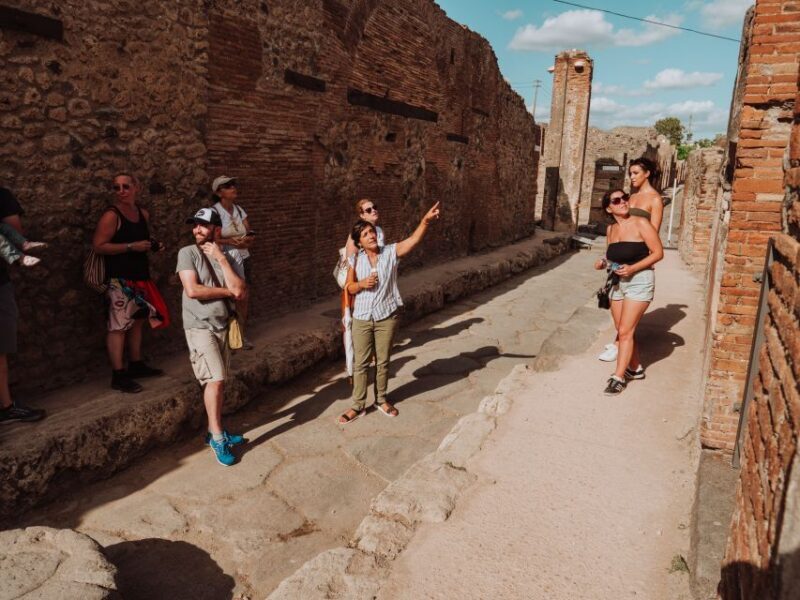
After Pompeii, the schedule gives you 30 minutes for a break. In practice, that is a quick window to use the toilet, pick up a sandwich, or browse the souvenir shops outside the ruins. It is not much time for a relaxed meal, especially after two hours of walking.
If you prefer a proper lunch and a cool place to sit, this is a real drawback to weigh. Bring a snack or plan to eat before the tour if you know you need a longer pause. The break is useful, but the day is a long one, and some people will find the short stop more functional than restful.
The next leg is by Circumvesuviana train to Ercolano, the town beside Herculaneum. The journey is described as about 20 minutes, while the itinerary allocates 30 minutes for the transfer. That allowance gives the schedule some room, but local train delays can still extend the day. A train disruption has led to a longer outing before; on another occasion, the company arranged a private minibus instead. Treat that as a possible response to problems, not a standard transfer option.
The train transfer is part of the day’s logistics, so keep your group together and follow the guide’s instructions. The experience is not a coach tour with a private vehicle waiting at every stop. It uses local transport between the archaeological sites.
More Great Tours Nearby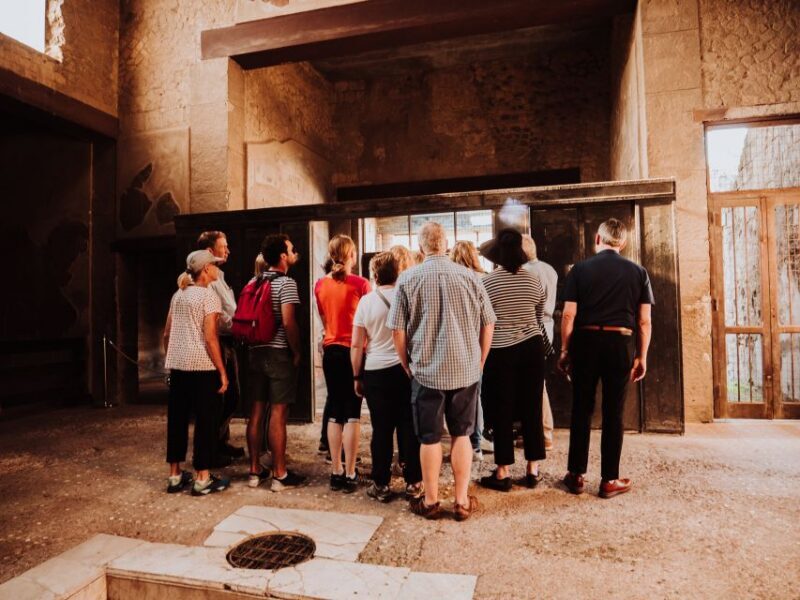
The final guided walk lasts about two hours at Herculaneum. It is smaller than Pompeii, which makes the visit feel more contained, but the surviving details can be remarkably vivid. The deep mud that buried it preserved second floors, carbonised wooden objects, intact paintings, and mosaics that are still on display.
Here, you can get a closer sense of the homes and the lives lived inside them. Herculaneum offers a glimpse of a more refined domestic world, especially among the wealthier residents of the Roman Empire. Its preserved surfaces and furnishings help turn broad historical ideas into specific rooms and objects.
That is why I would not skip Herculaneum just because you have already seen Pompeii. The smaller site is not a lesser encore. It changes the scale of the story, shifting your attention from a large urban centre to the material details of private life. The two-hour visit still cannot cover every corner, but the guide can help you focus on the most revealing areas.
The day ends at Parco Archeologico di Ercolano. There is no included ride back to Pompeii. If your car, hotel, or onward train is elsewhere, plan that return independently. This matters most if you are trying to fit the tour into a tight schedule or travelling on from the site.
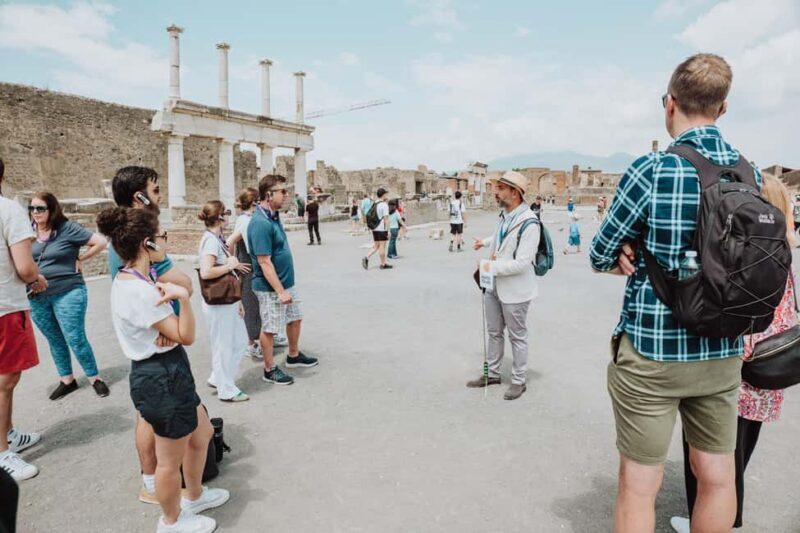
No tour price is specified here, so it is better to judge value by what the format offers than by guessing a figure. You get guided walks at two major sites, an archaeologist’s interpretation, a small-group cap, and a planned transfer by local train. The guide is the key part of that value: archaeological remains can be visually impressive but difficult to make sense of without context.
There is an important ticket detail to verify before paying. The tour information says entry tickets are provided for both sites and advertises skipping the ticket line, but it also lists Herculaneum admission as €16 for adults and €2 for EU citizens aged 18 to 25. Confirm exactly which tickets are included in your booking and whether any admission cost remains due on the day. Do not assume the separate price applies to you, or that every ticket is covered, without checking the terms for your selected date.
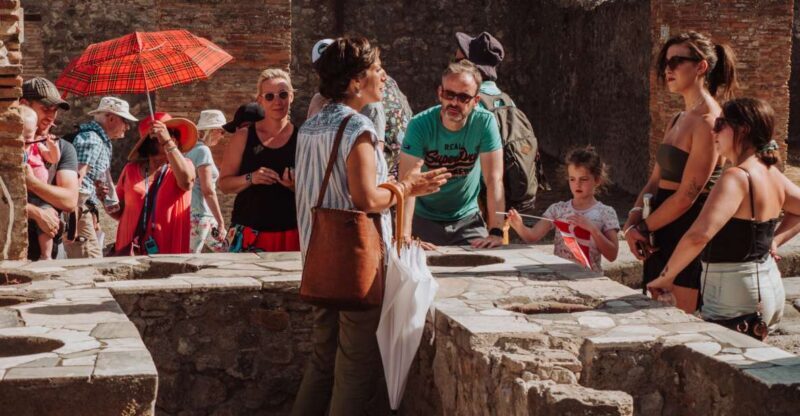
The small-group format also has practical value. With no more than 20 people, you have a better chance of hearing explanations and asking questions than in a large crowd, and headsets are used for groups larger than 10. It is not a private tour, though, and the pace needs to suit the whole group.
This works well if you want to see both sites in one day and would rather have an archaeologist explain what you are looking at. It is especially suited to history-minded visitors who want a clear route through the ruins, or to anyone who has dreamed of seeing Pompeii and wants Herculaneum included without organising two separate visits.
It is less suitable if you want a slow day, a long lunch, or hours to explore each site independently. People with mobility impairments and wheelchair users are listed as not suitable for this activity. The day involves walking across archaeological sites and a train transfer, so consider the physical demands before booking.
For a day trip from Naples or elsewhere, check your arrival and return plans carefully. The tour starts at Pompeii and finishes at Herculaneum, with no ride back to the starting point. Carry photo identification, dress for the weather, and leave a buffer for possible train delays.
I would book it if your priority is understanding both cities in one well-structured day. If you want a full, unhurried visit to Pompeii, choose more time there instead. If you do book, protect the lunch break with a snack, confirm ticket coverage, and plan your journey home from Ercolano.
“Sergio was knowledgeable, and guided us to the most interesting areas to view.”
The scheduled duration is 5.5 hours, including guided visits at Pompeii and Herculaneum, a short break, and the transfer between sites.
Meet on the left side of Pompeii’s Porta Marina Inferiore entrance, near the Arte bus stop. Look for the Askos Tours sign.
The tour is offered in English and Italian.
The group is limited to a maximum of 20 people. Headsets are provided for groups of more than 10.
The guided walk at Pompeii lasts about two hours.
The scheduled break is 30 minutes. It is a short stop for a quick meal, toilet visit, or brief look at the shops outside the ruins.
The tour uses the Circumvesuviana train to Ercolano. The journey is described as about 20 minutes, with 30 minutes allocated in the itinerary.
No. The tour finishes at Parco Archeologico di Ercolano, so you need to arrange your onward journey from there.
The tour information says tickets are provided for both sites, but it also lists a Herculaneum admission price. Check the ticket terms for your chosen booking to confirm what is covered.
Bring a passport or ID card, comfortable clothes, and suitable walking shoes. In summer, take water, sunglasses, and a hat; carry a raincoat or poncho in case of sudden showers.
You can check availability for your dates here: