Physical Address
304 North Cardinal St.
Dorchester Center, MA 02124
Physical Address
304 North Cardinal St.
Dorchester Center, MA 02124

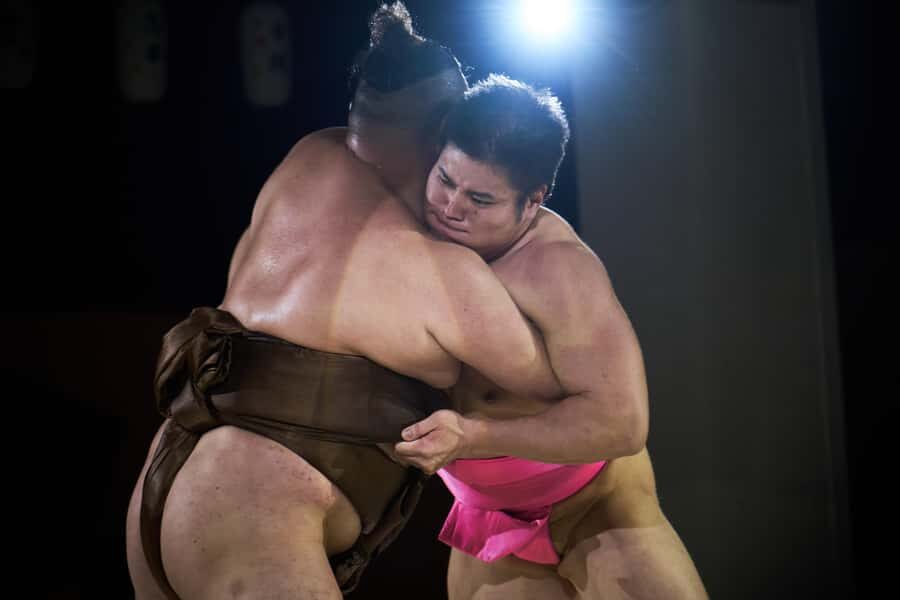
Learn sumo basics, watch former rikishi perform, try ring drills and optional chanko nabe at this interactive Osaka sumo experience.
Sumo here is more than a bout to watch: former rikishi explain the rules, demonstrate techniques and invite you into the ring for basic drills. I like that the show makes a sport with unfamiliar rituals easy to follow, and that the chance to try sumo yourself turns the lesson into a lively, hands-on outing.
I also like the practical extras: you can try on a haori, order chanko nabe, and take photos in the ring. The main consideration is location. Rinku Town is close to Kansai International Airport, but a long way from central Osaka, and this is a cultural show rather than a professional tournament.
Sumo’s rituals can look mysterious if you have never watched a match. This experience gives you a friendly primer before the action: the host covers the sport’s traditions, basic rules and etiquette, then helps you notice the techniques behind the bouts. English and Japanese instructions are provided, so you do not need to know the sport in advance.
The lesson is a good fit for first-timers and families. Instead of asking you to absorb a long lecture, the show connects explanation to demonstrations. You see moves and rules in context, which makes the later ring practice easier to follow.
There is also a clear limit to set in your mind. These are short exhibition bouts for cultural entertainment, not Grand Sumo tournament matches. If you are hoping for the solemn atmosphere and full-length contests of a professional tournament, this is a different kind of outing. Its strength is making sumo approachable, funny and interactive.
You might also be interested in these Osaka experiences
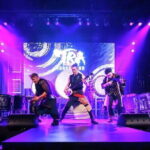
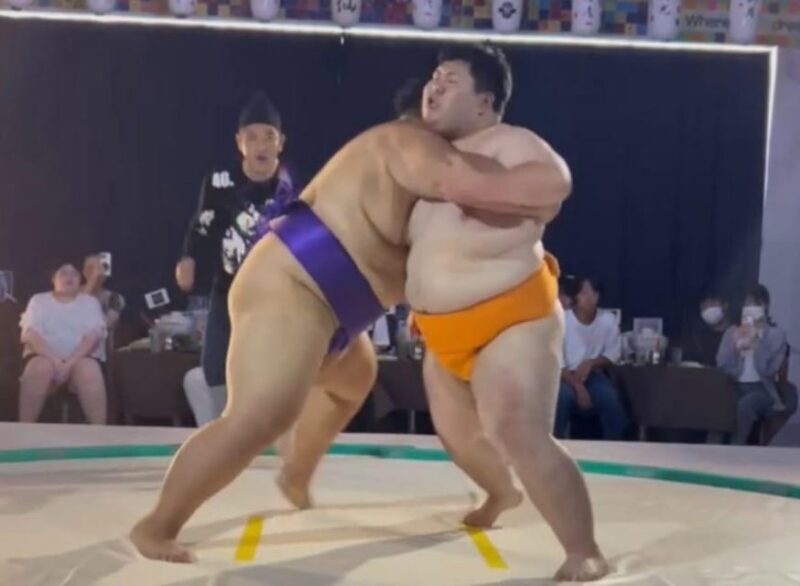
After the introduction, former rikishi perform bouts and show how a contest works. The host keeps the pace moving, with humour and explanations that help you understand what is happening. The wrestlers are part of the performance, not distant figures on a raised stage, and the format gives them room to engage with the audience.
That balance of sport and comedy is central to the experience. You get to see sumo techniques demonstrated, but the aim is entertainment as well as instruction. The show itself lasts about 50 minutes, including a short break, though the complete visit generally runs 90 minutes to two hours once you add check-in, food and the post-show activity.
You can expect an informative introduction rather than an in-depth account of every part of a wrestler’s life. The focus is on rules, techniques, history and etiquette. If you want to learn more about recruitment, training routines, diet or daily life in a sumo stable, you may want to ask questions during the visit, but those subjects are not promised as a full part of the program.
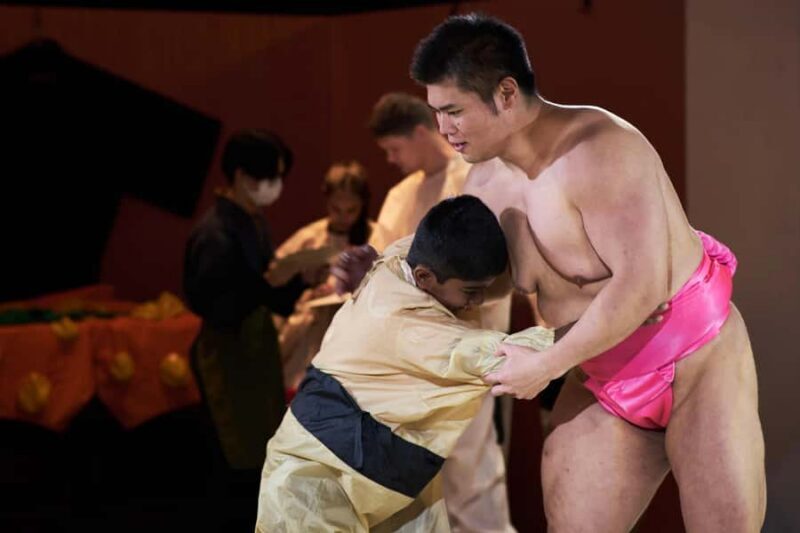
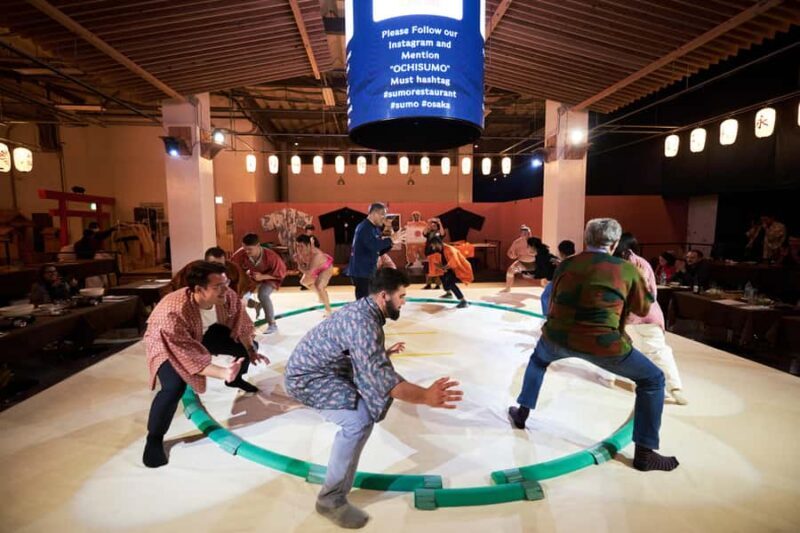
The hands-on portion is the experience’s biggest draw. After the bouts, you can step onto the dohyō, the sumo ring, and learn a few basic exercises from former rikishi. These include shiko, the distinctive leg stomps, a low stance and suri-ashi, the sliding footwork used to move around the ring.
The drills give you a small taste of how demanding sumo movement can be. They are not a full training session, and you do not need prior experience. The point is to try the basics under guidance, then appreciate the balance and control the wrestlers bring to their bouts.
You may also get the chance to face a former rikishi in a friendly one-on-one bout. The opportunity is memorable, but participation is not guaranteed. If more people volunteer than the ring can accommodate safely, participants may be chosen at random. Go in ready to cheer on someone else, too, and treat a turn as a bonus rather than the sole reason to book.
Physical activity carries a small risk of injury, which participants accept at their own discretion. The match is presented as a safe, friendly interaction, but it is still a physical activity. Children get priority for this part, a thoughtful touch for families, though priority does not mean every child is guaranteed a bout.
The visit ends with time for in-ring photos with a former rikishi. You can also see retired rikishi equipment and dohyō exhibits, adding a little context to the pictures. Bring your camera or phone, and if photos matter to you, consider asking about front-row seating when you book. Front-row places are suggested for better photo angles, but seat types and availability depend on the booking options.
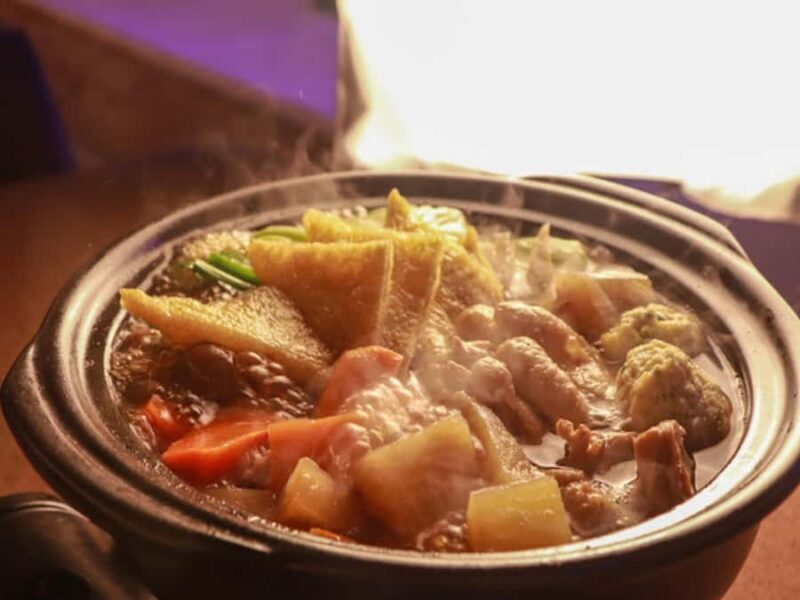
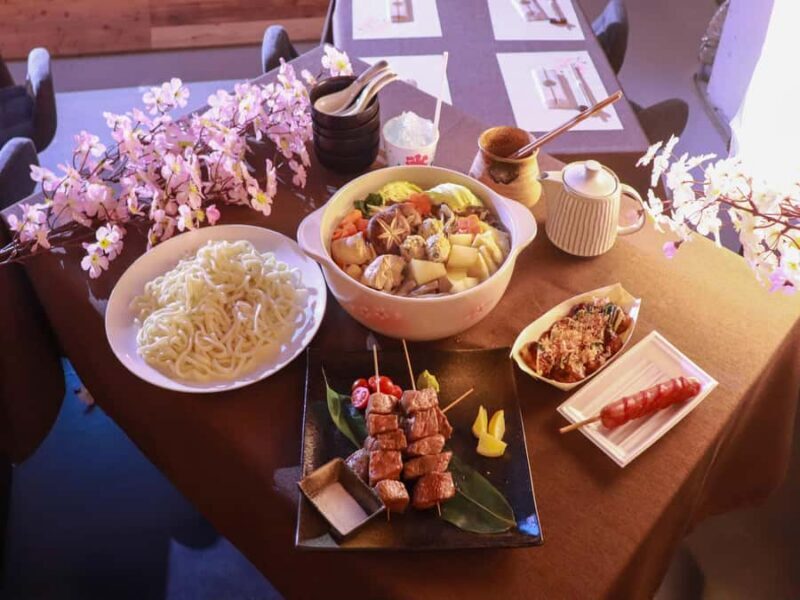
Chanko nabe is the traditional hot pot associated with sumo wrestlers’ training and recovery. Here, the recipe is based on the home-style cooking of the stable where one of the former rikishi trained. Each stable has its own approach to seasoning, so the meal offers a taste of sumo life as well as a filling dinner.
Food is not included with the basic ticket. You need to choose a food plan or order separately at the venue. The hot pot is served in a large shared pot for the table, and you serve yourself into bowls. That makes it a social meal, but check the plan details and portion arrangement when booking so you know what you are paying for and how much food to expect.
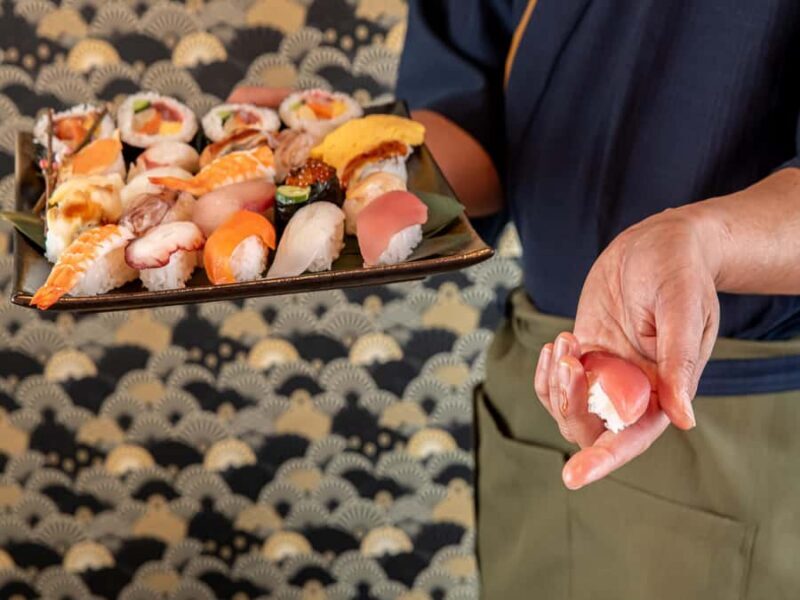
You can also buy snacks and side dishes, including karaage fried chicken, yakitori and takoyaki. Alcoholic drinks are available at the bar. Gluten-free and vegetarian options are offered at no extra charge, with staff assistance on the day. The listed meat dishes use chicken or beef.
The show can fit around lunch or dinner. The day performance starts at 1:00 PM, and the evening performance starts at 6:00 PM. Doors open from noon to 12:45 PM for the day show, and from 5:00 to 5:45 PM for the evening show. If you want to eat before the performance, arrive during the door-open window. Dining during the show is also possible, but the lighting may be dimmed, so you could miss details while eating.
More Great Tours Nearby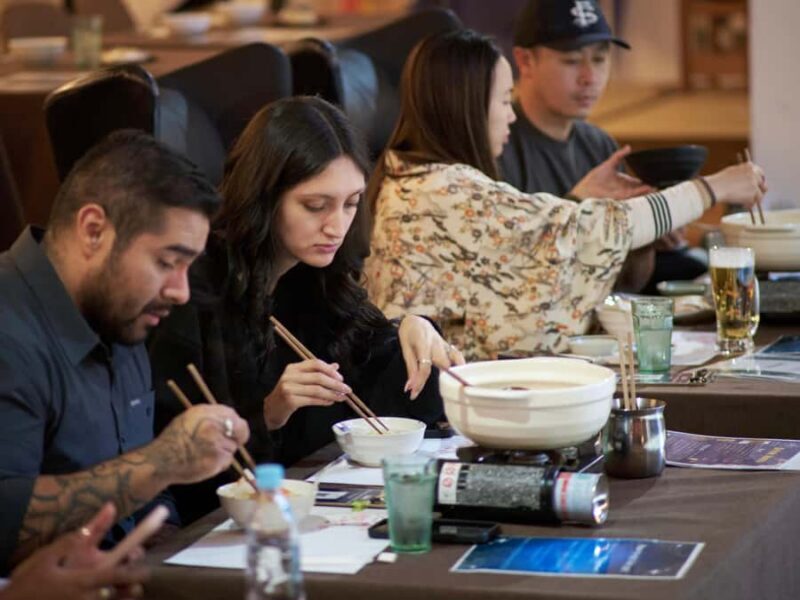
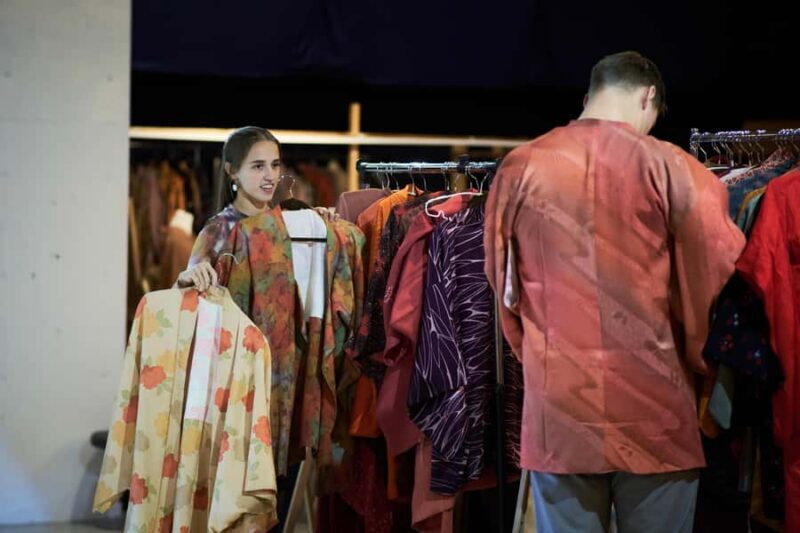
Before the performance, you can visit the kimono corner and try on a haori, a short jacket traditionally worn over a kimono. This is a self-dress option included with the experience, and it gives you another chance for photos without committing to a longer dressing session.
A full kimono makeover is available as a paid upgrade, with professional dressing. The distinction matters: the included haori try-on is simple and informal, while the premium option is the one to choose if you want professional help putting on a complete outfit.
If either the food or clothing experience is important to you, arrive when the doors open rather than just before the show. The schedule gives you time to eat or try on a haori before the performance begins, and you will be less rushed.
At about $63 per person, the basic experience covers a sumo show, cultural commentary, ring drills, an in-ring photo session, the haori try-on and access to exhibits. It is not simply a seat for a short performance. The mix of explanation, demonstrations and participation gives you several ways to connect with sumo during a visit of roughly 90 minutes to two hours.
The price looks strongest if you want an interactive introduction and expect to make use of the training and photo opportunities. If you mainly want to watch serious bouts, the entertainment format may not suit you as well. And remember to budget separately for chanko nabe, drinks or snacks, and the professional kimono upgrade if you want those extras.
Family pricing can make the outing more accessible. Children aged 7 to 12 have discounted pricing from ¥3,000, while children 6 and under can participate free. Kids’ chairs are available on request, and children get priority for the one-on-one rikishi experience. Confirm the price and selected plan for each person when booking, particularly if you are adding food.
The venue is Sumo Restaurant Ochi Izumibeya, inside Ochiarena on the second floor of Rinku Pleasure Town Seacle. From Rinku Town Station on the JR or Nankai line, use Exit 4 and walk straight along the road. After about three minutes, Ochiarena is on your right. The restaurant is above the Bike-O motorcycle shop; check in at the entrance, where staff will direct you to your seat.
The location is especially convenient if you are coming from Kansai International Airport. Rinku Town is one stop, about five minutes from Kansai Airport Station. That makes the experience a practical first or last Osaka activity if your flight schedule leaves room for it.
For a visit from central Osaka, allow more time. The trip from the Dotonbori area can take roughly 45 minutes to an hour, so this is not a quick detour from the city centre. Train access is recommended. Check your route and show time before setting out, and arrive at least 10 minutes before the performance begins.
I would choose this for a first introduction to sumo, a family outing, or a break from Osaka’s usual food and sightseeing plans. The format explains the sport without assuming prior knowledge, and the chance to try a few moves gives children and adults something to do beyond watching. The wrestlers’ humour and audience interaction also make it a lively choice for a group with mixed interests.
It is less suited to anyone seeking the atmosphere of a Grand Sumo tournament or a deep study of stable life. The bouts are part of a cultural show, and one-on-one participation is not assured. If those points fit your expectations, the combination of instruction, a hot-pot option and ring time offers a distinctive way to spend an afternoon or evening.
My call: Book if you want an easy-to-follow, hands-on sumo introduction and do not mind travelling out to Rinku Town. Choose a food plan if chanko nabe is part of the appeal, and consider the kimono upgrade only if professional dressing matters to you. If your main goal is tournament sumo, use your time and budget for a different kind of event.
“”
The full experience generally takes 90 minutes to two hours. The show itself lasts about 50 minutes, including a short break, followed by ring training and the photo session.
The day show starts at 1:00 PM and the evening show starts at 6:00 PM. Doors open from noon to 12:45 PM for the day show, and from 5:00 to 5:45 PM for the evening show.
No. Meals and drinks are not included unless you choose a food plan. Chanko nabe, snacks and drinks can also be purchased at the venue.
Chanko nabe is a hot pot traditionally eaten by rikishi to support training and recovery. It is served in a shared pot for the table, and diners serve themselves into bowls.
You can join the ring drills, and you may be able to take part in a one-on-one bout with a former rikishi. If more people want to participate than ring capacity allows, participants may be selected at random, so a match is not guaranteed.
Yes. Children are welcome. Children aged 7 to 12 have discounted pricing from ¥3,000, and children 6 and under can participate free. Young participants get priority for the one-on-one rikishi experience, and kids’ chairs are available on request.
Yes. Gluten-free and vegetarian options are offered at no extra charge, with staff assistance on the day.
You can try on a haori, a short jacket worn over a kimono, by yourself. A full kimono experience with professional dressing is available as a paid upgrade.
Use Exit 4 and walk straight along the road for about three minutes. Ochiarena is on your right. Sumo Restaurant Ochi Izumibeya is on the second floor of Rinku Pleasure Town Seacle, above the Bike-O motorcycle shop.
No. It is a cultural entertainment program with demonstrations and exhibition bouts by former rikishi, not part of a professional Grand Sumo tournament.
You can check availability for your dates here: