Physical Address
304 North Cardinal St.
Dorchester Center, MA 02124
Physical Address
304 North Cardinal St.
Dorchester Center, MA 02124

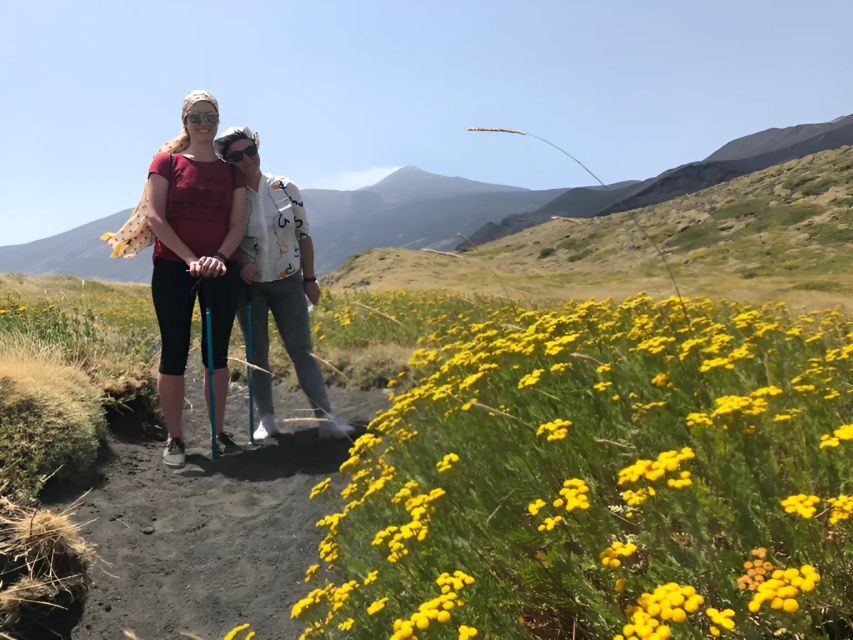
Explore Etna’s 2002 lava front, Sartorius Craters and a lava cave, then enjoy lunch and free time at the Alcantara Gorges.
Etna’s volcanic past is close at hand on this day out: you can walk beside the 2002 lava front, follow a gentle path among the Sartorius Craters and enter a lava tunnel once used to store snow. Then the mood shifts at the Alcantara Gorges, where the river cuts through dark volcanic rock.
I like the variety: the Etna stops offer striking geology and wide views, while the gorge gives you room to cool off and explore at your own pace. I also like that the day includes a local lunch, transport and the gorge entrance fee, so you are not arranging each piece yourself.
The main consideration is that this is not a summit climb or a close approach to Etna’s central crater. The trek is easy by the tour’s description, but it still involves walking on mountain paths, and the trip is not suited to people with mobility impairments or wheelchair users.
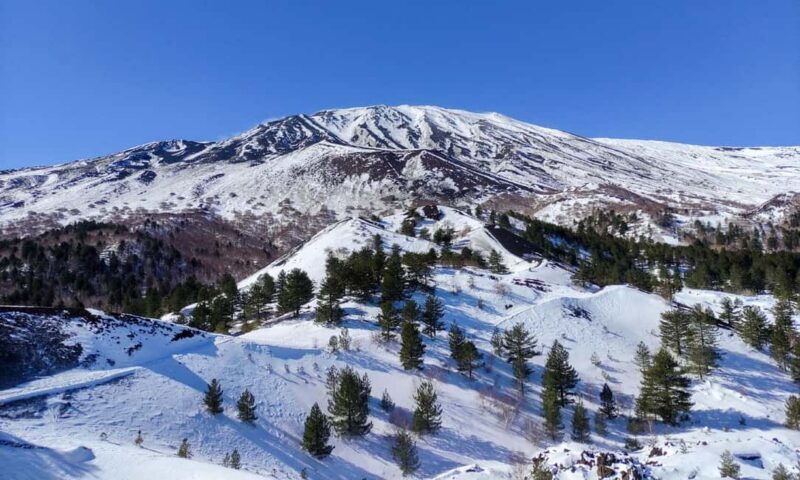
This tour makes a useful distinction between seeing Etna and climbing Etna. You visit the volcano’s northern slopes, moving among lava flows, forest, side craters and rural surroundings. It is a day of walking and interpretation, not a high-altitude ascent to the summit or an expedition to the central crater.
That difference matters when you book. If you want a guided introduction to Etna’s geology, scenery and place in local life, this route covers a lot without requiring a strenuous climb. If your main goal is to reach the highest possible point or get close to the active central crater, this is not that excursion.
The guide’s explanations are a major part of the experience. You will see volcanic features in the open, but a good guide helps connect them: how lava moves, how eruptions alter forests and facilities, and how people have adapted to living on Etna. Guides vary by departure. Names associated with the tour include Salvatore, often called Salvo, Rosario or Ross, Maya and Vincenzo. The tour is offered in English, Italian and French.
You might also be interested in these Catania experiences
After pickup, the drive to the Etna area takes about 40 minutes. The group travels in an SUV or minivan, with no more than eight passengers per vehicle. That is a practical advantage on a full-day route: you are not loading and unloading a large coach, and smaller vehicles can make the stops feel less like a crowd event.
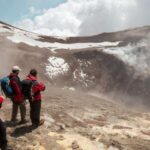
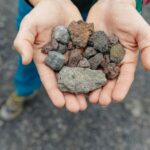
One of the first major encounters is the lava front from Etna’s 2002 eruption. The flow destroyed the Piano Provenzana ski facilities and part of the Ragabo Pine Forest, making this a vivid example of how quickly an eruption can redraw the mountain. Here, you can get close to old lava and touch its hardened surface.
The route passes through Ragabo Forest along the Mareneve road. The contrast between trees and black volcanic rock is part of what makes this side of Etna so compelling. It is not a bare, uniform wasteland: the volcano’s slopes include forest, crops and villages, and the views change as you move through them.
An off-road section is included to reach the lava front. The tour is not a technical off-road adventure, but it does add a different perspective from simply stopping beside a paved road. Weather and safety can affect the day’s plan, so the guide may change the order or details of stops.
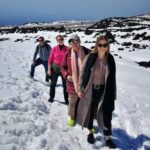
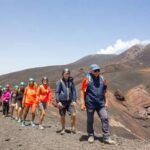
The hike near Rifugio Citelli is described as easy and suitable for a broad range of walkers. The route is around 3 km, starting at about 1,665 metres and reaching approximately 1,775 metres. That is a steady outing rather than a demanding mountain trek, but you should still wear proper walking shoes. Open shoes are not allowed on the Etna hike.
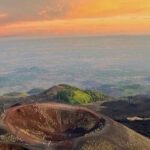
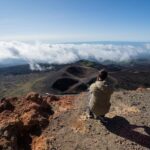
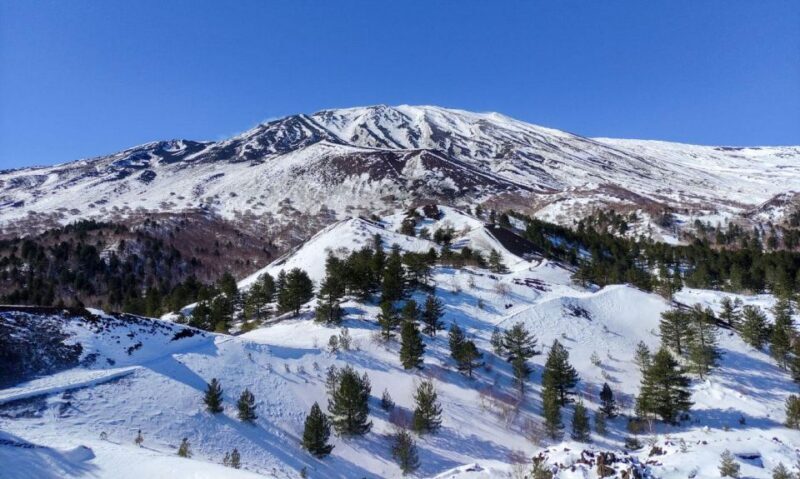
The trail passes white birch trees and the rounded side craters known as the Sartorius Craters, or bottoniera. These are not the summit craters. Instead, they offer a more accessible way to understand Etna’s volcanic activity and see the forms left by eruptions on its northeastern slope.
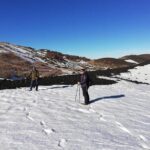
The path also brings you to viewpoints over Calabria and the Aeolian Islands when visibility is good. Views can vary with weather, but the combination of crater forms, trees and open mountain scenery gives this walk much more variety than a simple uphill march. The pace is generally designed to leave room for stops and explanations rather than push you along.
Take a windbreaker and a warm layer even if the coast is sunny. Conditions on Etna can differ from those in Taormina or Catania, and winter departures may be cold. In summer, bring sunscreen, a hat and sunglasses.
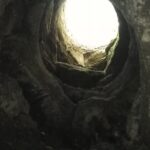
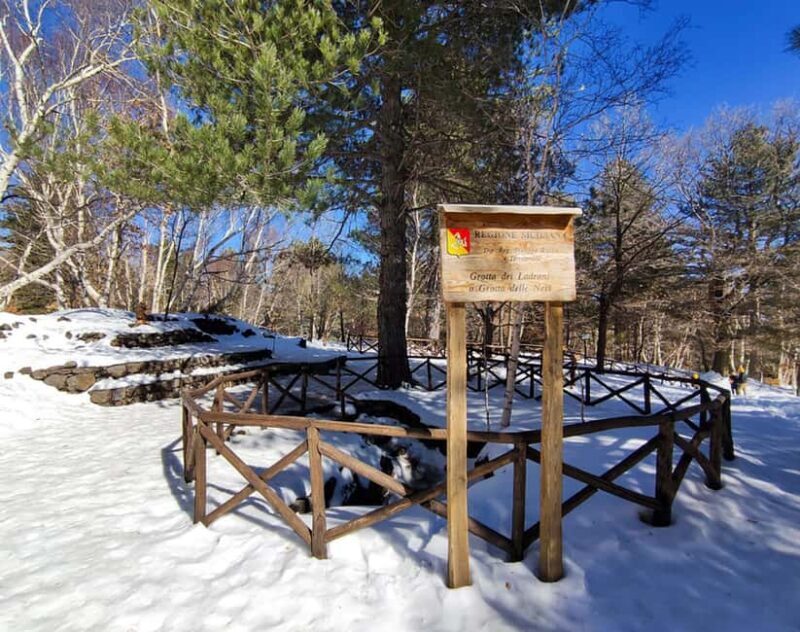
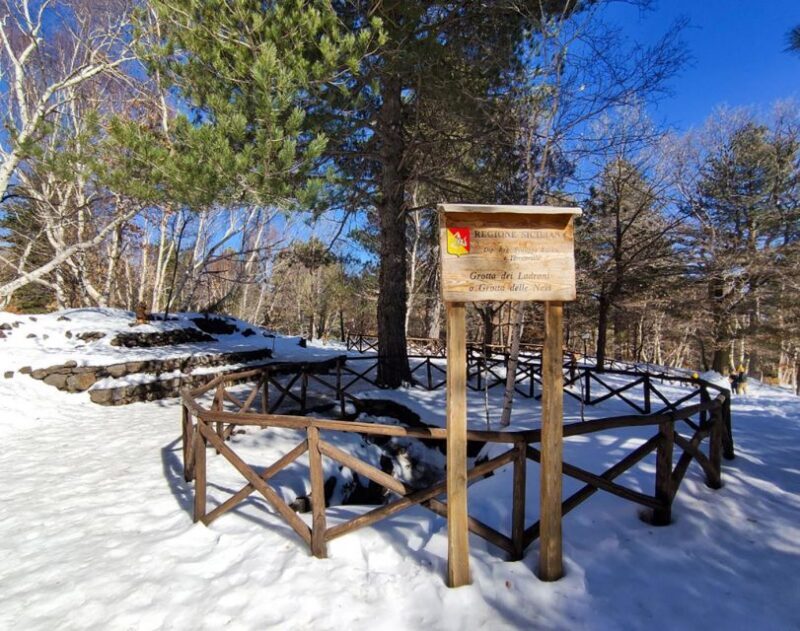
After the crater walk, you visit the Grotta dei Ladroni, also called the Grotta delle Nevi. It is a lava-flow tunnel, and the guide provides a helmet and flashlight for the visit. The cave was partly excavated by people, with a date of 1776 carved into a stone above the entrance.
The human use of this cave gives the stop its particular interest. Etneans stored snow here during winter and sold it during warmer months, turning a natural feature into a practical resource long before modern refrigeration. It is a small but memorable example of how people made use of the mountain’s unusual conditions.
The cave visit adds variety, but it is still an underground space. If enclosed places are uncomfortable for you, keep that in mind. The provided helmet and light are useful, but they do not change the basic fact that you will be entering a lava tunnel.
More Great Tours Nearby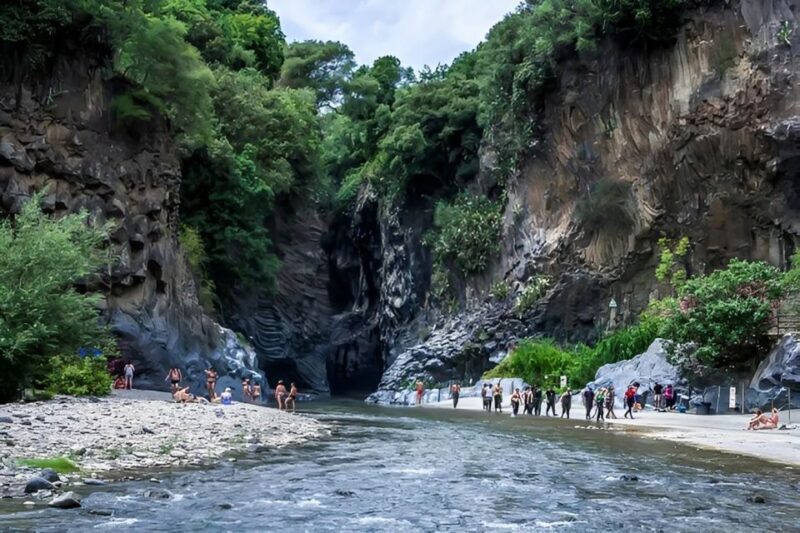
The tour pauses for about an hour at a local Etnean restaurant. The included meal is a first-course dish, water and coffee. That is a welcome break after the walk, and it makes the $105 price easier to assess: transport, a guide, lunch, water, cave equipment and the Alcantara entrance fee are part of the package.
The meal is regional, but the exact dish can vary. Some people have particularly enjoyed pasta, including pasta alla Norma, and a vegetarian option has been available. If you have allergies or food intolerances, tell the operator in advance and repeat the information to the waiter when ordering. That extra step is sensible anywhere menus and kitchen routines can differ.
Food quality is not the strongest part for everyone, so I would treat lunch as a convenient included meal rather than the reason to book. The more important value is having a proper sit-down pause built into a day that otherwise covers a lot of ground.
You might also be interested in these Catania experiences
After lunch, the drive to the Alcantara Valley takes about 25 minutes and passes Castiglione di Sicilia, a medieval village known for its Etna wine producers. The gorge visit is at the municipal entrance to the Alcantara River Park, and the entrance fee is included.
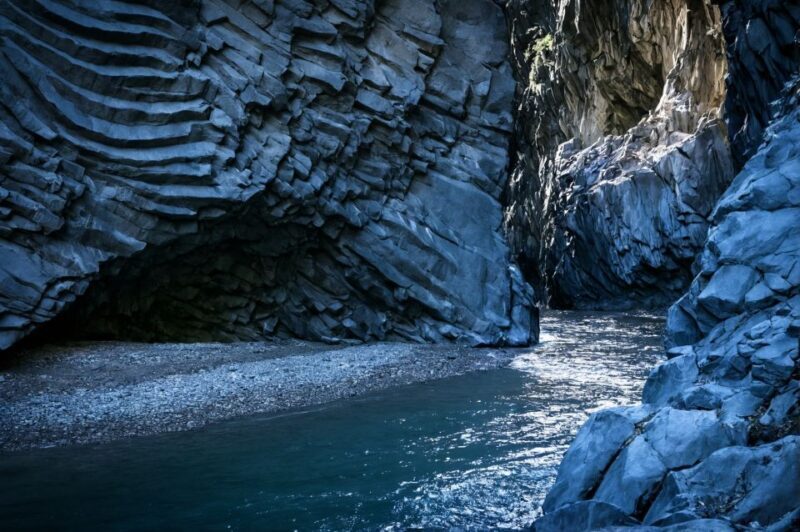
The Alcantara Gorges, also called the Larderia Gorges, are a lava canyon cut by the river through ancient flows. The rock walls make a sharp contrast with Etna’s higher, more open terrain. You can admire the canyon, take a walk and spend free time by the river, including a swim.
This final stop is deliberately more relaxed than the mountain section. Bring swimwear, a towel and water shoes if you plan to get into the river. The tour supplies bottled water, but you should bring your own as well, particularly on a warm day. The gorge visit is scheduled for about an hour, so it is a refreshing finale rather than a long river outing.
The balance will suit many people, but not everyone. If you would rather spend more time on Etna, the gorge may feel like a detour. One practical note: you will need to pack for two kinds of activity in one day, hiking on the mountain and possible river time at the end.
The full tour lasts about eight hours. The scheduled Etna portion takes around four and a half hours, lunch about an hour, and the gorge stop about an hour, with driving between locations. Pickups and drop-offs are offered at set meeting points, including locations around Taormina, Giardini Naxos and Giarre-Riposto. Your exact time and place are confirmed before the tour, so keep an eye on your messages.
The pickup service is a real convenience if you do not want to coordinate separate transport to Etna and the gorge. The vehicles are small, though the road time still adds up: there are roughly 40-minute drives at the beginning and end, plus a shorter transfer between lunch and the gorge. If winding roads bother you, note that driving is a meaningful part of the day.
The guide and driver may be separate people. Transport has been a strong part of the experience, with reports of smooth driving, clean vehicles and practical touches such as spare warm clothing or walking poles. These details can vary, so bring what you need rather than relying on extras being available.
The tour can be booked as a private or small-group outing. Smaller groups tend to make it easier to hear the guide, ask questions and pause for photos. If you prefer a set of stops without a personal feel, a larger coach trip may be cheaper, but it will not offer the same compact format.
At $105 per person, this is a solid-value day if you want both Etna and Alcantara without arranging transport, meals and entry separately. You get a guided mountain outing, the 2002 lava front, a crater walk, a cave visit, lunch, bottled water, cave gear and the gorge entrance. The price covers a full eight-hour day rather than one isolated stop.
The value is strongest for someone with limited time in eastern Sicily. Etna and the Alcantara Gorges are distinct places, and combining them gives you both volcanic terrain and a river canyon in one outing. You also get local context from the guide rather than only a ride between viewpoints.
There are trade-offs. The lunch is a set first course rather than a long, elaborate meal, and the gorge visit is brief. You should also avoid booking if you expect a summit ascent or if you want to spend most of the day at one site. The tour’s strength is variety, not depth at every stop.
I would recommend this tour if you want an active but not especially strenuous introduction to Etna, enjoy learning from a local guide and like the idea of finishing with a swim or riverside walk. It suits couples, families with children who can manage the walk, and anyone based near the listed pickup areas who wants the day’s transport handled.
It is not suitable for wheelchair users or people with mobility impairments, and the operator lists people over 75 and cruise ship visitors as not suitable. A baby can come along, but you need a baby carrier rather than a carriage. The route and schedule can change with weather or safety conditions.
Pack closed-toe walking shoes, outdoor layers, a windbreaker and swim gear. Then book if the combination of mountain walking, local food and river time sounds better to you than a summit-focused climb. If you want a higher ascent or a longer stay at the gorge, choose a tour built around that single goal instead.
“It was absolutely stunning. Salvatore was our guide and was super knowledgeable and accommodating.”
The tour lasts about eight hours, including transport, the Etna visit, lunch and time at the Alcantara Gorges.
The price includes transport from and back to the arranged meeting point, a local guide, lunch with a first course, water and coffee, bottled water, the Alcantara Gorges entrance fee, and a helmet and flashlight for the cave visit.
The Sartorius Craters route is described as easy. It is about 3 km long, starting at roughly 1,665 metres and reaching about 1,775 metres. You still need comfortable walking shoes, and open shoes are not allowed.
No. It explores Etna’s northern slopes, including the 2002 lava front, the Sartorius Craters and a lava tunnel. It is not a summit climb.
Yes. There is free time to relax by the river, walk or swim. Bring swimwear, a towel and water shoes if you plan to get in.
Bring comfortable closed-toe shoes, a windbreaker or jacket, and clothing suited to the weather. For the gorge, pack swimwear, a towel and water shoes. In summer, sunscreen, a hat and sunglasses are also advised.
Guides are available in English, Italian and French.
Pickup is from an arranged meeting point. Listed options include locations such as Taormina-Giardini, Recanati Bus Terminal, Giarre-Riposto, Lidl and other named stops. You receive the specific time and place before the tour.
The tour is described as suitable for young babies. Bring a baby carrier or similar, since baby carriages are not allowed.
No. It is not suitable for people with mobility impairments or wheelchair users. The operator also lists people over 75 and cruise ship visitors as not suitable.
You can check availability for your dates here: