Physical Address
304 North Cardinal St.
Dorchester Center, MA 02124
Physical Address
304 North Cardinal St.
Dorchester Center, MA 02124

Compare the price, long drives, camel rides, camp options, meals, and practical tips for this three-day Marrakech to Merzouga desert safari.
The best part of this three-day trip is the change of scene: you leave Marrakech’s streets, cross the High Atlas, pass villages and kasbahs, then watch the Erg Chebbi dunes glow at sunset from camelback. The night in a desert camp gives you time for dinner, Berber drumming, and a sunrise over the sand.
I like two things in particular: Ait Ben Haddou and Todgha Gorges make the long route more than a transfer, and the tour includes the camel rides, two nights of lodging, dinners, and breakfasts for $122 per person. Drivers such as Youssef, Hichaam, Ajbli, and Mohamed Bakhouz have been singled out for making the journey feel safe, friendly, and well paced.
The trade-off is the mileage. You’ll spend many hours in a van over three days, and the final drive back to Marrakech is especially long. Lunches and drinks are extra, and some stops can feel geared toward tour groups rather than independent browsing.
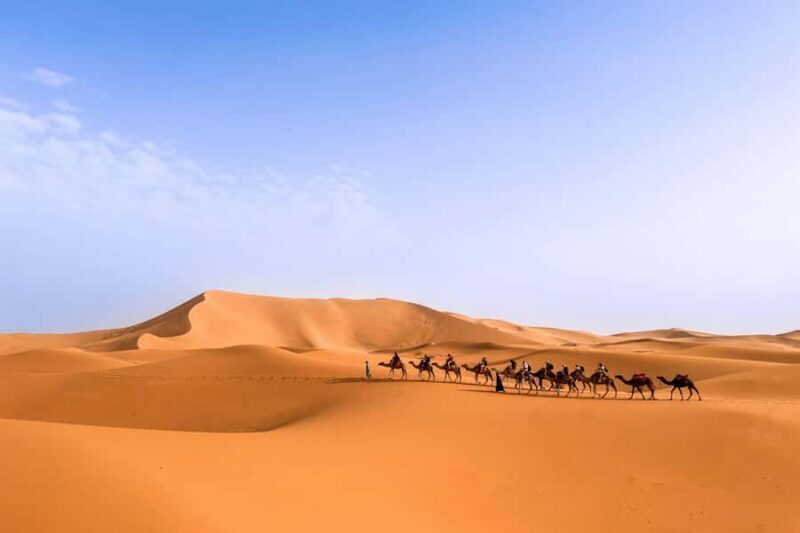
This is not a quick hop from Marrakech to the Sahara. Merzouga is far to the east, so the tour breaks up the distance with mountain roads, historic sites, valleys, and canyon scenery. You’ll travel in an air-conditioned minibus or minivan with an Arabic-, French-, English-, or Spanish-speaking driver-guide. Onboard Wi-Fi is included, though a long road day is still a long road day.
The route crosses the High Atlas, passing Berber villages and mountain scenery on the way to Ait Ben Haddou. Stops for photos, food, toilets, and water help divide the drive. They also mean the tour runs to a schedule, so you won’t have the freedom to linger as long as you might on a private trip.
The driver can make a real difference on these long days. Names praised on recent trips include Youssef, Hichaam, Ajbli, and Mohamed Bakhouz, among others. You can’t count on a specific driver when booking, but helpful communication, careful driving, and attention to passenger comfort come up repeatedly in accounts of the experience.
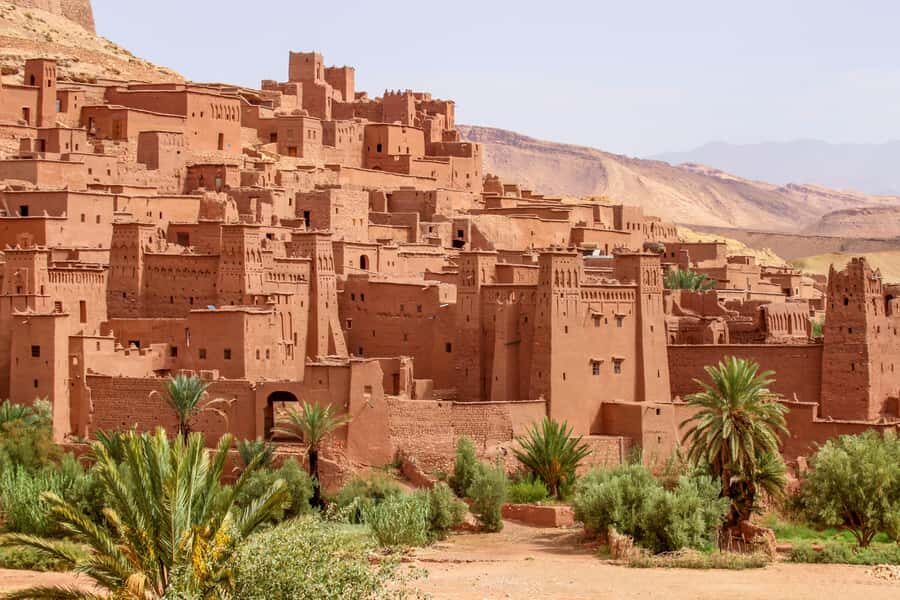
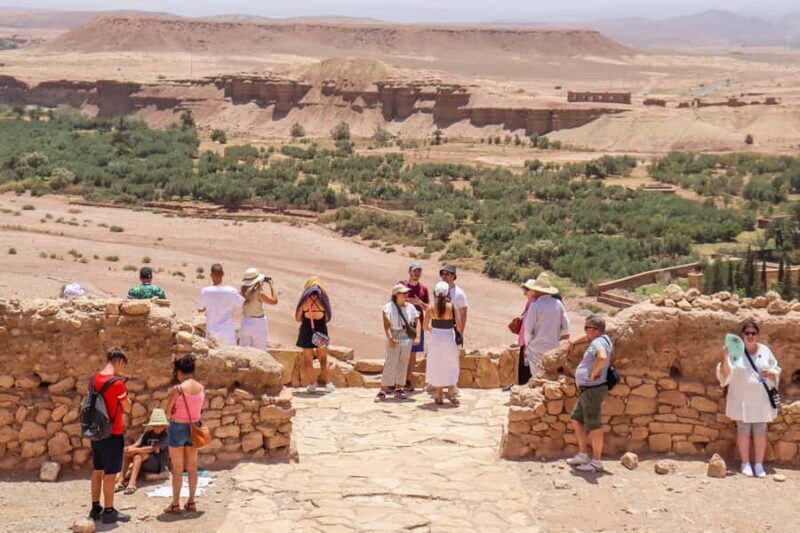
The first major stop is Ait Ben Haddou, a fortified village known for its earthen kasbah architecture and film connections. The site has appeared in productions including Gladiator and Game of Thrones, which can make it feel familiar even on a first visit. Its clustered walls and towers are especially striking against the surrounding dry terrain.
You’ll have free time to look around and eat lunch at a local restaurant. A local guide is available for €2 per person, but that cost is optional. If you value context about the buildings and the area, it is a small add-on to consider; if you prefer to walk at your own pace, you can explore without one.
Keep your expectations in line with the schedule. This is a stop on a route across Morocco, not a full-day visit. You’ll have time to see the main site, but the group needs to continue toward Ouarzazate and the Dades Valley.
After Ait Ben Haddou, the drive passes through Ouarzazate, often called the Gate of the Sahara, and continues toward Boumalne Dades. The shift from mountain roads to drier country is part of the pleasure here. You see more than one version of Morocco in a short span, with villages, kasbahs, and broad stretches of open terrain along the way.
The first night is at a kasbah in the Dades area or Kelaat Mgouna. A private room with air conditioning and a private bathroom is included. This is a useful pause before the second day, though it is best to think of the hotel as comfortable overnight accommodation rather than a destination in itself. Reports vary on hot water, so don’t count on every hotel detail being perfect.
Dinner is included. That helps keep the package price reasonable, especially after a full day on the road. Still, you’ll want some cash for drinks or personal purchases, and it’s wise to bring a refillable water bottle if you have one.
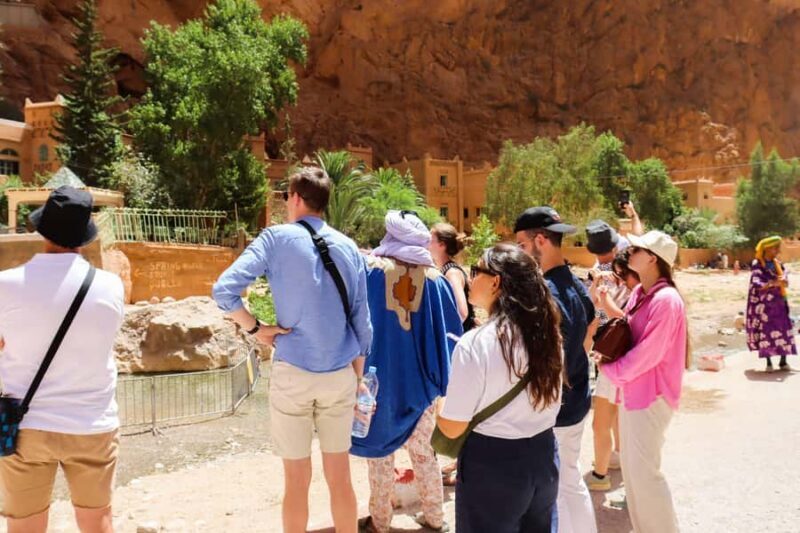
After breakfast, you head to Tinghir and the Todgha Gorges. Here the road reaches a dramatic canyon, where towering rock walls rise above the route. You’ll have free time to walk around and take photos, then stop for lunch at a local café.
This is one of the trip’s more rewarding breaks from sitting in the van. The scale of the gorge gives you a chance to stretch your legs and take in a very different setting from the kasbahs and open valleys. The time is limited, though, so you may wish you could stay longer if you like walking or taking your time with photographs.
Lunch is not included. The tour uses local restaurants along the way, which is convenient but can cost more than a simple meal elsewhere. Since the group travels together and continues on a fixed schedule, it may not be practical to search around for a cheaper option.
More Great Tours Nearby
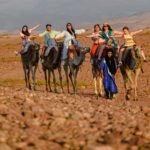
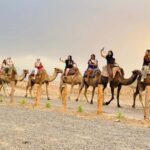
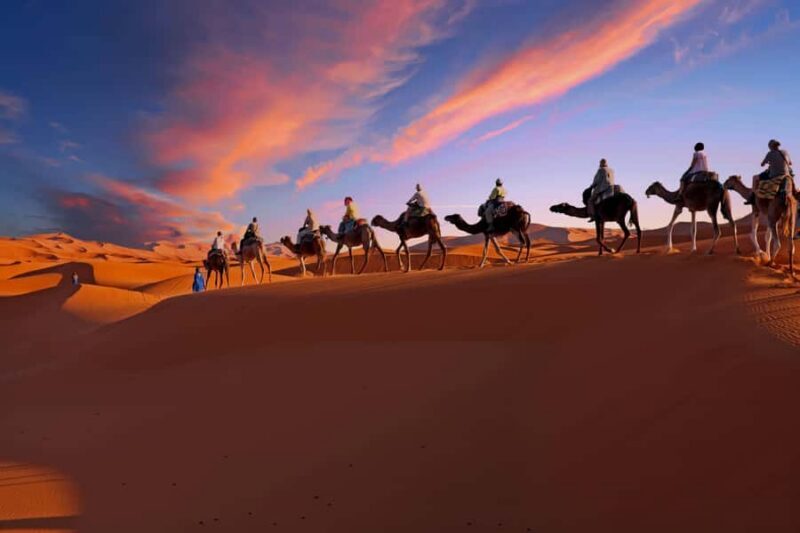
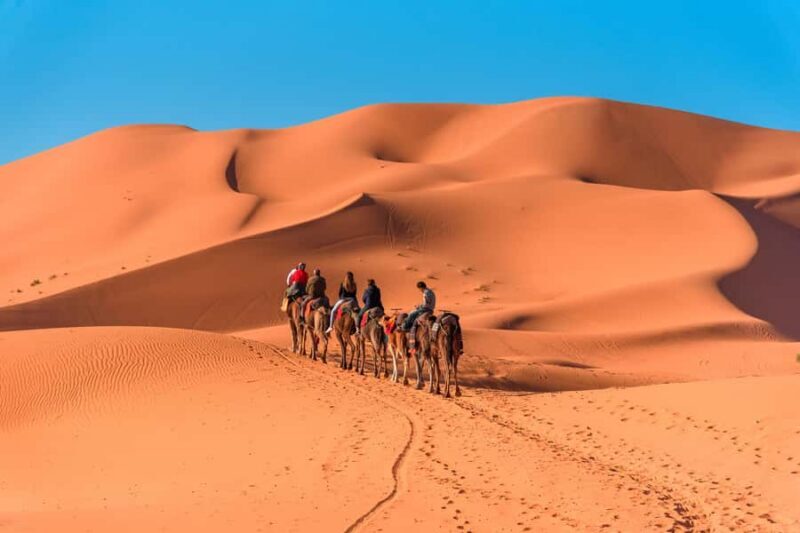
From Todgha, you continue to Merzouga and meet the camel caravan. The ride into the Erg Chebbi dunes is timed for golden hour, when the low sun brings out the sand’s curves and color. This is the moment many people picture when they book a Sahara trip, and the setting delivers a memorable contrast with the mountain and canyon scenery from earlier in the journey.
Camel riding is included at sunset and sunrise. If you would rather not ride, the tour says you can walk to camp on the standard option, or arrange a 4×4 transfer for €50 per car. Ask about the transfer in advance if riding a camel is not comfortable for you.
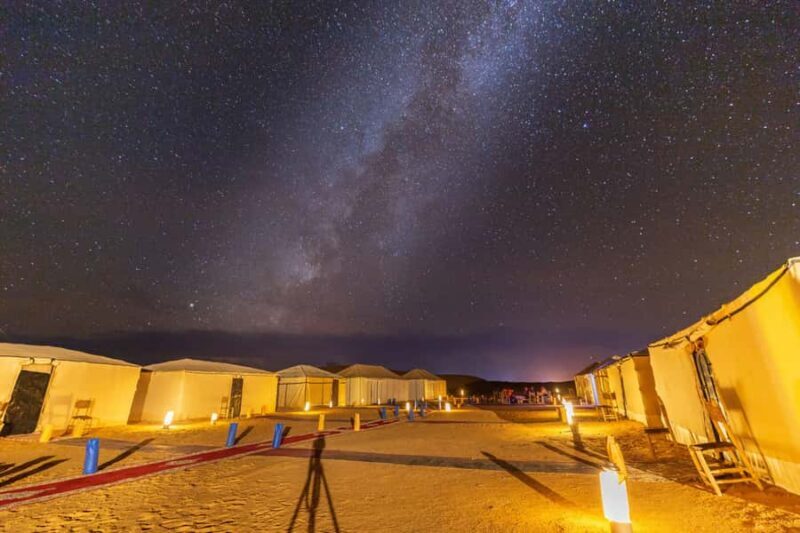
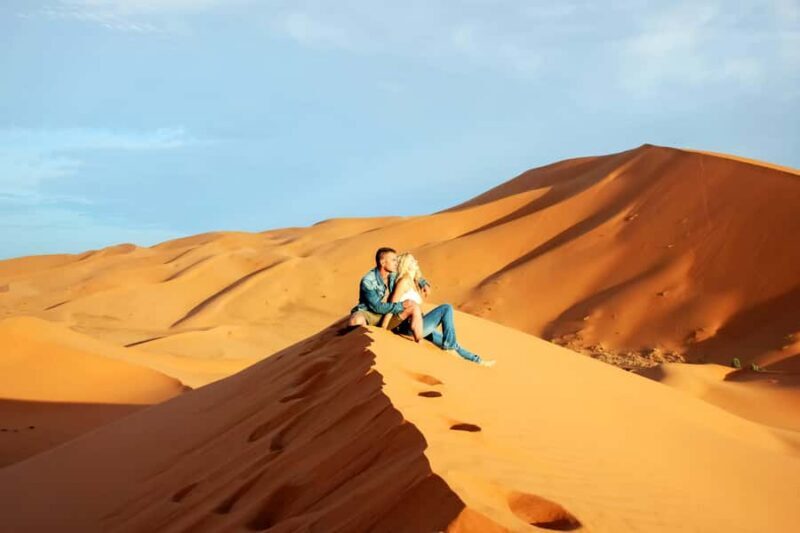
At camp, you get a private tent. The standard option has shared bathrooms nearby; the luxury option has a private bathroom inside the tent. The luxury camp costs more, but it buys a practical comfort upgrade: a private toilet and shower. If those matter to you after a long day, the extra cost may feel worthwhile.
Dinner and breakfast are included, with vegetarian options available. The evening also brings campfire music and Berber drumming, with local nomads showing you how to play the traditional tam tam drums. It is a social, organized camp experience, not a night alone in a remote patch of desert. The camp atmosphere is part of the appeal, though you should not expect silence or complete solitude.
Cold is the main comfort issue. February nights can be very cold, and the tents do not have heaters. Pack warm layers, even if Marrakech feels mild when you leave. A portable charger is useful too, since you may want to save your phone battery for photos and the sunrise.
An early wake-up gives you the chance to watch sunrise over the dunes before breakfast. The tour then transfers you back toward Marrakech, stopping halfway for lunch at a local restaurant. The return drive is a substantial part of the final day, and the expected drop-off is around 8 PM.
That timetable matters if you have a flight, dinner booking, or other plans. The tour is not suitable for wheelchair users or pregnant women, and the long stretches on the road may be tiring for young children. If you need to leave early or have a tight onward connection, this schedule may not be a good fit.
Road conditions can affect the route. If snow closes the High Atlas road, the tour may take an alternative route via Taroudant. In rare cases, weather can extend the overall trip, so avoid scheduling a tight connection after the stated return time.
At $122 per person, the price includes a lot of the main structure: hotel pickup and drop-off, transport in an air-conditioned vehicle, a multilingual driver-guide, two nights of lodging, camel rides at sunset and sunrise, two dinners, two breakfasts, camp music, Wi-Fi, and luggage handling. You also get the major stops that make the long journey worthwhile.
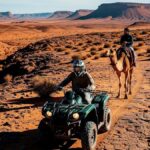
The price does not include lunches, beverages, personal expenses, the optional Ait Ben Haddou guide, or quad biking. The one-hour quad ride is listed at €50 per person and requires at least two participants. Sandboarding information is less clear: it appears among optional activities, while the tour details also describe it as included at camp. Confirm the current terms with the operator before you count on it, and remember that it is an optional high-risk activity not covered by the tour’s insurance.
Food stops can be more expensive than you might expect for a simple lunch. Bring cash, since some places prefer it or do not accept cards. The tour also includes shop and food stops along the route, which are convenient but may feel tourist-oriented. Treat them as part of a group itinerary, not as a promise of the cheapest meal or an unhurried shopping visit.
Choose this trip if you want to see several parts of southern Morocco in a short time and are willing to trade independent pacing for transport and organization. It suits first-time visitors who want Ait Ben Haddou, Todgha Gorges, and a camel ride in one booking, without arranging each hotel and transfer themselves.
It is a strong choice for people who enjoy scenery from the road and don’t mind early starts. The friendly, careful driver-guides can make the hours in the van feel more relaxed, but no guide can make the distances disappear. If you prefer slow travel, long hikes, or extra time at each stop, consider spending more nights on the route instead.
The private group option may suit people who want a more personal arrangement, though the tour details do not specify group sizes or how private departures change the schedule. Pickup is from your hotel or riad when the vehicle can reach it; if not, you’ll be given a nearby meeting point. Pickup details are sent through the GetYourGuide app and WhatsApp by 6 PM the day before.
Book this safari if the Sahara is high on your list and you want a practical, all-in-one route from Marrakech, with the camel rides and camp night included. The $122 price offers good value for the transport, lodging, dinners, breakfasts, and major stops, provided you budget separately for lunches, drinks, and optional activities.
Skip it if three long road days sound like a chore, or if you need a relaxed pace and substantial time at each site. For the best chance of enjoying the trip, choose the camp level that suits your bathroom needs, bring warm layers and cash, and leave the evening of Day 3 free.
“I loved the atv drive and all of the food and store stops.”
The tour lasts three days. It starts at about 7 AM on Day 1 and is expected to end in Marrakech around 8 PM on Day 3.
Yes. Pickup is included from your hotel or riad if it is accessible by car. If not, the operator will arrange a nearby meeting point, usually a short walk away.
The tour can also start from Ouarzazate.
Both options include a private tent. Standard camp bathrooms are shared and nearby, while luxury tents have private bathrooms inside.
Yes. Sunset and sunrise camel rides in Merzouga are included. On the standard option, you can walk to camp instead, or request a 4×4 transfer for €50 per car.
Moroccan dinners and breakfasts are included, and vegetarian options are available. Lunches and beverages are not included.
Optional quad biking costs €50 per person for a one-hour session. At least two people are required.
Bring comfortable shoes and clothes, sunglasses, a sun hat, sunscreen, and your passport or a copy. Warm layers are especially important in cold months; a portable charger and cash are useful additions.
No. The tour is listed as unsuitable for wheelchair users and pregnant women.
You can check availability for your dates here: