Physical Address
304 North Cardinal St.
Dorchester Center, MA 02124
Physical Address
304 North Cardinal St.
Dorchester Center, MA 02124

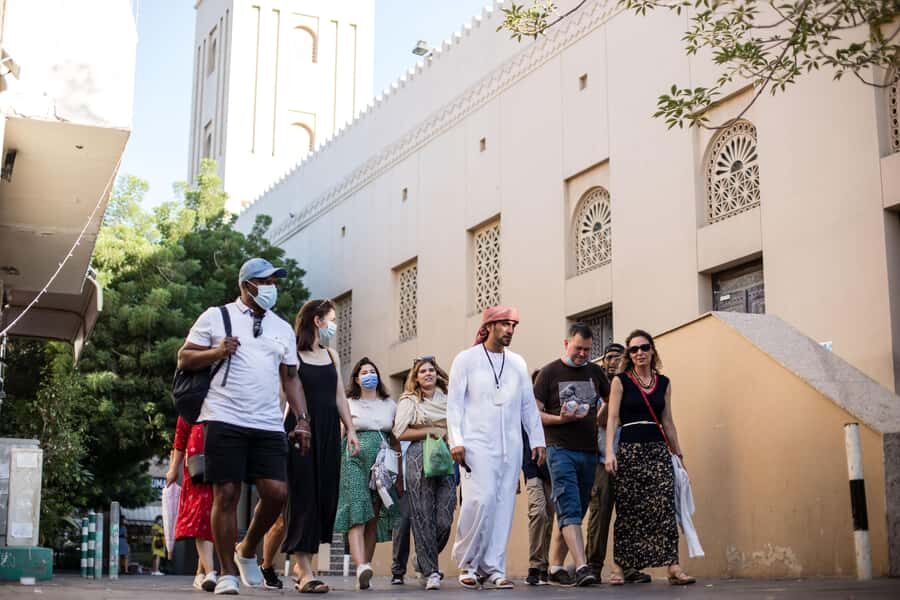
Walk Old Dubai with a local, taste Emirati favorites, cross Dubai Creek by abra, and get practical souk-shopping tips.
Dubai’s old neighborhoods offer a welcome change of pace from the city’s modern towers. This guided walk links Al Seef and Al Fahidi with the creek, street-food stops and the souks on both banks, so you get more than a quick look at old buildings.
I like two things in particular: the guide explains how local customs connect with daily life, and the route mixes heritage visits with food and an abra ride. The main drawback is the amount of walking, and public toilets near the Spice Souk may not be to everyone’s liking.
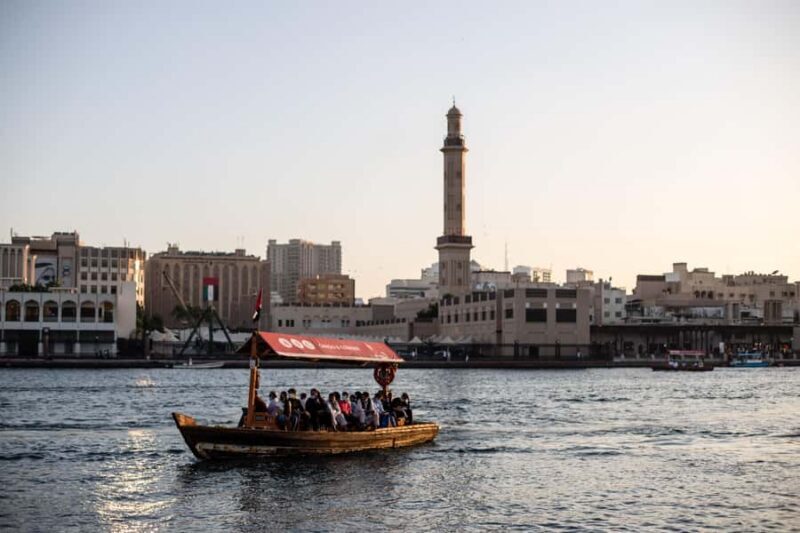
The route begins at Al Seef, a creekside neighborhood where restored architecture and heritage-style buildings offer a first glimpse of old Dubai. Your guide sets the scene with an introduction to the royal family, their history and lifestyle, as well as local culture.
This stop is a useful starting point because the creek helps explain how the city grew. You’re not just passing through a pretty waterfront district: the tour gives you a local frame of reference before moving into the older lanes and market areas.
Next comes Al Fahidi, where the focus shifts to heritage houses, museums and the lives of local families in earlier times. You’ll visit some houses, and the tour includes entry to heritage sites and museums. Rather than only seeing facades, you can get a closer look at the spaces where people lived.
Arabic coffee and tea, often served with dates, give the visit a relaxed pause. They’re also a chance to ask about Islam, local customs and everyday life. I’d use this time for questions. A good guide can make cultural details easier to understand than a quick museum label can.
Al Bastakiya is also on the route, with a short guided visit and time to look around. The listed itinerary includes a pass by Al Fahidi Fort, with a brief stop for sightseeing and free time. The exact time at each place is limited, so this is an introduction rather than a deep visit to every museum or historic building.
Looking for more options in Dubai? Here are some other experiences worth considering.
The guide is central to this tour. The old neighborhoods, creek crossings and markets make a more coherent experience when someone explains what you’re seeing and how it relates to the city today.
Guides named by participants include Hamza, Seef, Ramadan, Francis, Islam and Abdul. Their styles differ, but the most useful traits described are clear explanations, humor, patience with questions and attention to the group. You can’t choose a particular guide from the details provided, so treat the names as examples, not a promise.
The strongest guides do more than recite dates. They explain local customs, help separate fact from myth, and connect the historic quarter with modern Dubai. Several also offer practical souk advice, such as how to approach prices and avoid tourist traps. That guidance is especially handy if this is your first visit, since it gives you a little more confidence before you shop on your own.
The tour is offered in English, Italian, German, Hebrew, Russian, Arabic, French, Hindi and Spanish. A private group is available, which may suit you if you’d rather explore with your own party. The group size for standard departures isn’t specified.
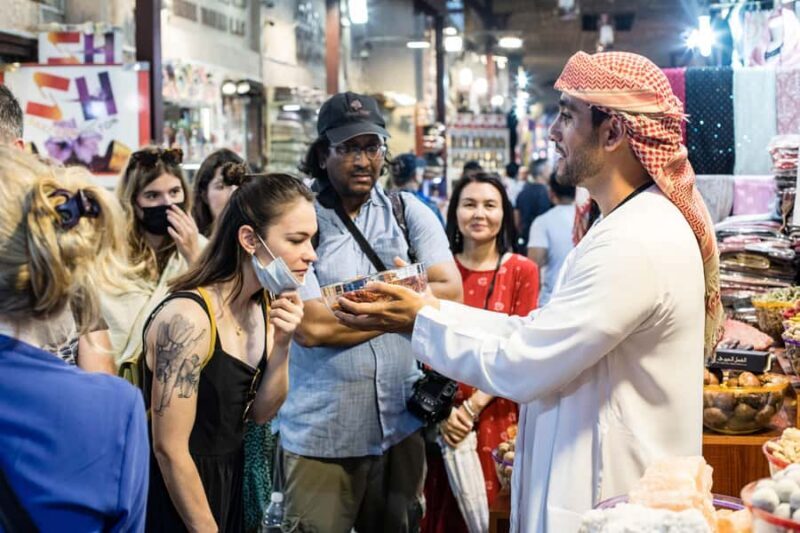
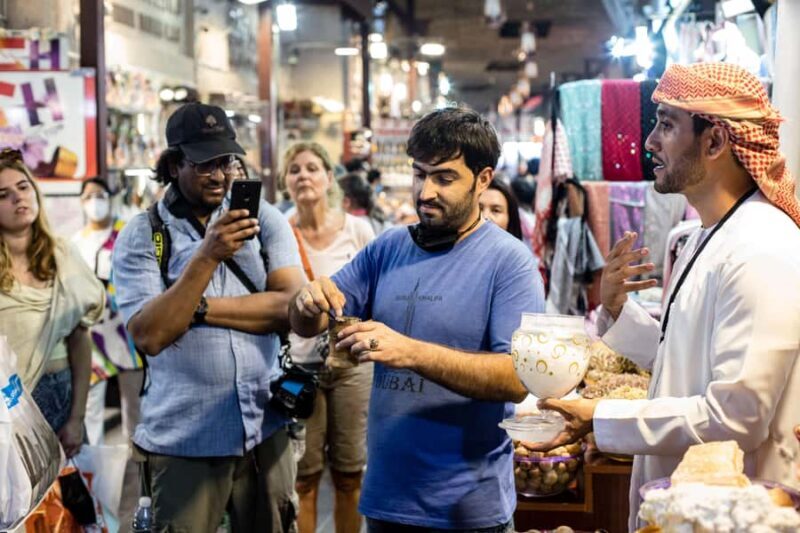
After the heritage stops, the route heads to Al Souq Al Kabeer in Bur Dubai, also called the Grand Souk. There’s time to browse and shop, along with a break for street food and drinks. The included refreshments can feature local snacks, juice and Dubai chocolate; the exact selection depends on the package you book.
The premium option specifically includes shawarma and falafel, with juice or other listed drinks. Arabic coffee, tea, dates, camel milk chocolate with dates and bottled water are also included in the tour details. Check the option carefully before paying, since not every food or drink is included in every package.
Tastings make this more than a shopping walk. They let you try flavors you might not pick on your own, while your guide can explain something about the food and its place in local culture. If you have dietary needs, the available details don’t specify substitutions, so ask the operator before booking rather than assuming a tasting will suit you.
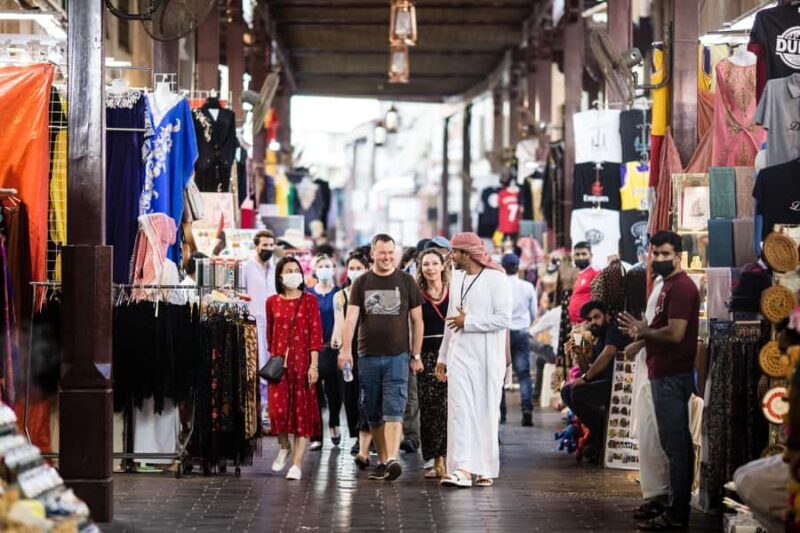
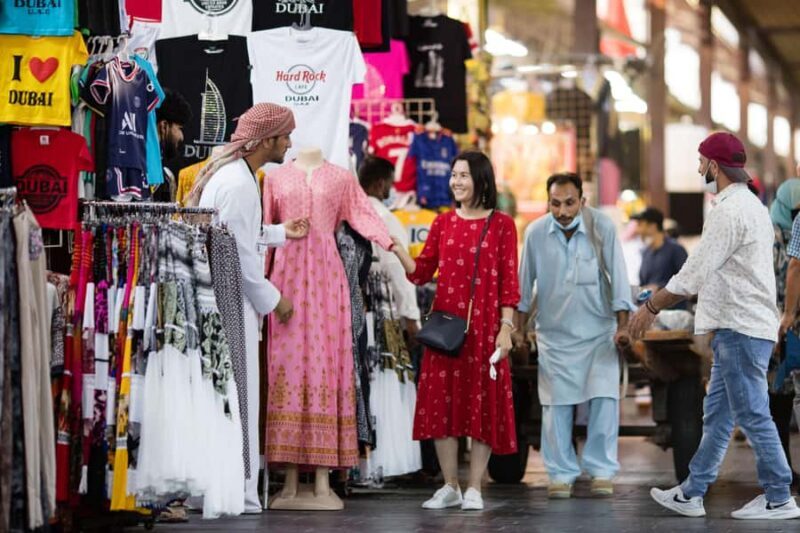
There’s free time at the souk, but this isn’t a long, unhurried shopping session. Think of it as an introduction: you can get a sense of the market, ask for advice and make a few purchases, then return later if you want to compare more shops.
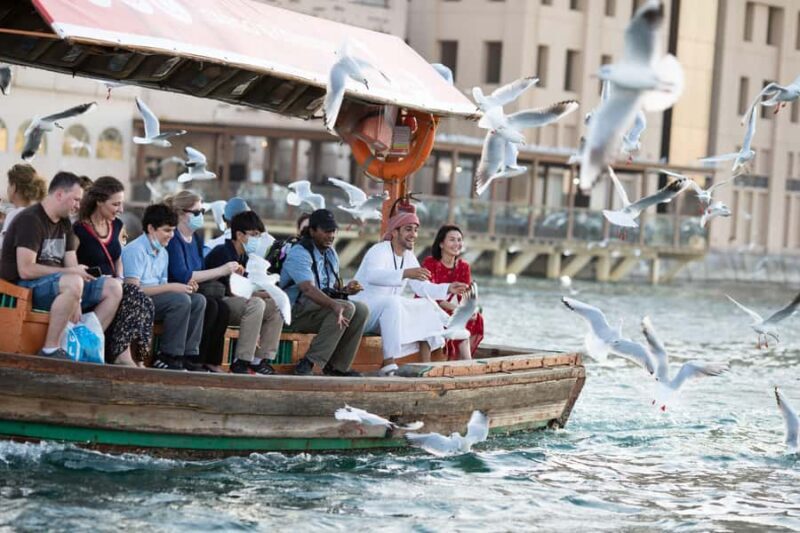
At Bur Dubai Abra Dock, you’ll board a traditional abra for a scenic ride along Dubai Creek. It’s a short crossing, listed at about 10 minutes, but it gives the route a welcome change from walking and a view of the city from the water.
The creek is more than a photo stop. It connects the historic neighborhoods on the Bur Dubai side with Deira, where the route continues into the Spice and Gold Souks. The boat makes the transition feel like part of the experience rather than just a transfer between stops.
Expect a brief ride, not a long cruise. If you’re hoping to spend an extended time on the water, this isn’t that kind of outing. But the abra is a memorable local detail and a practical way to reach the next part of the route.
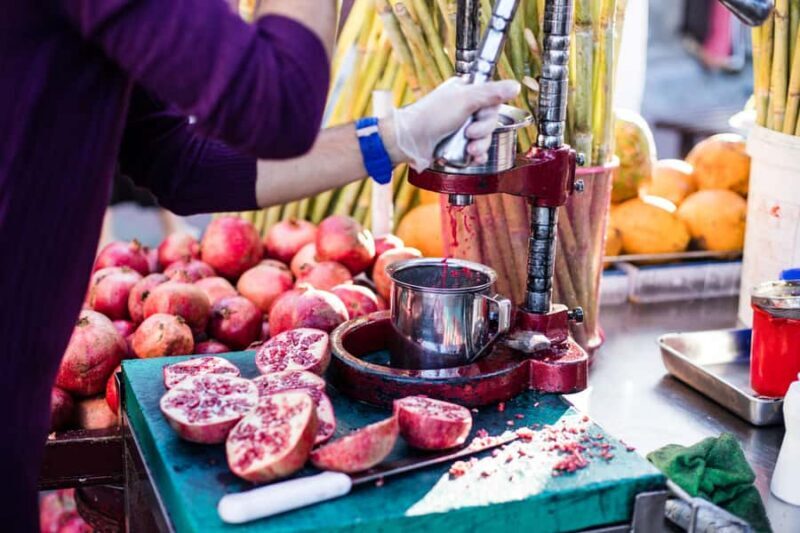
More Great Tours NearbyOnce across the creek, you’ll visit the Spice Souk. There’s time to browse, take in the aromas and look at the goods on display, with your guide offering context and advice. The itinerary allows around 25 minutes here, so you’ll have a taste of the market rather than unlimited time to shop.
One practical consideration: public toilets near the Spice Souk may be unpleasant. If you’d rather avoid an uncomfortable stop, make use of facilities earlier in the tour where possible. The route includes several breaks, but it’s sensible not to leave this to chance.
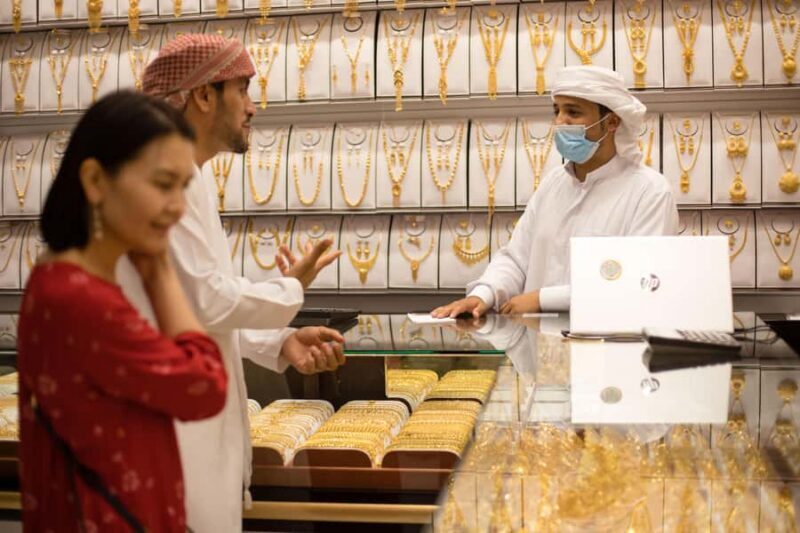
The final market visit is the Gold Souk, with about 20 minutes for a guided walk and shopping. This is a good place to ask how pricing works before you decide whether to buy. If you have a specific piece in mind, be clear about what you want and take your time comparing options. One guide, Seef, even helped a participant locate a shop selling a particular type of jewelry, but that kind of assistance depends on the guide and the time available.
You’re not obliged to buy anything. The value lies in seeing how the market works and getting a better sense of what’s available. Use the guide’s advice as a starting point, then make your own decision.
The stated duration is 2.5 to 4 hours, with starting times depending on availability. The route includes several short walks and breaks, but it covers a number of neighborhoods and market areas. Wear comfortable shoes and be ready to spend much of the outing on your feet.
The walking is described as unsuitable for people with mobility impairments. If that applies to you, check directly with the provider before booking. Pets and large bags or luggage are not allowed, so arrive with only what you need for the walk.
The meeting point is at the entrance of Al Seef Heritage Hotel by Curio, Bayt 1. Your guide will wear a badge and contact you before the tour. Hotel pickup is available only if you select that option; the provider confirms the details the day before. Drop-off options cover several parts of Dubai, including Bur Dubai, Deira, Downtown Dubai, Dubai Marina and Palm Jumeirah, but confirm your selected destination when booking.
At a starting price of $18 per person, this tour can be good value if you want a guided introduction to Old Dubai rather than a self-guided walk. The price covers a local guide, heritage-site and museum entry, an abra ride, and several tastings. The low starting price does not mean every food or drink is included, though. Premium options add items such as shawarma, falafel and specified drinks, so compare the package details before choosing.
The real value is the combination. You move through distinct neighborhoods, get cultural context, sample local food and cross the creek by boat, all in one outing. A guide’s shopping tips may also help you avoid wasting time or feeling pressured in the souks.
For the best return, book this early in your stay. The route provides a useful introduction to local customs and the markets, and the guide’s practical advice can help you make better use of later visits. If you’re already familiar with the old quarter, or mainly want a long, leisurely shopping session, the short stop times may feel limiting.
Book it if you want a structured first look at Old Dubai, enjoy learning through conversation and don’t mind walking. It’s especially suited to first-time visitors, curious families and anyone who wants food, history and market time in one half-day outing.
Skip it if you need a low-walking activity or want to spend hours at each museum and souk. For most visitors with comfortable shoes and a few hours to spare, this is a practical way to meet a side of Dubai that can be easy to miss among the newer districts.
“Seef was a great guide! He told us a lot about Emirati culture, the lunch was super delicious, and he showed us interesting aspects of each stop. H…”
The tour lasts about 2.5 to 4 hours. Starting times depend on availability.
The tour includes Arabic coffee, tea, dates, camel milk chocolate with dates, Dubai chocolate and bottled water. The premium option includes shawarma and falafel, with drinks listed for that package. Check the selected option for the exact inclusions.
Yes. The tour includes a traditional abra ride along Dubai Creek, listed at about 10 minutes.
Meet your guide at the entrance of Al Seef Heritage Hotel by Curio, Bayt 1. The guide will wear a badge and contact you before the tour.
Yes, if you choose an option that includes pickup. The provider confirms the pickup details the day before the tour.
No. The tour involves walking and is listed as unsuitable for people with mobility impairments.
You can check availability for your dates here: